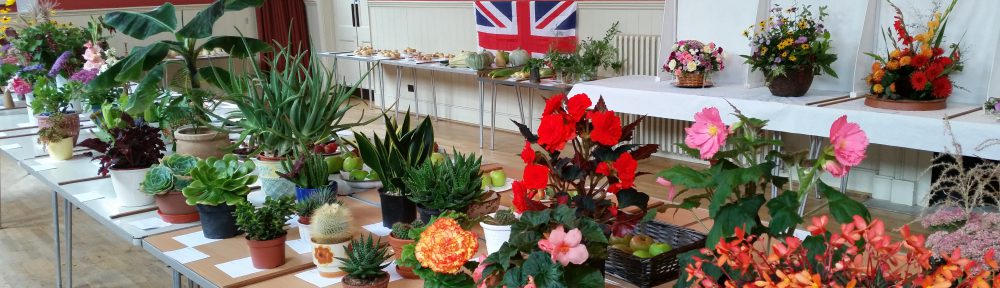
Photography judging at the Dedham Horticultural Society shows.
The photography classes are an important part of our spring and autumn shows, but have you ever wondered how they get judged? To help you create stronger entries, we asked judge Roy Laverick for his insight. He told us that he assesses each entry under three headings and awards points depending on how well they measure up.
Relevance (maximum 2 points)
“This generally results in an automatic two points for every entry, since it is unusual (but not unknown) to be confronted with a photo that does not comply with the class title for which it has been entered. I try to interpret this title as broadly as possible, but occasionally I just cannot see how the subject matter complies with class title, and the photo is accordingly barred from proceeding further through the judging process.”
Composition (maximum 5 points)
“In this area, I am particularly looking for photos that have a clear centre of attention to which the viewer’s eye is drawn. This will usually be towards the centre of the picture but need not necessarily be so. The way in which the subject matter has been framed within the viewfinder when the photo was taken, and subsequently during cropping (if carried out) is vitally important. Cropping can make or break a good photo and is something that should be considered very carefully.
“At every show I see otherwise superb photos, which are spoilt because they have been over-cropped. For instance, it is generally undesirable for a photo of a pot or bowl of flowers to feature blooms and/or stalks which pass out of the picture. Conversely, it is unfortunate if the prime subject of the photo is so small that it cannot be readily appreciated.”
Technical (maximum 5 points)
“Under this heading I am trying to ensure that the shot does not suffer from significant technical shortcomings, such as being out of focus in key areas or badly exposed (giving excessive lightness or darkness). I try to make allowance for photos that have obviously been printed at home, but if this process has resulted in noticeable ‘barring’ or ‘blurring’ (implying that the domestic printer is not up to the task being asked of it) the photo has little chance of being awarded a high mark.”
Choosing the winners
“The above marking process will sort the wheat from the chaff, but it is likely that a number of likely ‘winners’ will all have been awarded the same mark and this is now that a ‘tie break’ is applied. This takes the form of identifying which of the prints with a particular score has the greatest ‘wow factor’ and accordingly deserves for award purposes to be placed above its similarly marked competitor(s).
“‘Wow factor’ is very much a personal judgement and defies scientific definition. I am looking, however, for a photo that grabs the attention of the viewer as a result of being commendable for composition or technical ability and which also features spectacular colour and/or lighting. Sometimes there are like-marked photos, both of which have a high ‘wow factor’: that’s when the judge’s task becomes really difficult.”
So bear Roy’s tips in mind if you’re thinking of entering your photos in our next show.
 Dedham Horticultural Society