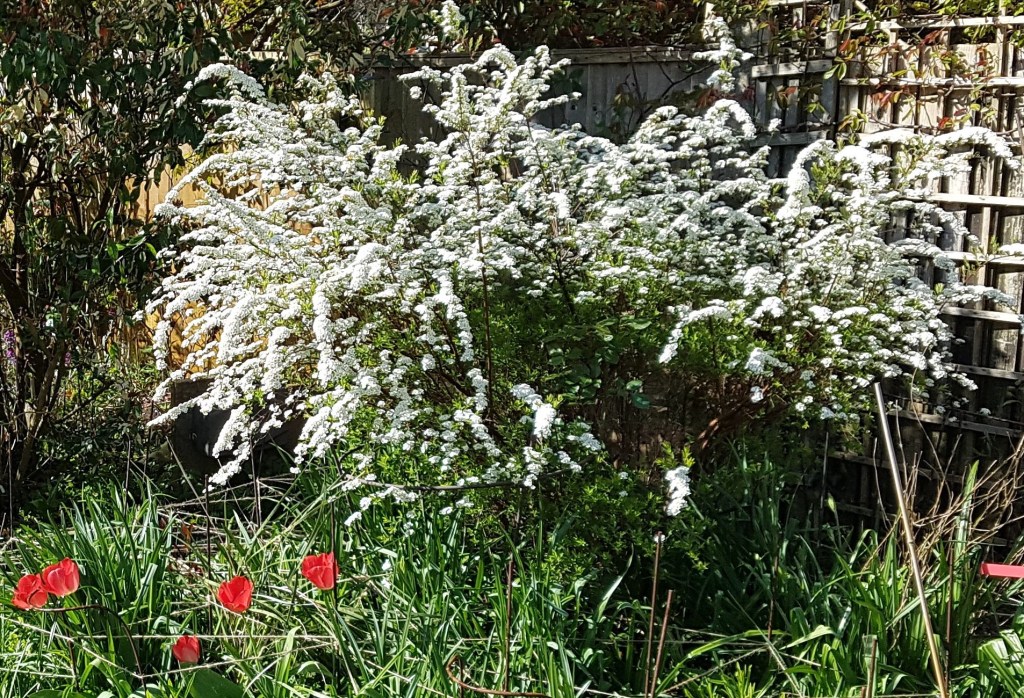
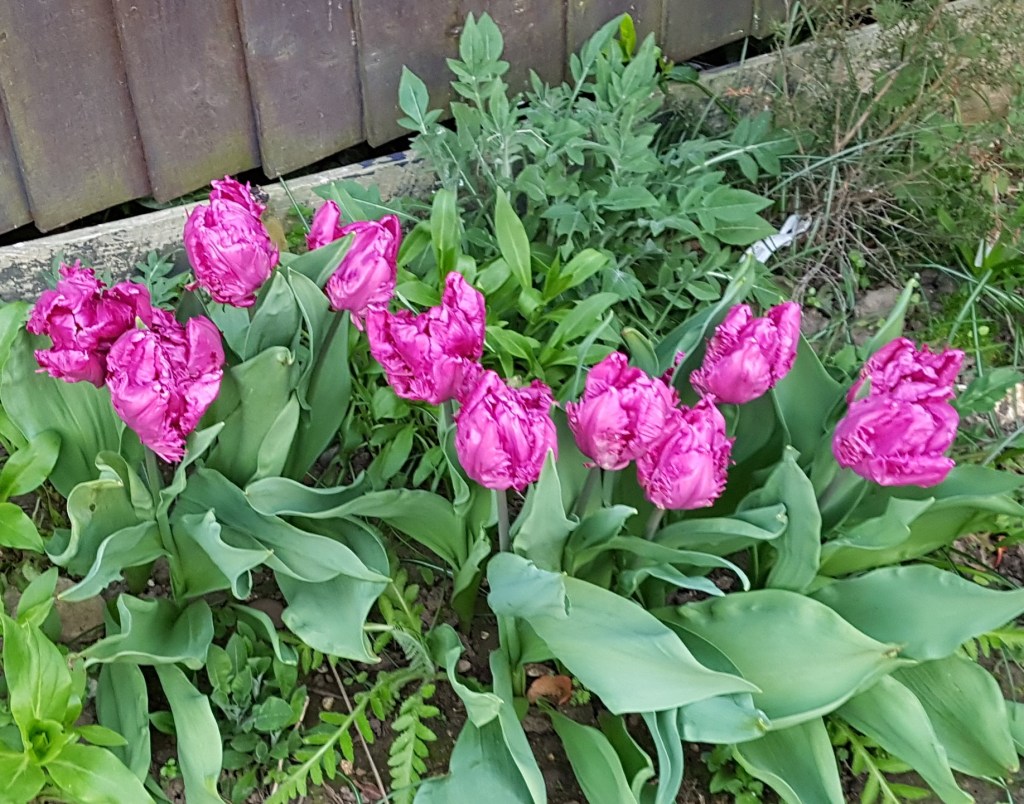
Depending on the weather (of course), April brings marvellous blossom and the blossom-like to the garden and hedgerows. It brings the first signs of the fruit harvest to come with the flowers of apple and pear covering cordons and stepovers in my mini-orchard; an older, taller greengage tree spreads white froth over the shed; and there are petals of almost-red on a small cascading flowering cherry. All this is complemented by the white flowers of a fabulous Spiraea ‘Arguta’ and pink from a flowering currant (Ribes sanguineum), while tulips bring pops and spots of colour around the garden.
There’s plenty to admire in the beds and borders right now, but needless-to-say there is plenty of jobs to crack on with, so enough standing about!
A couple of quick jobs to warm up first. Stake herbaceous peonies which will be putting on plenty of growth now ready to flower in May and June – the big heads will topple over without support, especially if we get an April shower. Prune penstemons by making cuts just above fresh, new shoots at the base of the plant. If you can’t see any new shoots low down, cut just above the lowest set of leaves.
Early in the month is also a time to prune Hydrangea Macrophylla; the lacecaps and mopheads of the genus. I’ve never had much luck with growing these – or with pruning them – but I’m going to give it another go by pruning back to a healthy-looking bud or pair of buds. If the plant is well established, you could also cut out up to a third of the older, woody growth to make room for new. You can prune lavender now too, though I chopped mine back in the autumn after flowering. When you do, avoid going back into older wood but look for any new growth emerging from lower down the stems to show you how far back you could cut.
Take basal cuttings from perennials like delphiniums, dahlias, campanulas, asters and phlox by looking for shoots rising 10-12cm from the base of the clump and using a sharp knife to cut three or four as near to the base as possible. They don’t need to have root attached but if they do, they will establish more easily.
Remove any leaves that may be buried by compost and rot (killing your cutting) and pinch out the top to reduce moisture loss as the cutting roots. You can dip them in hormone rooting powder – although this isn’t necessary – and pop them at least 2.5cm deep around the edge of a pot of cutting compost.
Pop them in a propagator or under a plastic bag and mist occasionally. New growth will show you that the cuttings have rooted.
You can do this any time of year, but it’s a task that I only care to do a couple of times a year and I like to get it out of the way before I’m distracted by everything else: turn the compost. I have a pretty serious three bin system (and a mightier four bin system on the allotment that I share with a couple who are trying to corner the market in redcurrants and gooseberries). They’re not quite up to Monty’s standard but the three metre-squared bins need turning over.
Finally, a serious word about weeding. I know some of you love a dandelion and a couple of you (you know who you are) think bindweed brings a lovely splash of white to the border. But it’s time to untwine them from their chokehold on your roses, dig them out at the root, and chuck them on a bonfire or in the white sacks. It’s going to be weed, weed, weed for the next six months, so you might as well get used to it now.
 Dedham Horticultural Society