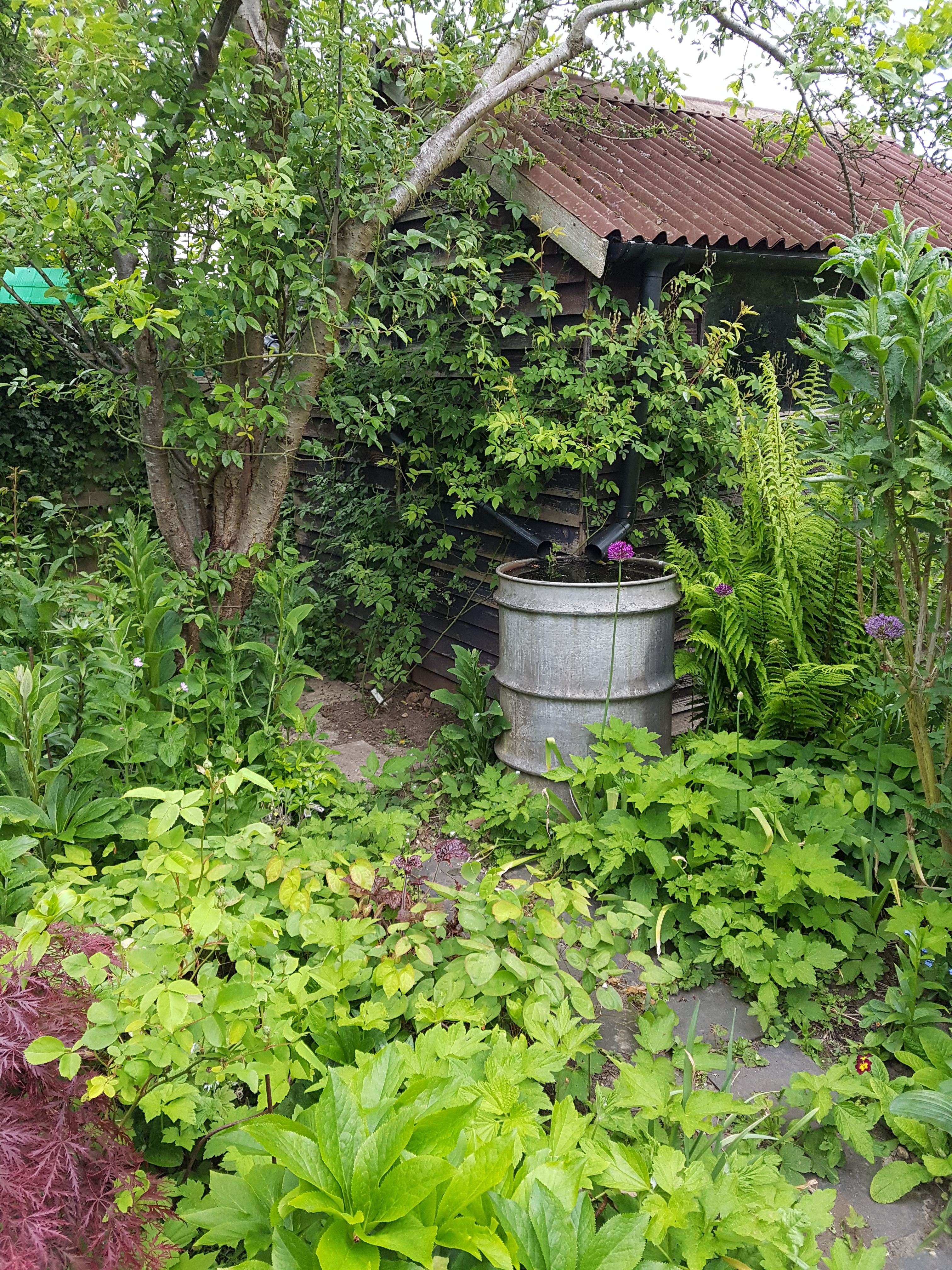
If April saw green shoots and buds bursting forth from soil, stem and branches, then May brings flowers blooming from almost every part of the garden. There are spots in the garden at this time of year where my eye is caught by a tapestry of foliage colour: where the rusted roof of my shed contrasts with the silver grey of a water butt, catches the new red leaves of a small acer, and complements the many shades of green in what I like to call my woodland border.
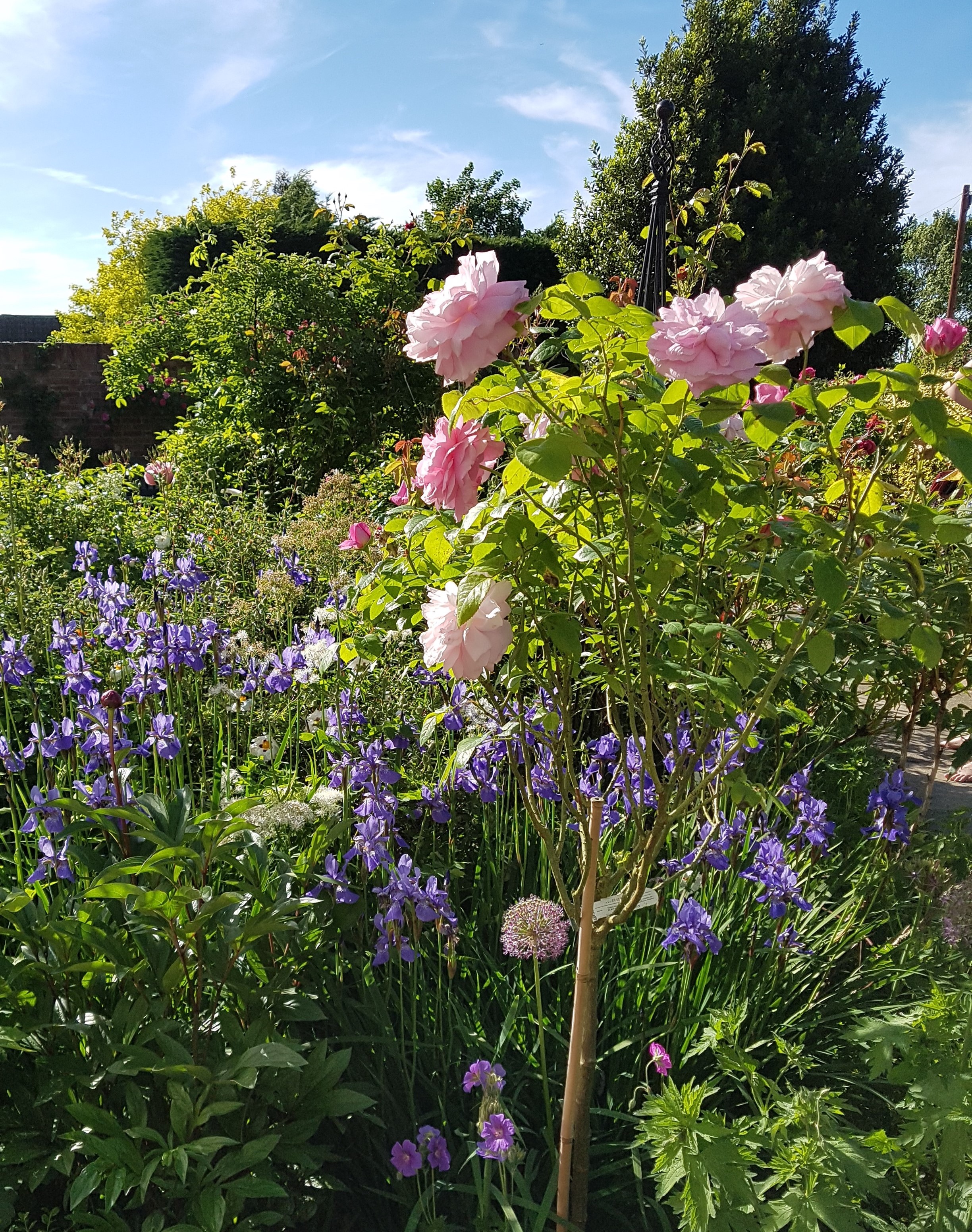
But that red and green corner of foliage is now enhanced elsewhere with colour too. Azaleas and rhododendrons are unfurling finger-like pink and red buds. Oriental poppies (Papaver orientale) ‘Harlem’ and ‘Brilliant’, and herbaceous and tree peonies are showing off their big blowsy, delicate flowers. Spiky Camassia leichtlinii and frothy cow parsley (Anthriscus sylvestris) provide blue and white contrast in the cottage border, and alliums complement the fresh green fronds of hardy male ferns (Dryopteris filix-mas). If you’re lucky, your garden might have magnificent large clumps of blue Iris sibirica beside a pink Rosa ‘Mary Rose’. All with the pale blue of self-seeded forget-me-nots (Myosotis sylvatica) sprinkled – seemingly never-endingly – at their feet.
As great as it all looks right now and as good as looking at it makes me feel, the work hasn’t stopped. With the drier weather, there should be plenty of opportunity to put your hoe to the soil once a week and cut the heads of weeds where they can shrivel up and die in the sunshine. Hoeing will tackle the annual weeds, but you’ll still have to get down to soil level to fork perennial weeds out by hand.
I have a large evergreen hedge that separates my mini-orchard from the rest of the garden and this is a good time to give it a bit of a trim, but remember to check that there are no birds nesting as it’s an offence to damage or destroy them. Fortunately, though I’m not sure what kind of hedge it is, it’s not dense and is easy to look through it end to end and see what’s inside. I just want to take the hedgetrimmer to one side of it, cutting it back a couple of inches and taking a bit off the top. A good feed after cutting will help it put on new growth. I’ll do the other side next year, narrowing the whole hedge over two seasons. If you have a box (Buxus sempervirens) hedge, give it a trim too at the end of May to neaten it for summer.
If you don’t have a hedge to cut, late May is traditionally the time to give plants a ‘Chelsea Chop’. It can make herbaceous perennials bushier and stagger flowering times but needs to be done when the plant is of a reasonable size. Try it on nepeta, phlox, asters, sedums and more by pruning about a third of the plant: either take the top third off everything or every third stem of one plant or a third of a larger group.
I love Aubrieta ‘Red Cascade’ which has been flowering since March, bringing eye-catching colour to the borders ahead of the daffodils and tulips, but as it goes over, a quick trim will encourage fresh growth and flowers.
The allotment is coming on with plenty of time spent tidying it up after Christmas, but I’ll need to protect strawberry plants with straw to help keep weeds down and lift the berries off the soil and with netting to keep the birds off. In my mini-orchard, I need to hang pheromone traps in my plum and apple trees to monitor and hopefully reduce the activity of moths that can result in larvae (yes, maggots) in fruit when it comes to harvest time. I hope you have the chance to enjoy your gardens as much as I enjoy mine at this time of year – despite the work that’s needed to get it this way.
 Dedham Horticultural Society