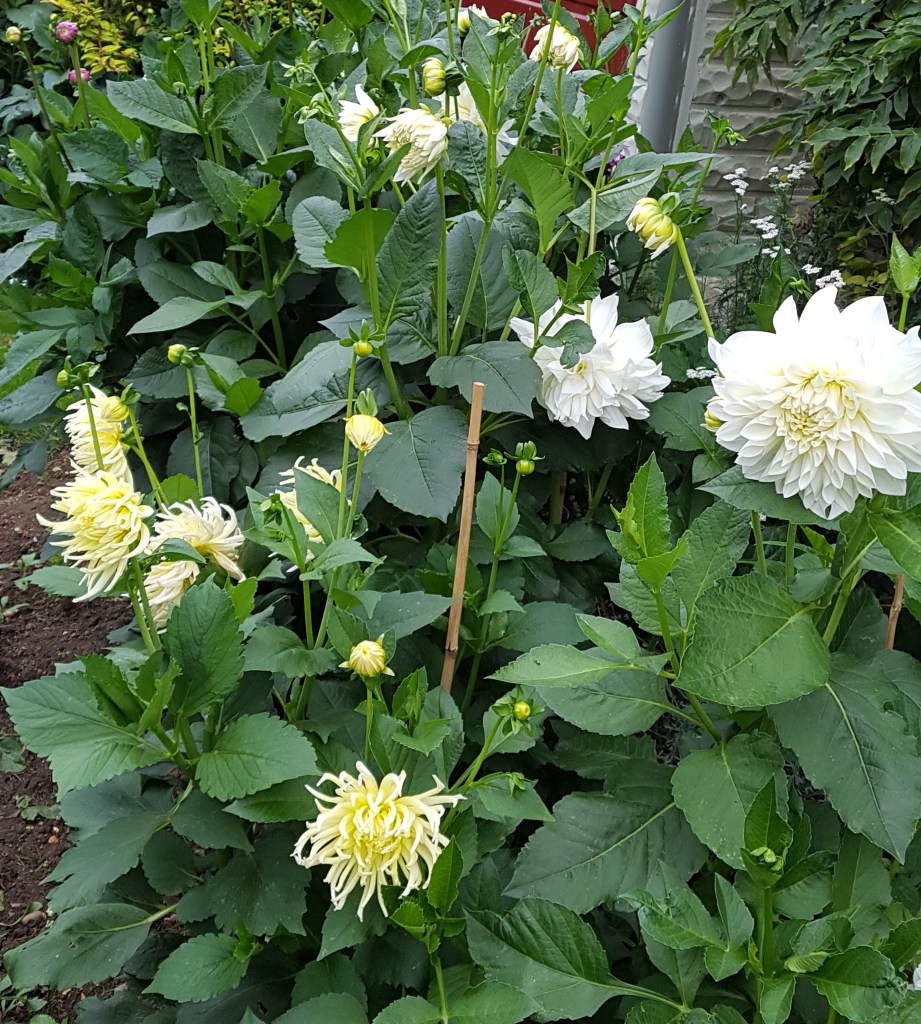
As we head into autumn, there’s still plenty of plants doing their stuff in the garden. My dahlias are in full bloom but need deadheading regularly to keep flowering until the first frosts. I’ve also been growing chrysanthemums this year, which always seem to get away from me before I can tie them and keep them growing straight. I’m not sure about the scent but the blooms can be as spectactular as dahlias – although they get really bashed about in wind and rain.
Complementing the colours of dahlias and chrysanthemums are grasses, Miscanthus sinensis ‘Flamingo’ and ‘Malepartus’: towering a couple of metres with dark pink and purple flower stalks that glow in the sun and – as we move deeper into autumn – will become ostrich-like plumes of white that last well into November.
September onwards is time to plant spring bulbs, except tulips which should wait until November when it’s colder and less chance of them getting the fungal disease Tulip fire (Botrytis tulipae if you want to get Latin about it). Daffodils, crocuses, alliums and lilies can all go into the border now, although I find crocuses a bit irritating as a flower. They look pretty but are so delicate and out so early, they invetibly get completely destroyed by spring wind and rain. Fortunately (for them) the bees love their early nectar and pollen, so they earn their place. Purple alliums look great with the fresh fronds of ferns in May and June, so why not chuck both into a new fernery?
Though I love their delicate checkerboard pattern and brown-purple flowers, I’ve never had much luck with snakeshead fritillaries in the borders; only a few of them seem to come up and they rarely last more than a single season. So instead they go into bulb ‘lasagnes’ in pots. Start with six inches of compost, then a layer of the largest and latest flowering bulbs like daffodils, another layer of compost, then smaller bulbs, and so up to the top where crocuses, fritilalries and snowdrops can be planted.
If you didn’t manage to trim your lavender plants in August, September is really the last chance to do it. Shear back the spent flowers and make sure to take off some of the current year’s growth to stop the bush becoming leggy. You can take back two to three centimetres but make sure you only cut back to the point at which you can see growth.
I don’t really grow a lot of them, but now is a good time to sow hardy annuals so they get a good start in spring for bigger, stronger plants and better flowers for summer. I do like white umbellifers like Orlaya grandiflora and Ammi majus, which need a cold period before they germinate, and am sowing Daucus carota for the first time.
With the soil still warm, this is a great month to lift, divide and replant perennials. If they are overgrown or tired-looking, this will refresh them and improve flowering next year but also give you extra plants for free! I’ll be splitting up Crocosmia ‘Lucifer’ corms, Epimedium, Hosta, Hemerocallis (daylilies) and Primula for better flowers. I can also divide any grasses that are outgrowing their space – often they die off in the middle of the clump, so dividing them will let me discard the centre and replant the outer pieces.
And finally, rake and aerate, feed and tackle moss in the lawn. You can use a spring-tined rake if you’re feeling energetic and have a smaller lawn, but may want to invest in a machine to help with bigger gardens. Scarifying (raking) will take out the thatch of dead grass, moss and other debris that has built up in the lawn – it’s going to look a mess, but autumn’s mix of warmth and wet will give it plenty of time to recover before winter.
Aerate by pushing a fork about 6 inches into the ground, giving it a wiggle and repeating every foot or so. This will help loose the compacted ground that results from all the mowing and playing, but also gets air in to help grass grow. Finally, top dress with a weed and moss killer, feed and a sprinkling of seed.
All this should set you up for the end of the season and a great start in spring.
 Dedham Horticultural Society