Shooting, spreading and supporting

The garden’s in full on growth mode now. Everywhere I look something is shooting up or spreading out, which of course means weeds need pulling up or hoeing off (if the weather stays dry), stems need supporting and something always – always – needs pruning.

As I’m trucking secateurs, hand fork, trowel, Japanese razor hoe (best thing ever, you should get one), tubs and white bags of cut material back and forth across the garden, there’s still time to enjoy the fat buds of rhododendrons and peonies waiting to burst later in spring, as well as blossom, wall flowers, primroses and Erysimum ‘Bowles’s Mauve’ in bloom. I’ll pull some tender, bright pink stalks of forced rhubarb for the kitchen too and enjoy the huge amount of colour seen in the greens, purples and reds of stems and foliage.
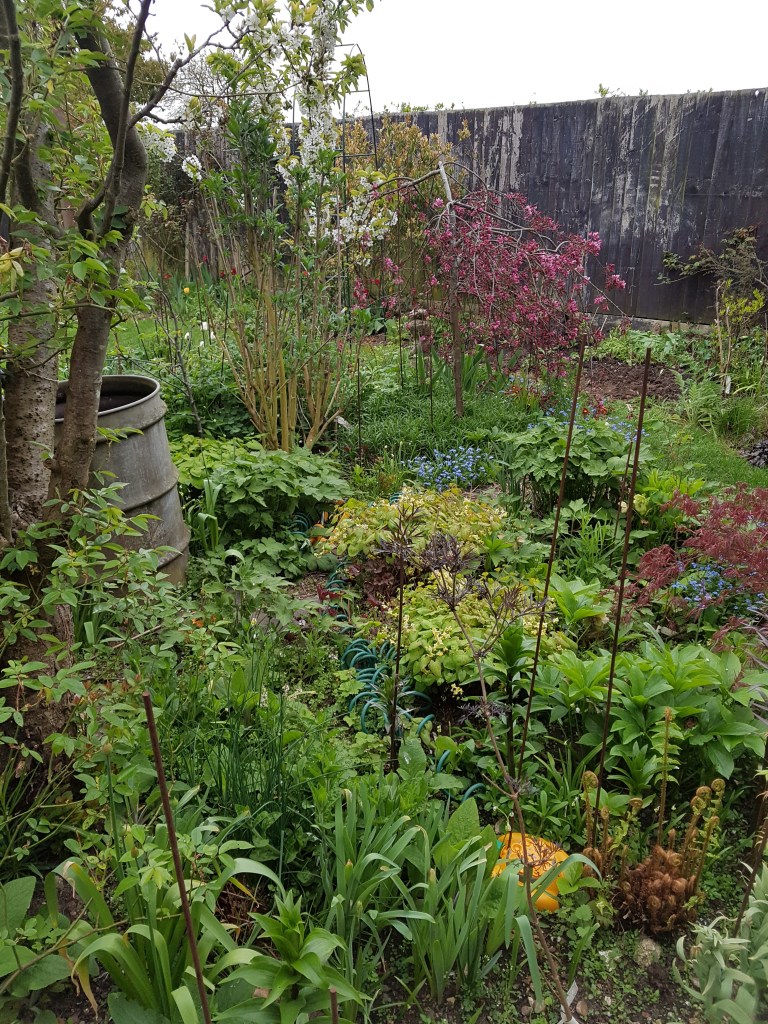
Colour without flowers

Many of the bulbs are still going strong and, alongside the usual, two anemones are looking especially good: the soft blue Anemone blanda alongside the stronger jewel tones of Anemone cornaria. The petals of the red coronaria contrast with the blue of the blanda, but there’s also a touch of blue around its boss of stamens that complements perfectly.
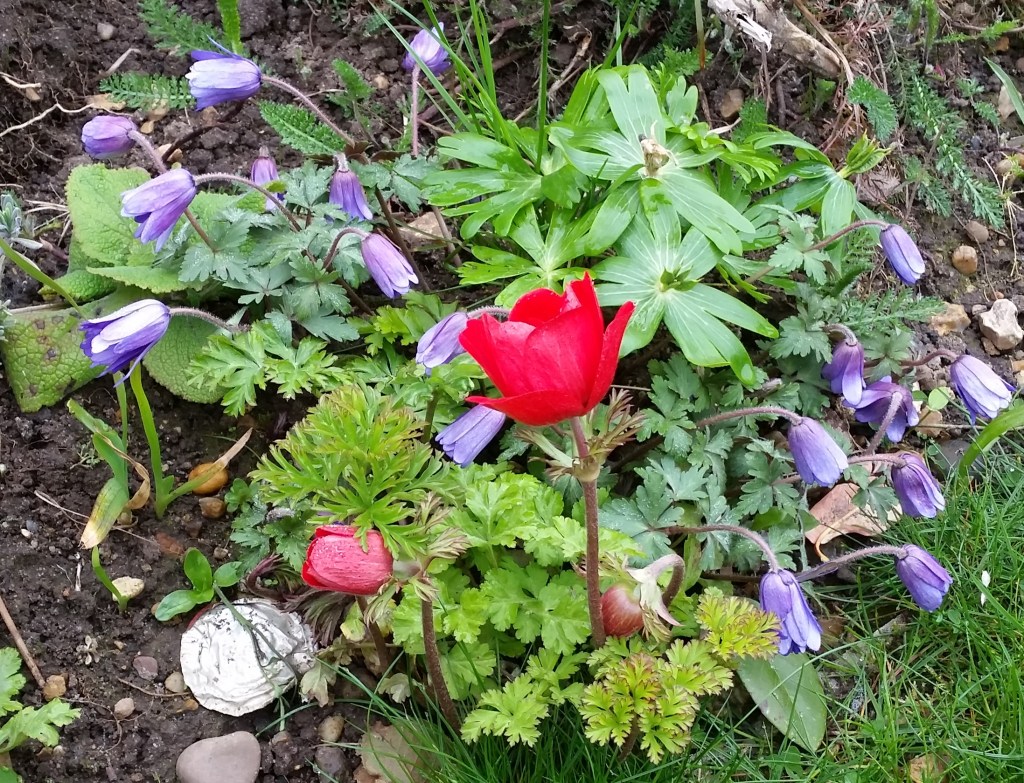
Anemones

I’ll also check to see which – if any – of my overwintered pelargoniums (often called geraniums, although they’re nothing alike and shouldn’t be treated alike) have made it through. I’ve only just started growing these in pots and I’m not sure I’ve quite got their needs right to get them through the worse of the weather. But I learn something new in every gardening year, so will persevere.

I planted tomato seeds on the window ledge in early March and they should be ready to pot on into larger containers with split canes for support. It’s still too early to plant them out but when I do, I always have spares that go to the Horticultural Society’s plant sale in May.

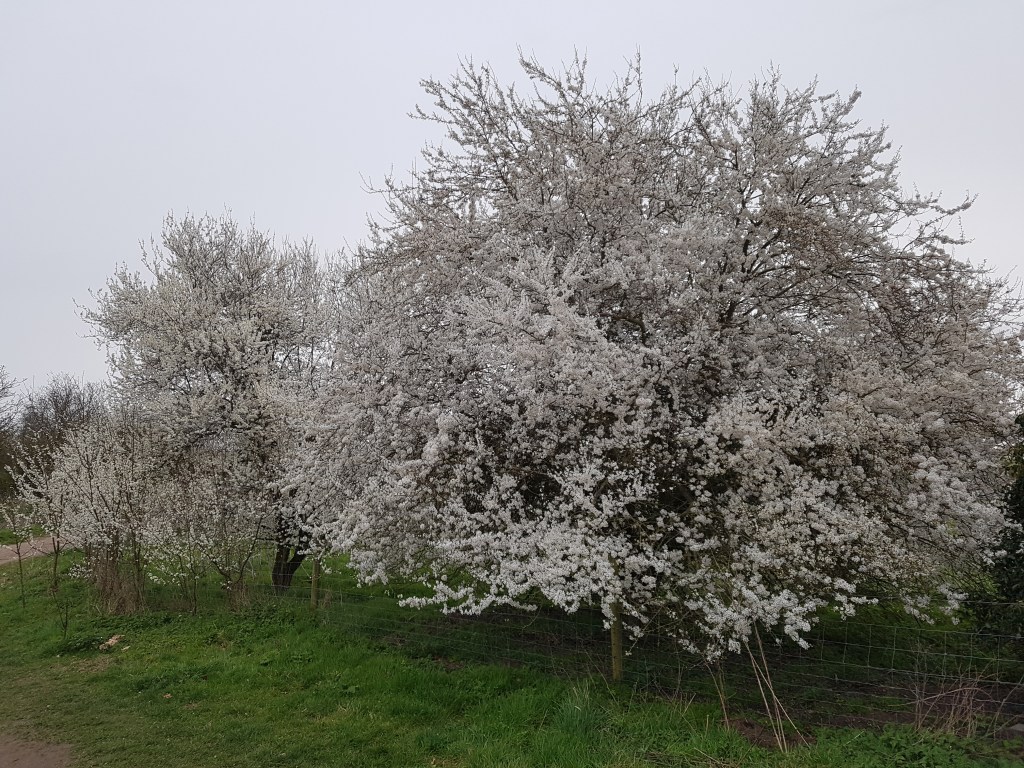
The blossom looks great as always, but I’m mindful of the late and heavy frost last May which meant my fruit crops were much less than hoped for. I doubt I’ll be able to protect every tree (and certainly not the large old greengage) but will get some fleece draped over my St Edmunds Pippin apple treet, which I bought because my dad lives in Bury.

I’ll also check on the hardwood rose cuttings that I’ve had in pots for a couple of years now. A quick look underneath to see if roots are starting to show through the pots’ drainage holes will indicate whether they need potting on. I usually put a few of these into our plant sale too, so you might find some if you’re able to pop along to Dedham’s churchyard on the day.

Then there’s lawncare. I don’t love a lawn, though it certainly sets off the rest of the garden (I’m told) and I’ve boosted mine with a clover mix that encourages pollinators. This year or next, I’m going to reduce my grassy areas to just a small circle and pave the rest in the hope I can maintain the smaller area to a better level of ‘perfection’ (hah).

First job in April is to scarify the grass, which essentially means scraping away with a spring-tine rake to get as much moss (or thatch) out and let air to the roots of the grass. It’s hard work, but I bought a cheap electric scarifier which is easier and quicker, and it’s amazing just how much comes out. Very compacted areas that get walked on a lot will benefit from spiking with a garden fork: just drive the tines in, wiggle them gently back and forth and move six inches or so to the next spot and repeat. I’ll dig out any perennial weeds (dandelion is my lawn’s bête noire), feed it with a high-nitrogen fertiliser and, if it’s dry enough, give it a mow with the blades high.

When not outside, I need to read (again) about how to grow peaches. I cannot seem to get more than the odd fruit (and competing with wasps for that one) and suspect I’m cutting back the wrong branches when I prune later in the year. (No stone fruit should be pruned in winter).

Most peach trees suffer from leaf curl and, while there aren’t any chemical sprays to control it, you can try an organic winter tree wash. You can also try shrouding the tree with a polythene lean-to (I know, what next?!) to protect it from rain which spreads the spores. You’ll need to leave it open on the sides or remove it on dry days so pollinators can get to the blossom. However you’re spending these (hopefully) warmer, longer days in the garden, I hope you find something here to motivate or inspire.
Spring bulbs

As I look around the garden this month, the first flowers I see rising from the ground at the start of a new season are the spring bulbs I planted at the end of the last. Bulbs represent an easy way to fill beds and borders (or containers) with a range of colour and form, and they seem to start earlier every year.

As easy as they are, there are several things to remember when planting with bulbs. First, size matters, so choose the highest quality you can afford. Top size bulbs will give you bigger and stronger plants. Secondly, a general rule of thumb is to plant them at three times their depth – though the deeper you plant tulips, the stronger their stems tend to be.

Sadly it’s too late now to plant spring bulbs, but hopefully you can look forward to enjoying some of these as they emerge over coming weeks.

One of the first coming up in my garden is the dwarf iris (Iris reticulata) which ranges from icy – almost white – blue through royal to midnight blue and purple. I prefer the darker, jewel-like tones of ‘JS Dijt’, ‘Blue Note’ and ‘Pauline’. Last year, I planted some Dutch irises (Iris × hollandica) for the first time, which flower later in spring and into early summer (just in time for the bearded iris to take up the baton in the border). Making great cut flowers, Dutch iris are up to 50cm tall in white, dark blue and a wonderfully sunny deep yellow.

At the same time, small clumps of snowdrops (Galanthus nivalis) are coming up among the dwarf iris. Although you can find a wide range of different varieties that can be double-flowered, taller than usual, and have yellow touches instead of green, I like the simplicity of the common form that grow to just 6 inches or so with dainty white and green blooms. Although they will thrive in all kinds of locations, snowdrop bulbs can dry out more easily than others if they are lifted and stored to be planted in autumn. Instead, it’s better to plant them ‘in the green’: in other words at this time of year when they are freshly lifted and still in leaf. Bluebells (Hyacinthoides non-scripta) are the same.

Then there’s Crocus, which I still think are pretty much a waste of time, though they do tend to come up early following the snowdrops and early iris. Coming in white and shades of purple, yellow or orange, they can be naturalised under trees, through grass and in the border. My problem with crocus is their frailty, a bout of rain or wind and they become soggy, droopy things. I also find the colours a bit weak, so would prefer to plant something bolder and bigger. They do have one major value (at least to me); encouraging masses of honey bees (and other pollinators) just as they emerge from their winter rest.

If you fancy something a little different, try Crocus sativus, which flowers in autumn. Harvest the bright orange stamens and dry them to make saffron you can use to cook with.

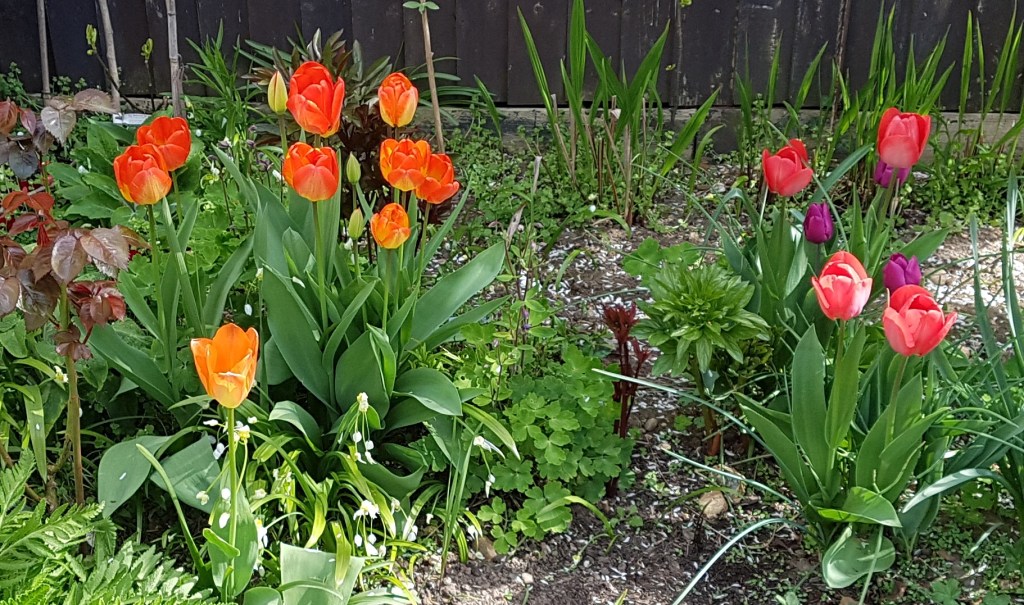
I love the colour range, different shapes and flowering times of tulips and if you choose different varieties, you can get weeks of blooms in the garden. While most spring bulbs should be in the ground by November, tulips can be planted later – as late as December – so if I’m too busy with other gardening jobs, I can still chuck some in a pot and be sure of flowers in spring.

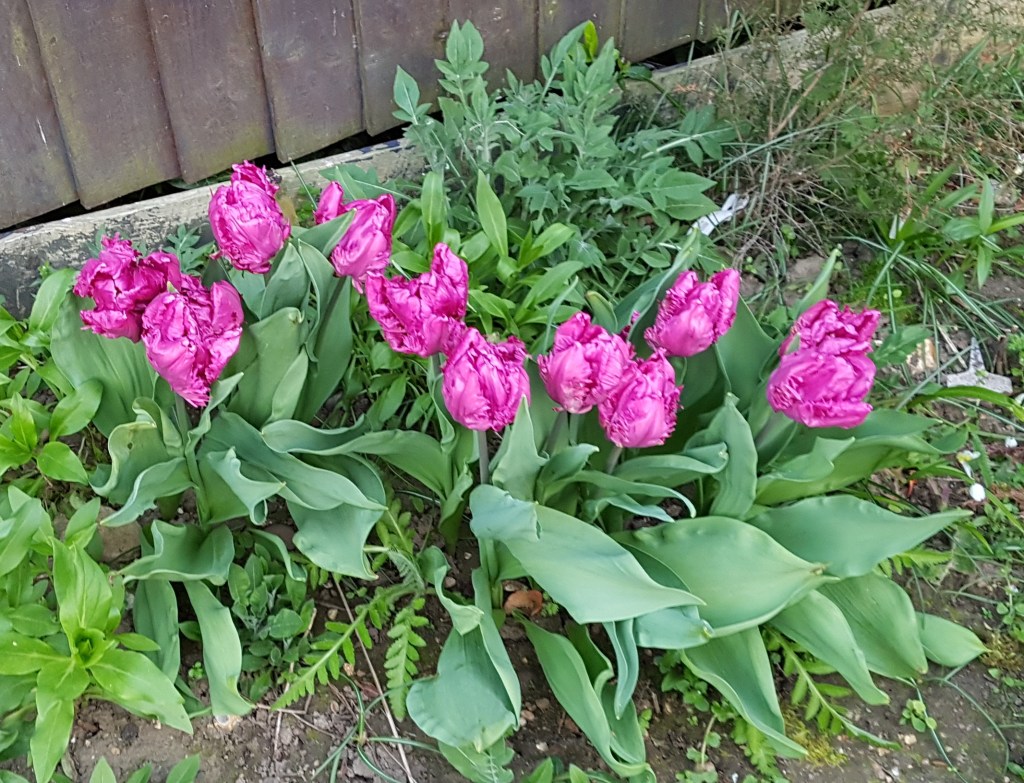
My favourites are the blousy, peony-like, doubles and the showy parrots, though both are top heavy and can be damaged by heavy rain and strong wind. Darwin hybrids have the classic tulip shape and are more reliably perennial when most other tulips deteriorate year on year. Triumphs offer the widest range of colours, but I find fringed tulips too fussy and just can’t get on with the shape of the lily-flowered type. There are others too and a bit of research online will reveal a range of ideas to suit your planting scheme, whether modern, minimialist or cottage-garden.

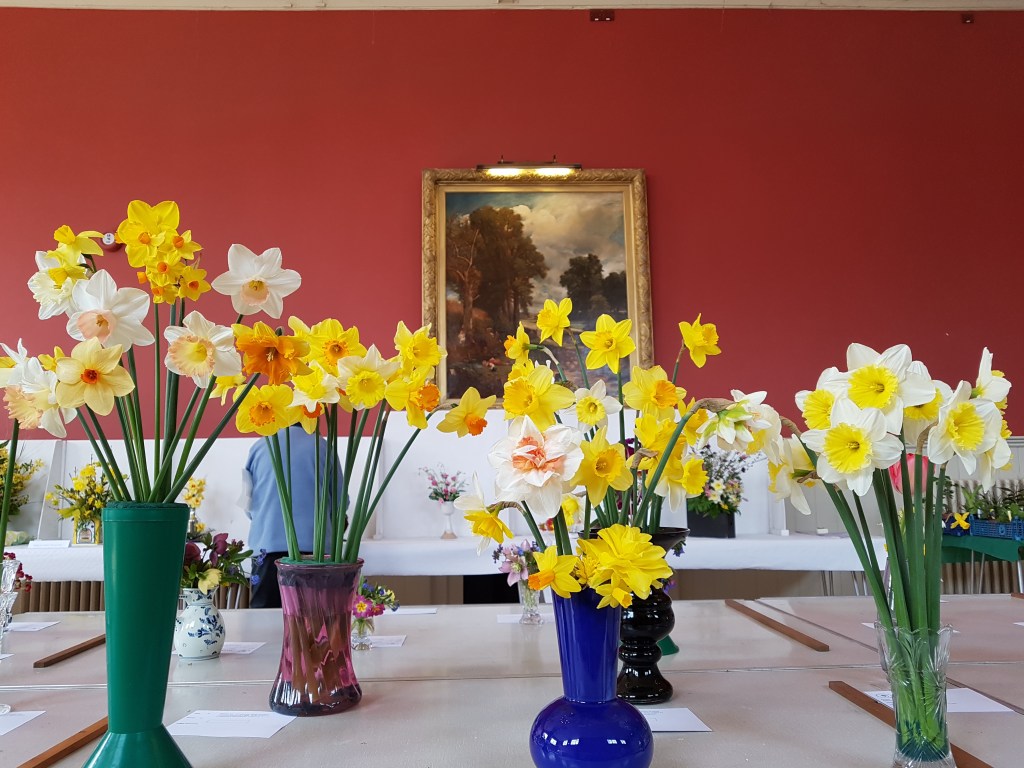
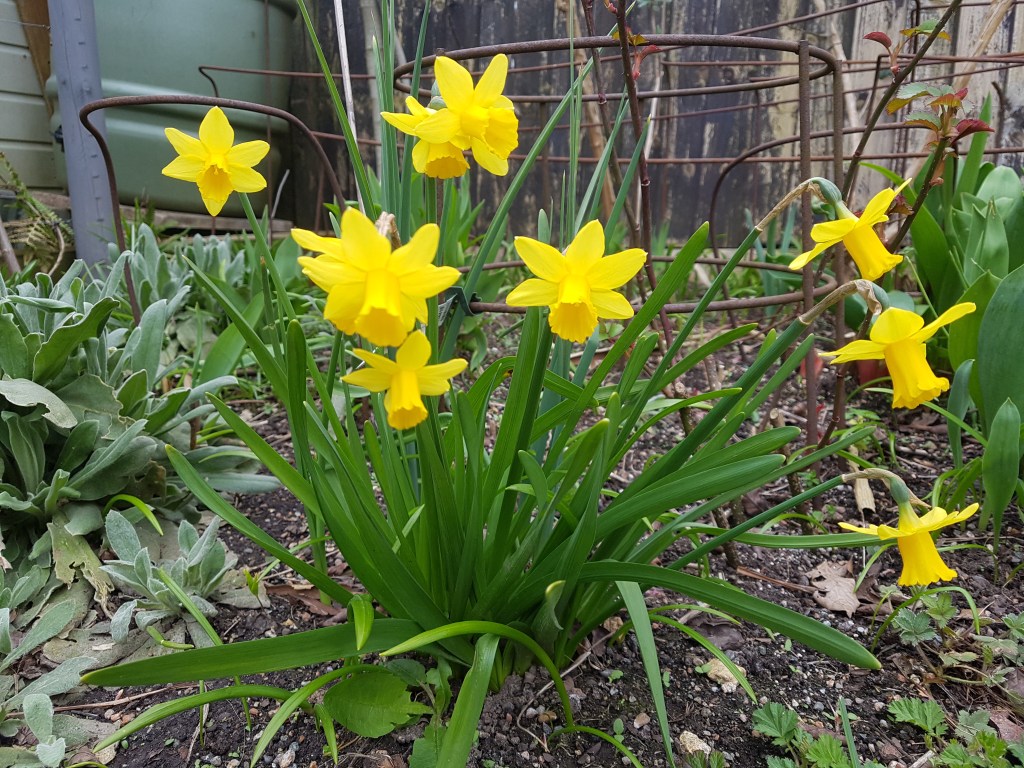
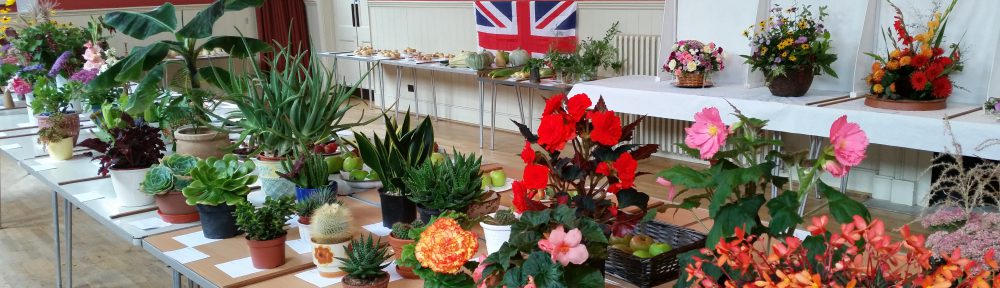
Along with tulips come good old daffs (properly called narcissi) and, if you’ve ever exhibited at or visited our Horticultual Society’s Spring Show (on 9 April, check the website for the schedule) you’ll know there a huge range of cultivated varieties in different shades of yellow, white, cream, even orange and peach.

Daffodils at our Spring Show

Coming back year after year, trumpet and large-cupped varieties provide a shape that’s most familiar, but there are also perfectly formed miniatures, doubles (doubled flowers, not two or more flowers on a stem, which is different), or the poeticus or ‘pheasant-eyed’ with clear white petals and an orange-rimmed yellow cup. There are also the odd-looking Bulbocodium, which are so weird they can only be worth growing for novelty value.

I could go on: there are plenty of other bulbs to choose from like Hyacinthus orientalis (powerfully scented and often ‘forced’ for Christmas displays); deep blue Muscari or pale blue Camassia; architectural alliums (you can keep the flowerheads for winter but mine have usually broken off by then), and the bells of fritillaries (snakes’ head, crown imperial, Persian and more).

Whatever your favourites, remember that a bulb’s foliage feeds it for next year’s display, so let it die back naturally rather than cutting it off. If you need the space, you can dig them up and plant them somewhere out of sight.

Spring is sprung

The official start of spring, March sees the garden getting into its stride as the clocks go forward and days get gradually longer. It’s a great time to be outside but remember it’s still early and there’s plenty of opportunity for frost and other bad weather to undo your work.

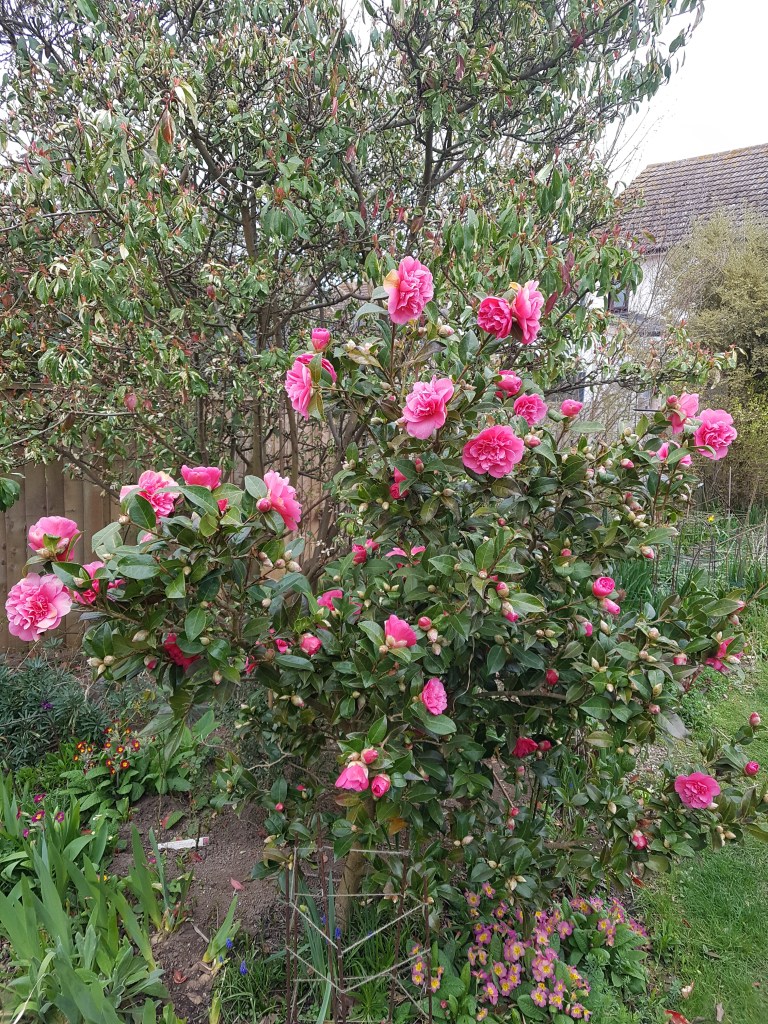
Camellia japonica

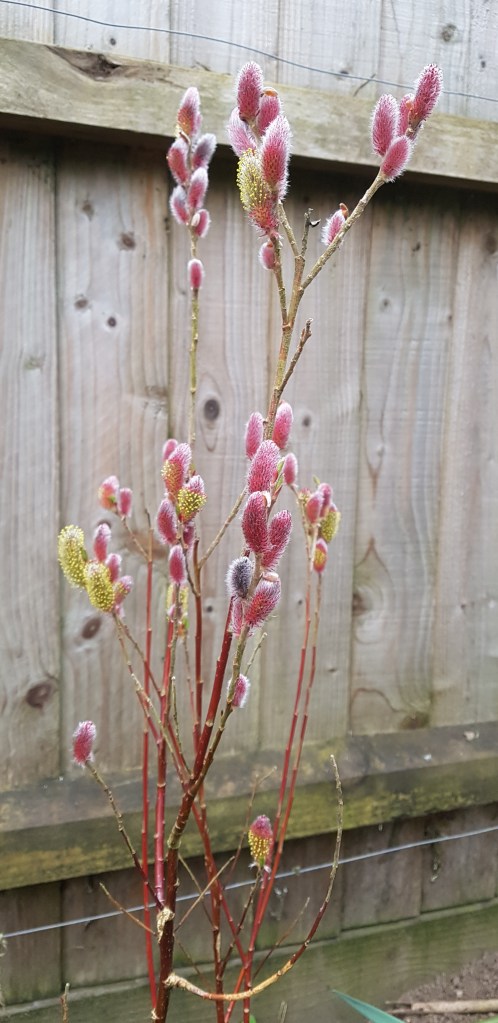
Around the garden, I see pink Camellia japonica, flowering currants (Ribes sanguineum) and even pink pussy willow (no I’m not sure why either), spring-flowering heathers (I grow pink and white Erica carnea), trailing Aubrieta in deepest pink and purple, Clematis montana, a range of hellebores, primroses, and a rainbow of bulbs. There’s blossoming Amelanchier lamarckii and apple trees in the borders, and more shrouding tree after tree on village walks with the dogs.

When I’m not standing around marvelling, chances are I’ll still be clearing the beds, scattering some general-purpose fertiliser and mulching with 2-3 inches of homemade compost (mm-mmm, gooood). There’s rarely enough compost to do every border though, so I rotate through them but half the job is trying to remember which ones get to benefit each year. The compost will be taken down by the worms and other crawly things to return nutrients, lock in moisture, improve soil structure and (in theory) suppress weeds. Plus it makes the beds look amazing.

Some of my spring bulbs have gone over now and as I’m mulching I snap off the seedheads so the plants focus all their energy into growing their bulbs for next year. If bulbs are your thing, spring is the time to plant some summer-flowering ones. If you follow these columns (back issues available online), you’ll know I do like a lily and you can plant all kinds and colours – several of them strongly scented. But if you do, be prepared to pick off lily beetles so they don’t destroy your plants.

If you lifted dahlia tubers for winter protection, pot them into fresh compost now and put them in a light, frost-free place (a cold greenhouse is fine, maybe a cold frame) to bring them into growth. They’ll reward you with bigger plants and earlier flowers.

Plant the tubers shallowly so their tops are just showing and keep them well watered. As they start to shoot, I’m going to take cuttings for the first time and try to raise new plants for free. Let the shoots reach about 8cm in length, then use a sharp knife to cut just where the shoot emerges from the tuber, below the lowest pair of leaves. Pinch out the tip and take off the leaves from the lower half of the stem, before dipping in rooting powder. Each cutting goes into its own small pot, in a warm bright spot away from direct sunlight.

Cuttings not your thing? Try seeds! You can direct sow hardy annuals – like poppies – now into weed-free soil: there is a wide range of poppy colours from delicate pastels to deep jewel tones, but all like to grow where they are sown and resent being moved. You can also try half hardy annuals, like Cosmos bipinnatus in colours from white to deep pink and red. I like the tall white ‘Purity’, but have never had much luck growing them early; someone who’s a bit of a Cosmos expert plants his late (entirely by design, of course) and gets strong plants quickly and in plenty of time for the summer and autumn border. Whatever you’re planning on doing, I hope the weather stays fine for you this month and you enjoy the chance to be in the garden.