
Last month, we hosted our annual Autumn Horticultural Show at the Assembly Rooms. It was great to see so many people – members and not – entering exhibits, despite the challenging weather conditions. All that dry, sunny weather is wonderful for lounging around with a cool glass of something (what do you mean you didn’t?), but after several weeks of it many of my plants were feeling very sorry for themselves.

We welcomed a few new exhibitors this year who I hope enjoyed it and discovered that ‘growing for show’ needn’t be difficult. You can easily grow something in a container if you don’t have a large garden – there are many dahlias that are made for that – or sow a range of annuals or nurture your favourite rose. We post a selection of photos on our website so you can take inspiration from past exhibitors.
Now is the time to think about planting bulbs – if you are, why not plan ahead for our Spring Show on 1 April 2023. The list of classes isn’t out for a few months yet, but there is always plenty for daffodils (narcissus), as well as opportunities to exibit your tulips, hycainths and other spring bulbs and flowers. If flowers aren’t your thing, do think about showing us your cooking, flower arranging or photography instead. It’s completely free to enter!
If you have a couple of largish containers, try making a bulb ‘lasagne’ now. You could plant layers by size of bulb with large daffodil bulbs at the bottom and smaller crocus higher up. Or plant by flowering period, so later flowering varieties at the bottom and early ones above: there’s snowdrops and crocuses in February, daffodils in March, tulips in April and alliums in May – all full of colour when not very much else has gotten going.
If you’re planting a container of bulbs in October, bear in mind that it’s usually better to plant tulips later in the year (November to early December) when the colder weather gives protection from tulip fire.
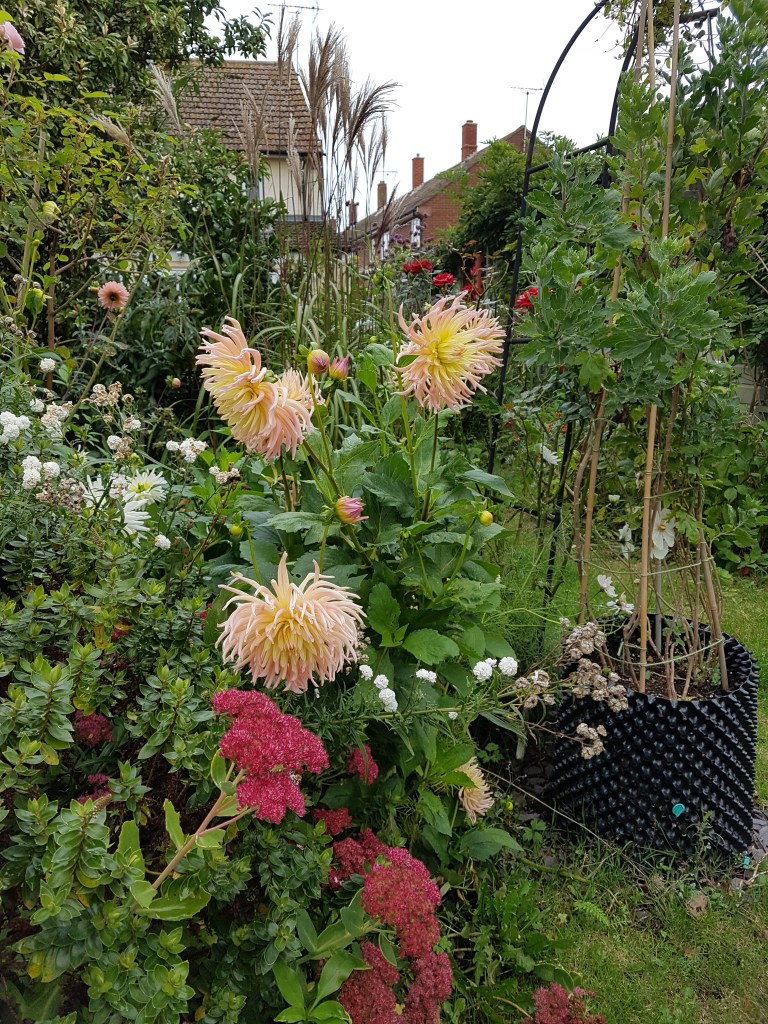
While you’re in the garden, as temperatures drop, think about lifting tender plants. I’m still deadheading many dahlias through October but as the first frost blackens the foliage, I’ve started lifting my favourites. Although my soil is quite well draining and they usually make it through winter if I leave them where they are, lifting means I can start them off earlier in spring, take cuttings to make more plants, and – if we have a summer like this one – might get them into flower sooner. I leave cannas in the ground, chucking a bit of mulch over them and hoping for the best – but they often don’t flower.
Those of you growing large banana plants or tree ferns, will no doubt be thinking about wrapping them to protect them from frost.
With some rain in September, this month is a chance to look after the lawn (hopefully now that it’s starting to green up again). Start by raking leaves off the grass – you can put them in bags to make leaf mould or just chuck them on the borders to break down into the soil. If you’re looking for a bit of a workout, use the spring-tine rake to scarify the lawn, scraping out layers of thatch and moss: it will look a mess but lets air and water get to the roots of the grass, as well as improving drainage. If it sounds too much like hard work – you can get powered scarifiers too. Raise the blades on your mower slightly and give the lawn a final cut towards the end of the month. Then finally, apply an autumn feed which builds stronger roots and helps protect over winter.
 Dedham Horticultural Society