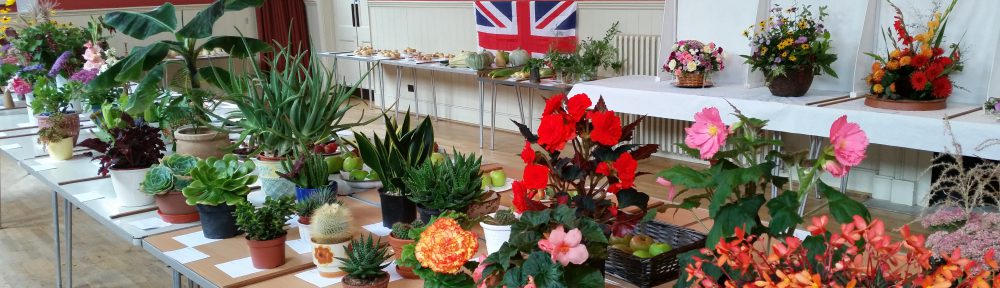
On Saturday 1 April (yes, that day), Dedham’s Horticultural Society brings its Spring Show back to the village’s Assembly Rooms.
There are five areas in which we encourage you to exhibit and, like the autumn show, a range of classes – so it’s a perfect chance to show off some of your spring plants. It’s free to enter, a lot of fun and a great way to get to know some of your fellow growers, cooks, arrangers and photographers. Even if you think you don’t have a green thumb (try anyway, you might be surprised!), there are other options.
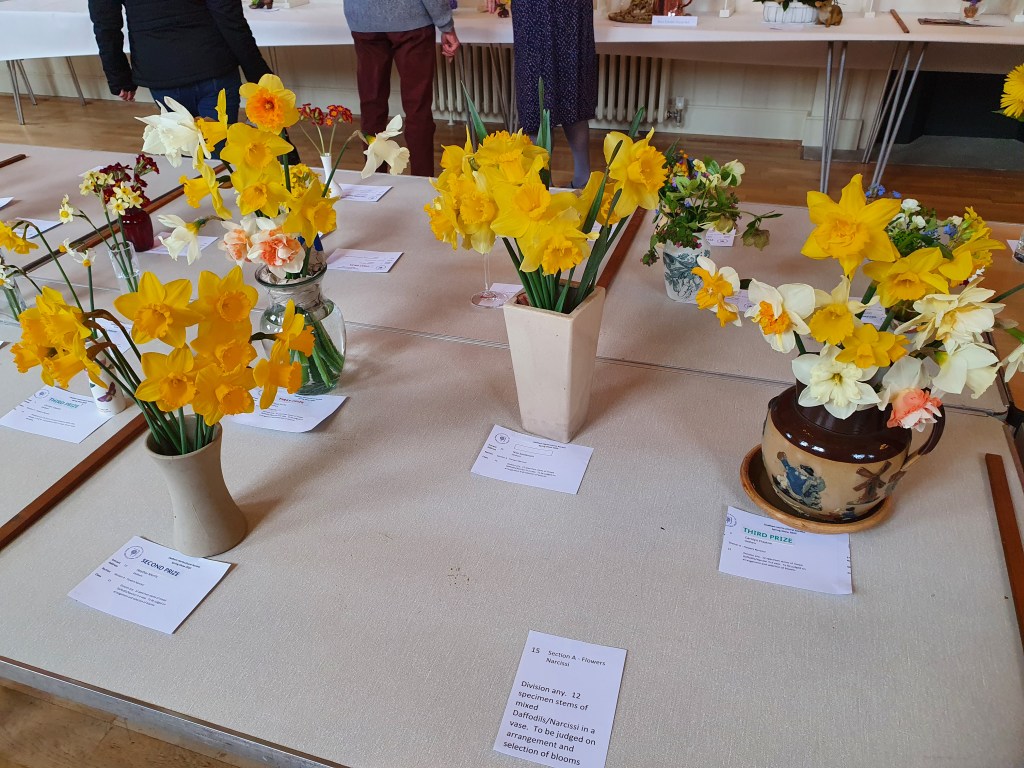
Spring is our daffodil show – just as it’s dahlias in autumn – but while there a couple of dahlias classes I’d recommend to anyone new to showing, there are many more daffodil classes you can enter and you only need one or three of a kind. Perfect if you have a limited number of plants from your garden, containers or window boxes.
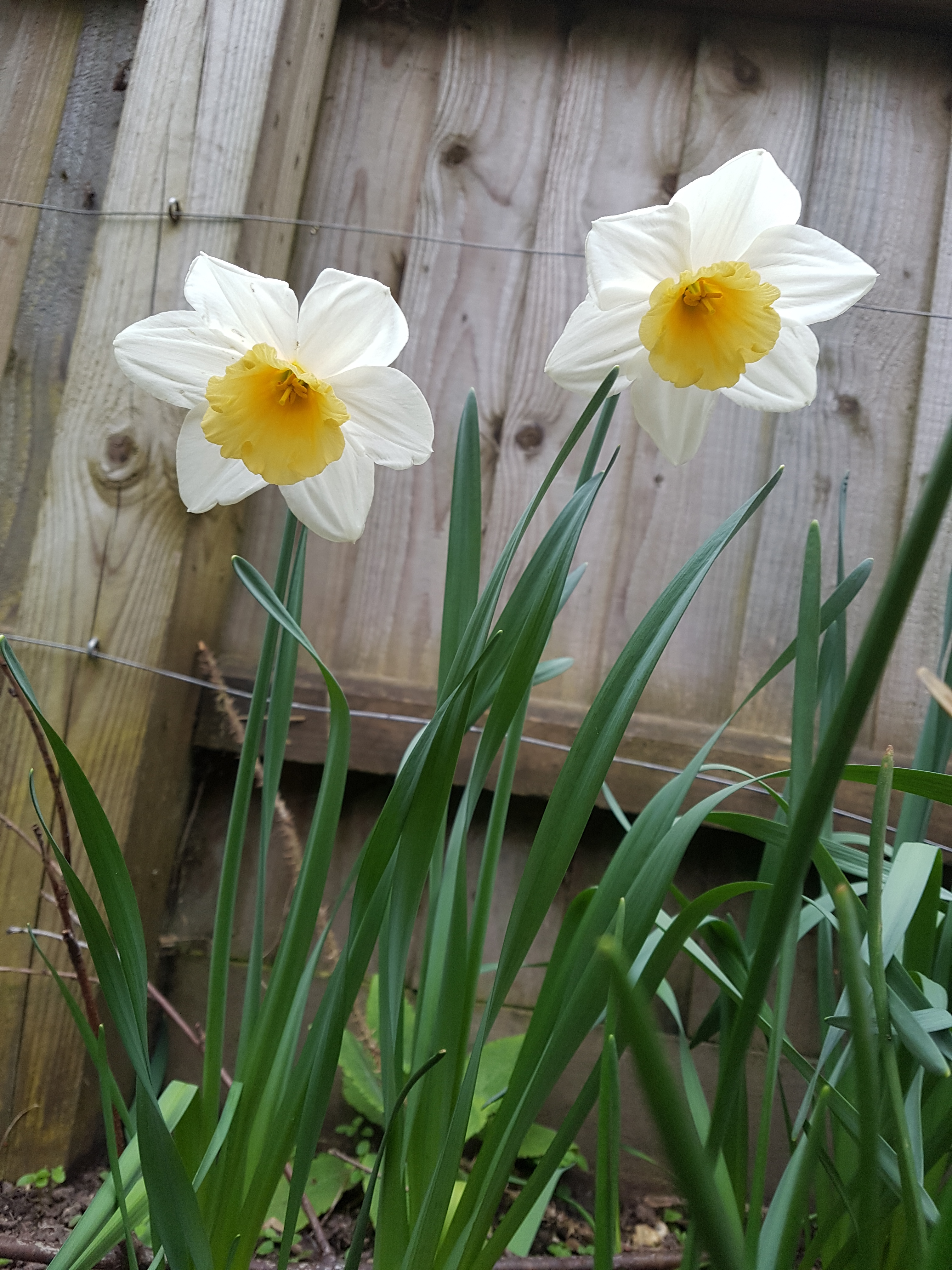
The key to entering is knowing what kind of daffodil you have as the wrong daff in a class will be judged NAS ‘not as standard’ and disqualified. Yikes! We post examples of how daffodils are formally classified on our website and you can find the classification system on the website of the UK’s Daffodil Society too.
The trumpet daffodil, for classes 1-6, is the one we’re all most familiar with. You can check whether you have one by gently folding the petals forward over the long trumpet (sometimes called a cup). If they are shorter than the trumpet, then congrats you have a trumpet daffodil. Choose one of the classes based on colour and whether you have enough identical-looking flowers.
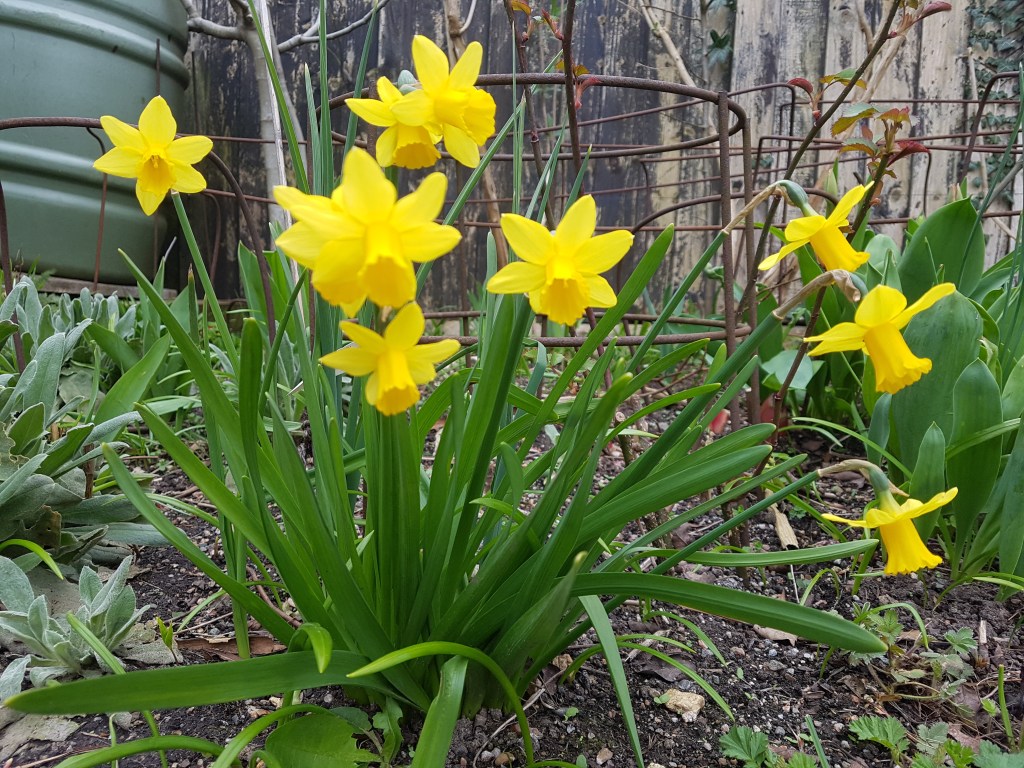
Tulips are another good cut flower to enter, though class 17 – three stems in a vase, one variety – is, I think, harder than the other two as each flower needs to look identical. The others just need you to plonk one or five of any tulip into a vase.With miniature or small bulbous plants (class 20), tulips and most daffodils are excluded by their size, but you can include miniature daffs like ‘Tête-à-tête’, Iris reticulata, snowdrops, crocus (if they haven’t gone over already), Chionodoxa luciliae, the snake’s head fritillary, grape hyacinth (Muscari) and Scilla siberica.
Apparently, dahlias grown from new cuttings make better exhibition-quality plants than those grown from older tubers. So if you’re getting serious about our autumn show, you can start making cuttings from any tubers you lifted and stored ahead of winter. Take them out of storage and pot them up in multi-purpose compost with the old stalk just above the surface. Give them a bit of water and put them on a warm, light windowsill or in a propagator. Once the resulting shoots are about 8cm long, use a sharp knife to carefully cut them free. Dip them in hormone powder and push them gently into a pot of compost and use a propagator or plastic bag to encourage rooting.
If spending March planning for the show doesn’t float your boat, then I expect you’ll want some work to do in the garden instead. I’ll ease you in gently with a bit of cutting back of some ornamental grasses.
Take deciduous Calamagrostis and Deschampsia back to ground level before growth starts. You can do similar with pampas grass (Cortaderia selloana), just watch out for new growth and protect yourself from the sharp edges of their leaves. Tackle Miscanthus towards the end of March or in April, pruning individual stems so you don’t accidentally cut off new green shoots. Pennisetum should be done in late April as the old stems protect the crown if spring is a wet one.
Whether you’re cutting back pampas or planning to show, it’s time to enjoy the garden as spring arrives.
 Dedham Horticultural Society