Well, what a March it’s been. One of the jobs for April was going to be “protect fruit blossom from late frosts” but frankly I’ll be amazed if March’s weather hasn’t put an end to any early spring blossom and – as a result – the potential for fruit to come. Luckily, one thing I can enjoy this month are the tender pink stems of my forced rhubarb; yum.
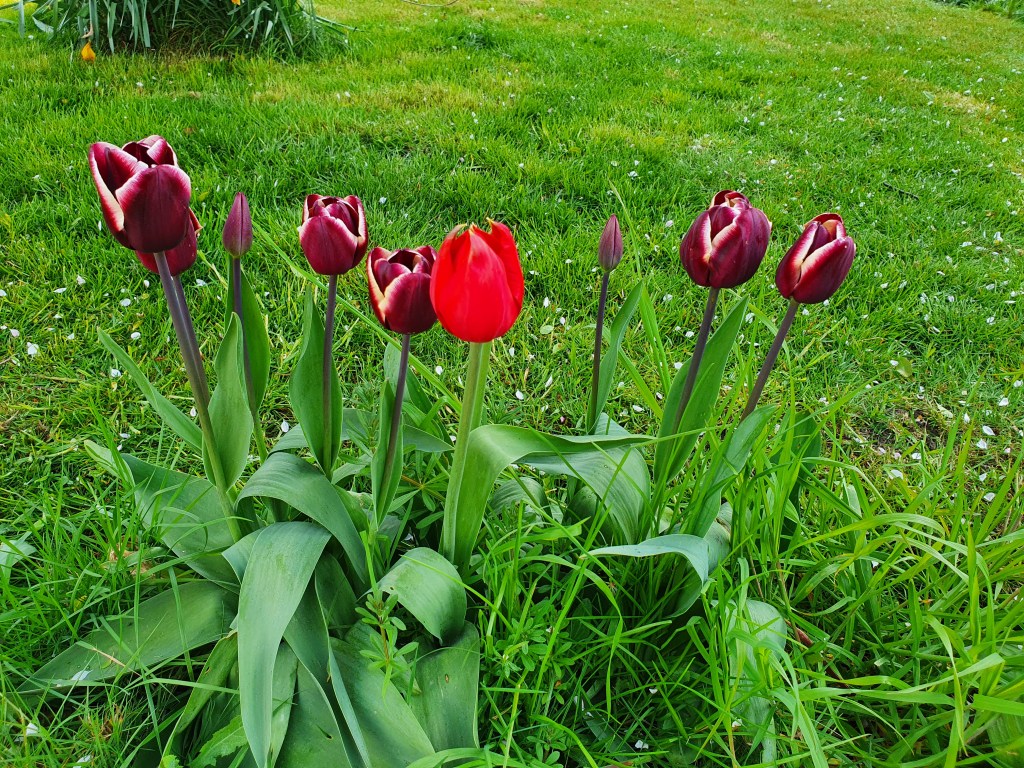
1 March may mark the start of meteorological spring, but you and I know that the season doesn’t really get going until this month when the clocks have changed, the days are noticeably longer and the ground is warming up. April also means tulip-time (it’s a proper thing, honest) and – as much as I’ve being enjoying the colour-pops of yellow daffs through March – I love the rich range of colour that tulips bring more.
But on to the work.
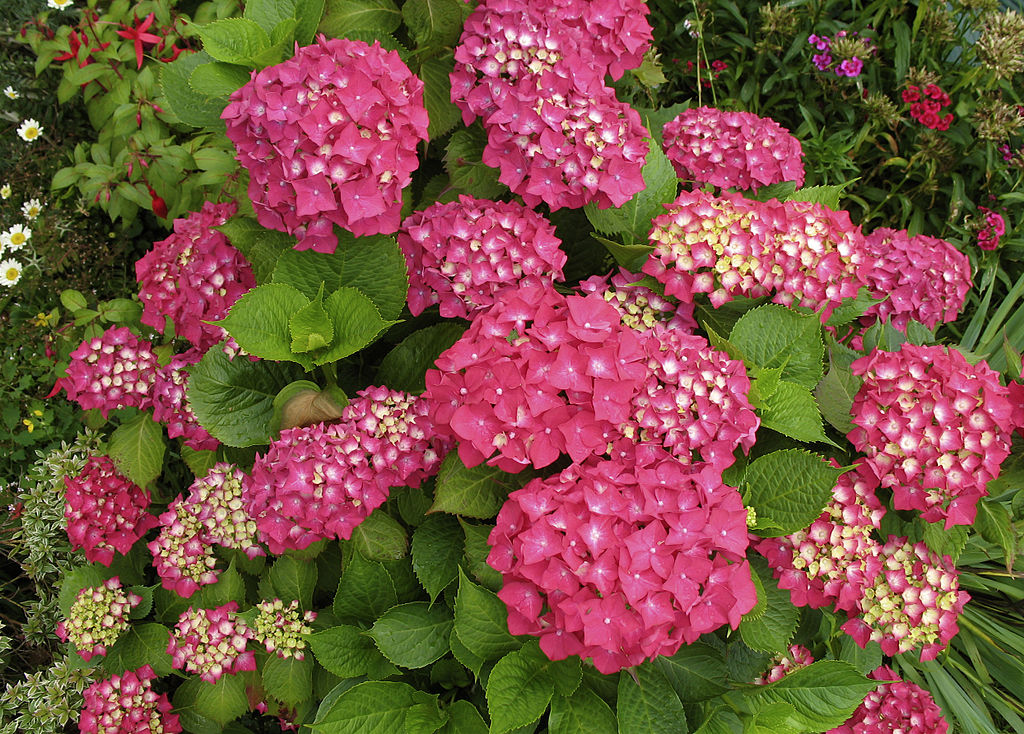
I’ve never had much luck with hydrangeas, even though their earlier name, Hortensia, suggests to me that any home is much the poorer without one. And they’re certainly spectacular.
If you’re not familiar, there are several kinds and early April is a good time to prune the lacecap and mophead cultivars of Hydrangea Macrophylla.
Macrophylla flower on the previous year’s growth and it’s best to leave cutting back until this point in the year. As well as looking nice when frosted over winter, leaving the old flowers until spring will help protect stems and new buds. This month though, you can carefully cut off the old flowerheads just above a pair of buds. You can also remove any weak stems, and maybe a couple of the very oldest, to make room for new growth from the base.
This is also a good month to direct sow the seeds of hardy annuals like sunflowers, nigella and nasturtiums, calendula, Californian poppies and cornflowers. It’s probably a good job that they’re hardy in case April or May brings more cold weather. We all know it’s not beyond the realms of possibility.
Just sow seeds straight into the ground on a dry day. Rake your soil to a fine texture first which will help the seedlings break through and reach the light. Make sure you remove weeds as they usually grow faster and will compete with the plants you actually want. If you sow in straight lines – while it won’t look very natural – it will be easy to see anything that grows outside the lines and is therefore likely a weed seedling. Water the seeds in well with a fine rose on your watering can, so you don’t wash the seeds all over the place.
Elsewhere in the garden, look for fresh new buds on slightly tender plants like penstemons and lavender. Ideally the buds will be as low down on the plant as possible to keep the plants from getting straggly. The advice now seems to be to prune these plants in spring instead of autumn, once the weather and temperatures have improved. I still trim the flower stalks back in August but save the reshaping prune until now. You can treat sage and rosemary the same.
Our plant sale is on Saturday morning, 13 May, outside Dedham church (mark the date in your diary now!) and we always welcome any spare plants you don’t need. Now is a great time to make new plants (for you or us) by dividing perennials like lemon balm and chives, hostas, asters and daylilies. You might need a sharp knife, two forks, a sharp spade or saw to do it (this is often not delicate work), but just make sure that each division has roots and shoots. Dividing plants also refreshes older plants, helping them grow away more strongly.
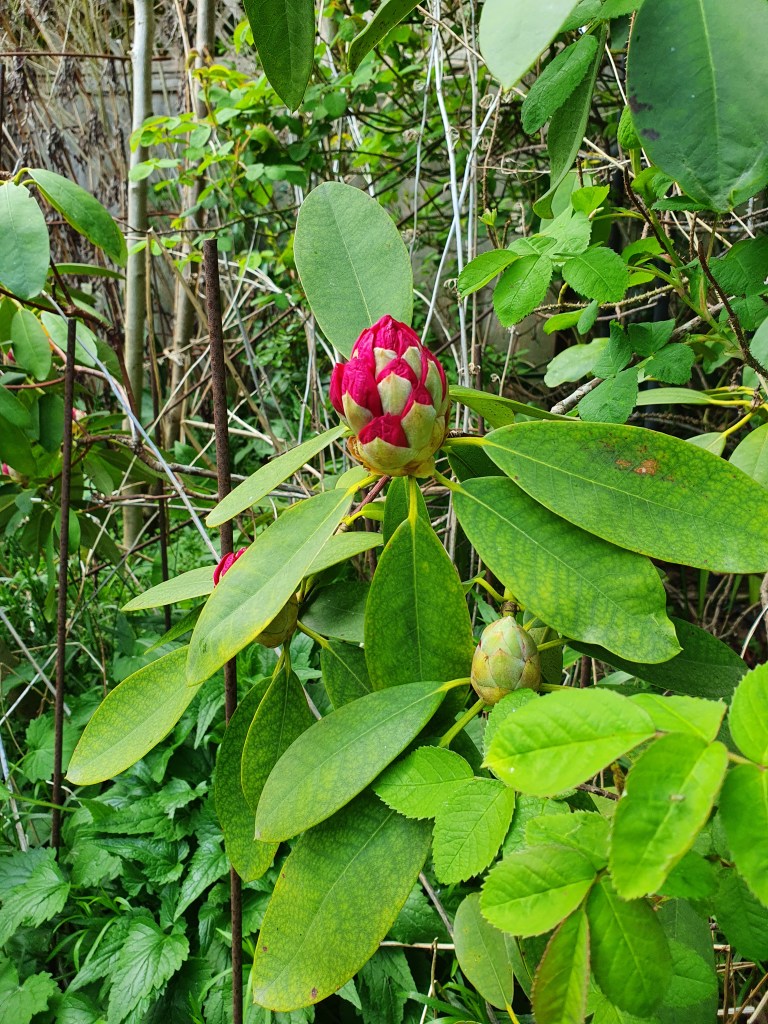
Finally, we can still mulch beds and borders now and it will help keep in the moisture from wet March. This could be especially important around rhododendrons, azaleas and camellias which will suffer bud drop if they get too dry over summer. My camellias have definitely been affected by last year’s hot, dry weather as flowering isn’t anything like as spectacular as normal. I’ll make sure to use an ericaceous feed on these plants, as well as on the blueberries I grow in pots to give everything a boost this year.
With spring definitely well underway now, I hope you’re looking forward to extra time in the garden.
 Dedham Horticultural Society