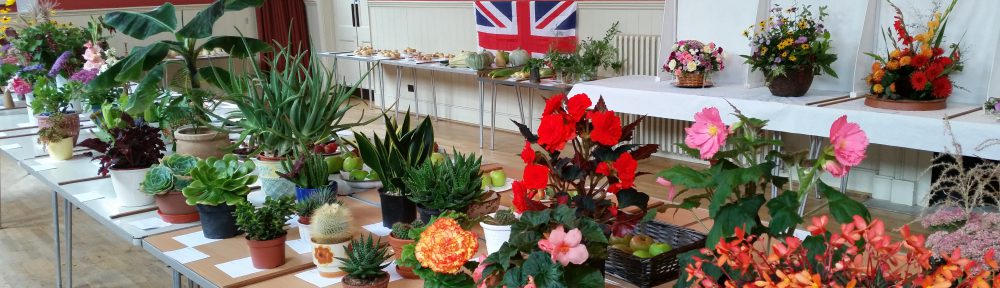
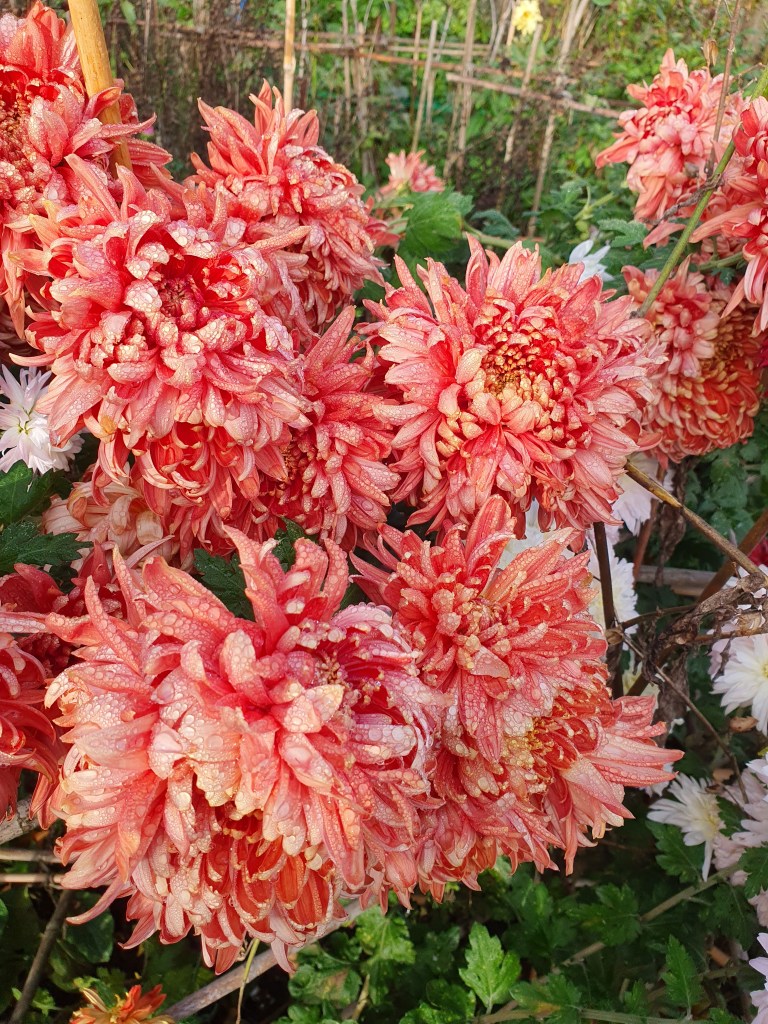
Okay this month’s title is stretching the limits of punnery but, as temperatures continue to drop putting tender plants at risk and bedraggled chrysanthemums offer the last of the colour, we can enjoy (yes, enjoy!) fresh air and exercise while packing away the borders for winter and laying the groundwork for spring.
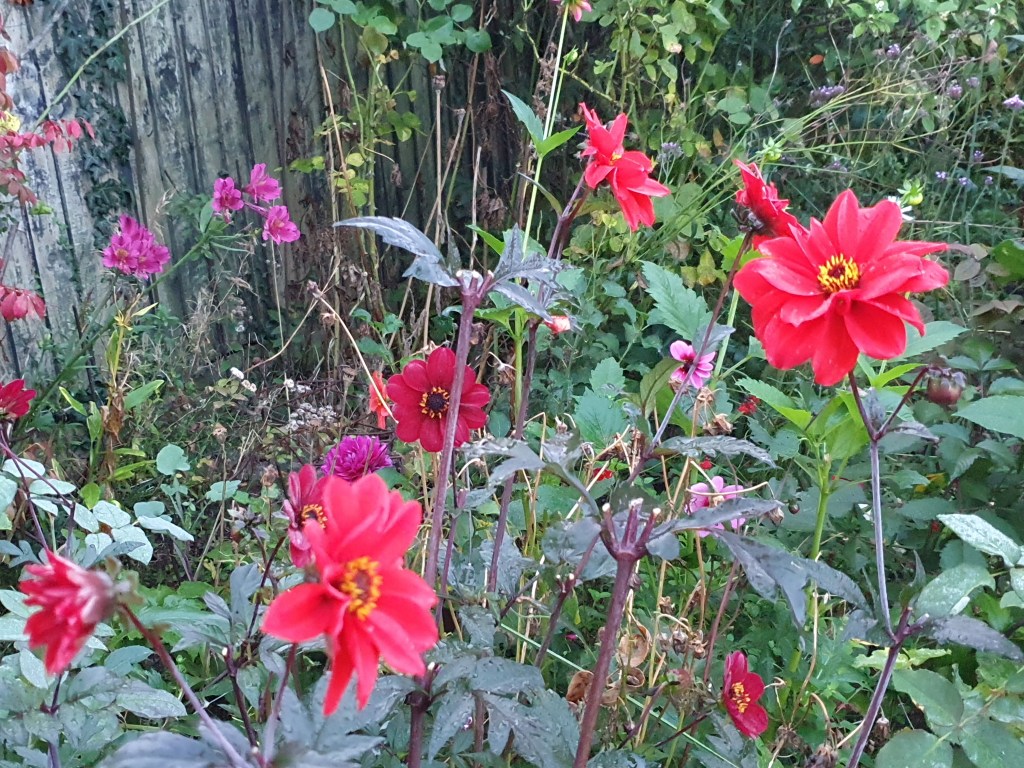
Squats first as I move from border to border lifting the (way too many) dahlias I’ve planted this year. As well as a few new ones bought online (I’m loving flowers of the single red Bishop of LLandaff and the glowing cerise-purple, semi-double Bishop of Canterbury, planted in large groups among Mexican Star – actually a cross with Cosmos atrosanguineus), I’ve also grown a range from seed.
This has thrown up a lot of ordinary colours, as well as some really beautiful ones that I’ll be labelling and sorting for next year.
We will have had the first frost by now, which has blackened the tips of the foliage but shouldn’t have descended too deeply into the soil so the tubers will still be protected. I don’t lift all my tubers – the soil in the raised beds on the allotment is very free draining so they’re usually safe from the combination of cold and wet that will rot them.
The ones I lift will get hosed off to remove as much soil as possible and left to dry before I store them wrapped in newspaper in a frost-free place over winter. To protect those in my garden borders, I’ll chuck a bucket of compost in a molehill over them and hope for the best – it’s surprising what they’ll get through.
Once lifted, it’s time to (p)lunge – alright, I’ll stop – new tulip bulbs into the borders to fill the gaps I’ve made. November is a great time to do it: most of the other bulbs should be in by now, but tulips are better added when the weather is colder to protect them from the fungal disease, tulip fire, which produces brown spots and withered, distorted leaves.
Although the choice might be more limited, you can get some great bargains in December and January and even when planted that late, they’ll still flower well and in time for spring.
There are many types of tulip (almost as many as there are of dahlias) and the best type to come back year after year are Darwin Hybrids with their traditional goblet shape on strong stems. Over time though their flowers will get smaller and make less of an impact, so I keep them topped up every year.
Although it’s very weather-dependent, Single Early and Double Early tulips tend to flower first as early as March, they’re followed by the Darwins, Parrots, Triumphs and others, before the late-flowering singles and doubles in May.
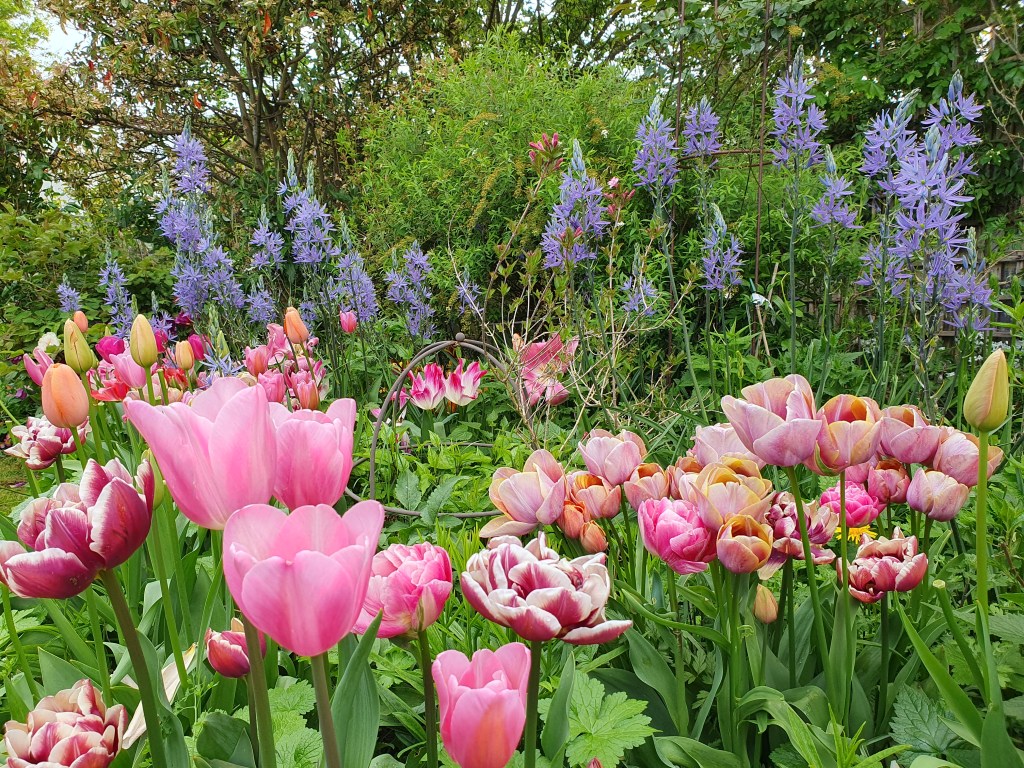
I plant a mix of the different types in large groupings so as one type fades it is followed by another. In one of my borders, double and single blooms in pink, peach and apricot complement the blue Camassia leichtlinii ‘Caerulea’ in May.
I plant them deep – at least three times the bulbs’ size – which can encourage stronger stems and make them more likely to flower in subsequent years (I’ll let you know in March what this year’s display is like).
I had some of my grass paths replaced with brick this year and have taken the opportunity to widen some borders for more plants. The wetter, frostier weather can make them slippery, so I’ll follow Monty’s idea to brush some sharp sand onto them to try and stop me breaking my clumsy neck when moving about the garden.
What lawn remains is now a small, brick-edged semicircle that I think I might be able to maintain and possibly bring to a beautiful green swathe by summer. Possibly. The road to getting there starts now, trying to squeeze in a last mow with the blades raised high if the weather is still mild, which will help to deal with any annual weeds. I’ll try to dig out dandelions and other perennials and aerate by stabbing a garden fork around and levering it back and forth a little.
 Dedham Horticultural Society