At last, it’s March and a great time of year for me. Although shrubs were budding up and daffodils were putting the heads above ground in the first week of February, everything starts to really get going this month. It’s officially Spring, the clocks go forward, and the days are getting longer – even Easter is early this year.
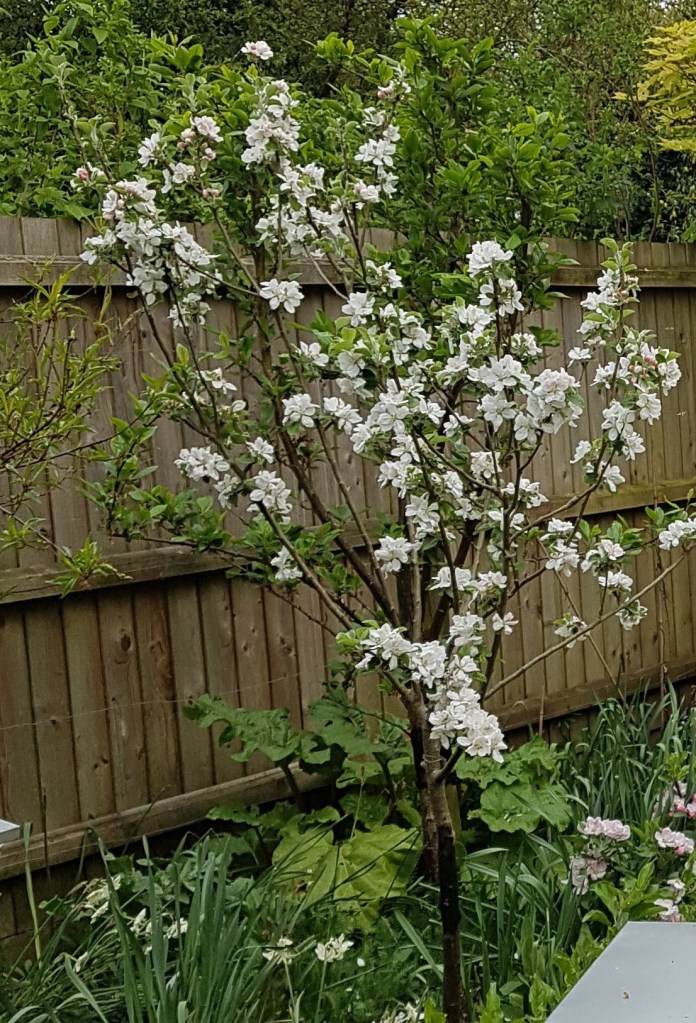
By March, most of the spring bulbs are coming up around the garden and when the weather is sunniest bees will be on the crocus. There might be a bit of early apple blossom in the mini-orchard and there’s plenty of vibrant, fresh greenery emerging.
That emerging greenery is going to be vulnerable to slugs though and it’ll be necessary to go on the attack before they get out of control. While I’m not obsessive enough to be out at night with a torch picking them off my plants, I do want to protect some of my favourites (plants, not slugs). I chuck molehills of grit over my delphinium plants and will remove as much decaying foliage and leaf litter as possible from around them. Nematodes will also do the job if the soil is warm enough.
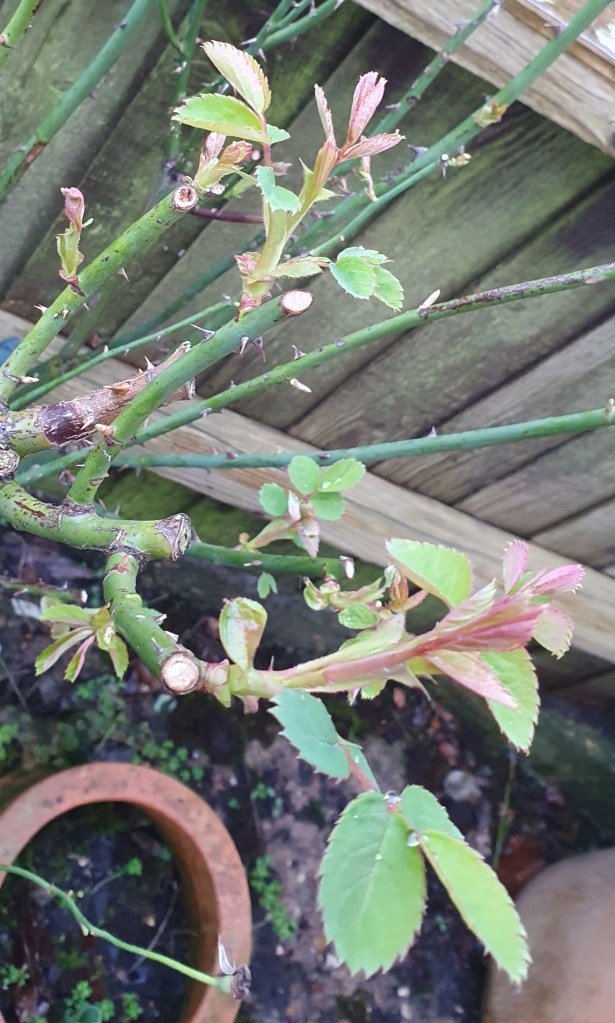
I’ll finish the rose pruning I started in February now that new growth is starting to unfurl on my modern shrub and English roses, bush roses and climbers.
I’ve plenty of the vigorous, repeat-flowering plants that are classified as modern shrub roses including stunning pink ‘The Ancient Mariner’ which is a good 7ft with a definite structure of sturdy stems and is used almost as a divider between parts of my garden. I also have the purple, heavily-scented Gallica ‘Cardinal de Richelieu’ in my front garden. I leave most of their framework in place as a hard cut back will encourage more leafy growth at the expense of flowers.
Bush roses include floribundas and hybrid teas like gorgeous red ‘Deep Secret’, and flower on new growth made in the current growing season. I’m always nervous about cutting these down hard (especially where I’ve lost the label and am not convinced I’ve identified the right kind of rose) but will experiment a bit this year to see how well they recover.
Finally, I’ll tackle the ‘Claire Austin’ climber on the front of the house, tying in long stems to their wire framework and cutting back sideshoots to one or two buds. Tying the long stems as horizontal as possible will encourage more sideshoots and more flowers. I’m sure I’ll come away from the process looking like I’ve lost a fight with a particularly aggressive cat, but it’ll be worth it.
When pruning, be brave (even if you’ve lost a label – they’ll recover) and use sharp secateurs to make a sloping cut above and away from an outward-facing bud to keep an open-centred, goblet-shaped plant. Remove dead snags and thin, twiggy stems as well as stems that are growing across one another and might rub.
Leave rambling roses until after immediately after they’ve bloomed in the summer, but every rose will get away better with a granular feed after their spring pruning.
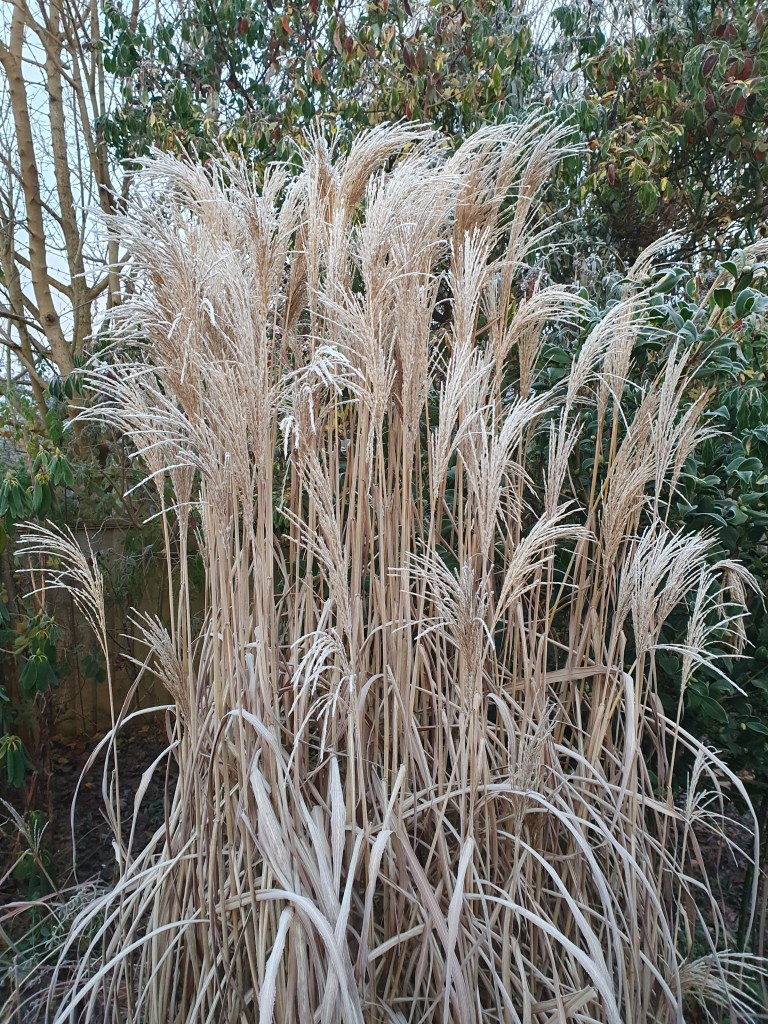
I love my ornamental grasses and their tall fronds have given a fine display over autumn and winter. However, now’s the time to cut back the deciduous miscanthus hard to the ground before new green shoots grow too long. Although I don’t grow any, evergreen grasses like stipa should be combed through with a rake or your hands (wear gloves) to pull out the dead growth.
On the allotment, I’ve already put forcers on a couple of my rhubarb plants and will now chuck some chicken-manure pellets around them all and mulch with compost (avoiding the crown) to give them a boost as they get going. I also need to replace one of my rows of asparagus plants which haven’t proven productive. I’ll plant the crowns in a 1ft wide trench, 6 inches deep, laying the roots over a ridge that runs along the centre and spacing them 12-18 inches apart. Then I return the soil to the trench with the tips of the shoots just buried. I won’t harvest these plants for at least a couple of seasons.
I hope you’re looking forward to spring and to being in the garden as much as me.
 Dedham Horticultural Society