May is a great time to enjoy the sight of fresh green fronds unfurling as ferns put on their new growth. If you have a shadier corner and you’re not sure what to do with it, why not give them a go instead of shrubs or flowering perennials? You can always add a pop of colour at this time of year by planting alliums among them. A fine-looking but low-maintenance option, they need little more than a quick tidy up to remove dead and dying fronds in spring to clear the way for fresh new growth.
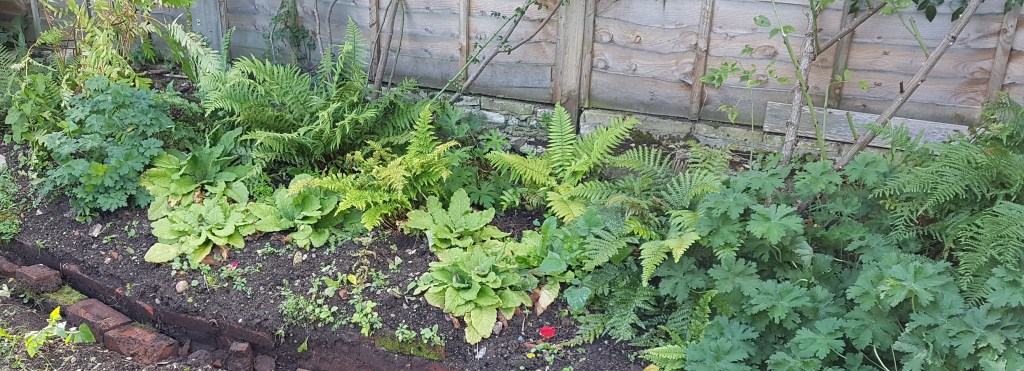
Your fernery doesn’t need to be perpetually damp (though a wider range of ferns enjoy this kind of ground) and there are several ferns that will suit drier shade close to a hedge or trees (Dryopteris – there’s even a clue in the name). The small, delicate maidenhair, Adiantum venustum, likes a sheltered spot, while the shuttlecock or ostrich fern Matteuccia struthiopteris reaches 1.5 metres when given its preferred moist conditions. Ferns come in varying shades of green of course, but your fernery could also include the silver-and-burgundy-flushed Athyrium niponicum or the ‘autumn fern’, Dryopteris erythrosora, which has red new growth that gradually turns bronze.
Now, while all this looks lovely in a certain garden I know, unfortunately very little of my garden is given over to ferns and there’s plenty to be getting on with if I’m going to stay on top of it all.
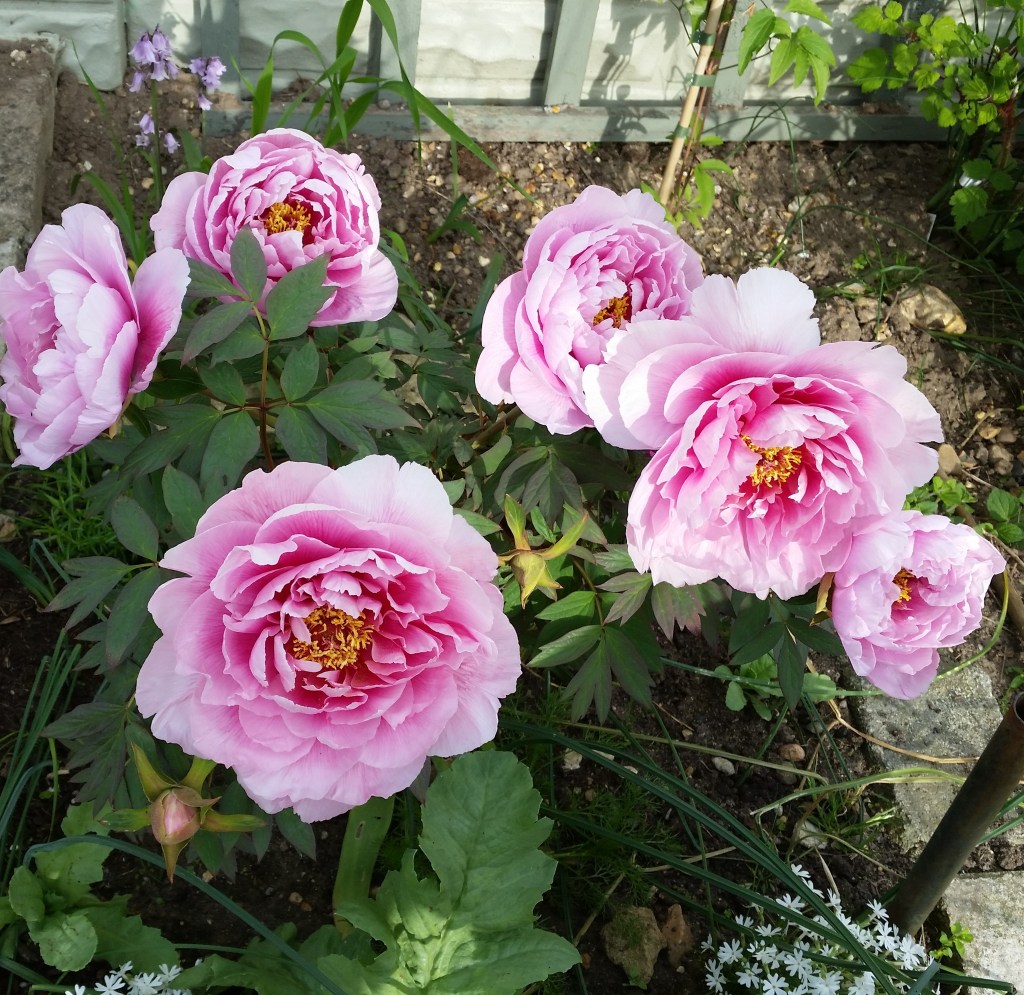
The borders are getting into their stride now with peonies surrounded by froths of sky-blue forget-me-nots. The early bulbs are mostly over now (feed them as they die back for a better show next season) but the violet globes of Allium hollandicum ‘Purple Sensation’ are taking over, reaching up to meet amethyst racemes of Wisteria sinensis. Delphiniums are giving the deepest blue, purple and ultramarine spires but will need careful staking if their heavy heads aren’t to snap straight off.
I put my tomato plants out towards the end of May as the danger of frost passes. I plant them deeply so some of the stem is also buried. New roots will grow from this, resulting in a stronger plant that will stand up better to the weight of the fruit. Tomatoes are great fresh off the vine, but also make a fantastic ‘red and green’ chutney – look out for it entered in our September show (or have a go yourself!).
I’ve a couple of hostas filling their pots and as the leaves start to put their pointed tips above soil-level, it’s a good time to divide them. Just tip them out and saw through the tightly packed root system – a bit harsh but they’ll thank you for it later. Similarly rootbound agapanthus enjoy being be tightly packed but it’s worth moving them into a pot one size bigger every three years or so. I’ll also go round the garden splitting larger clumps of Primula vulgaris and replanting them to fill gaps in other beds and borders.
If you’ve gaps to fill in your garden too, then pop along to the front of Dedham Church on Saturday 11 May for our annual plant sale from 9-11.30am. You can pick up some bargains and we’d love to take off your hands anything from the garden that you no longer need. But if plants aren’t your thing, Mission Bake might be able to tempt you along with their homemade cakes.
Our final speaker evening at 7.30pm on Wednesday 5 June will welcome local gardener Ed Fairey who will talk to us about the History of the National Garden Scheme with a particular focus on Essex gardens. Entry is just £2 for non-members and it’s a great way to get to know more about us.
 Dedham Horticultural Society