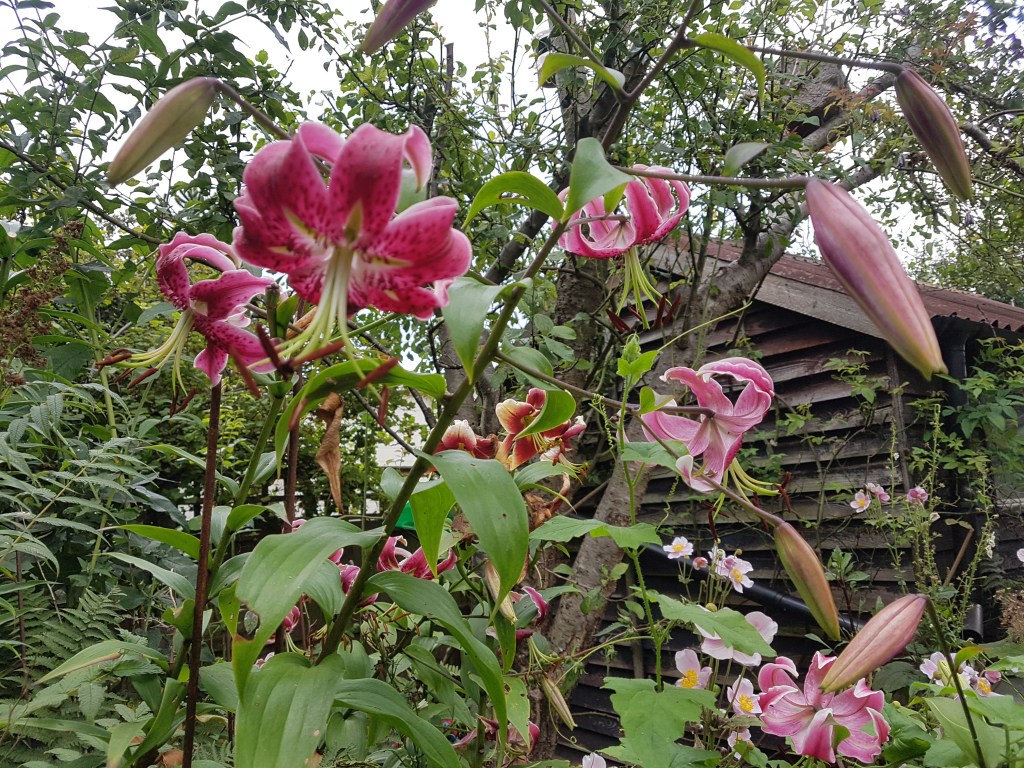
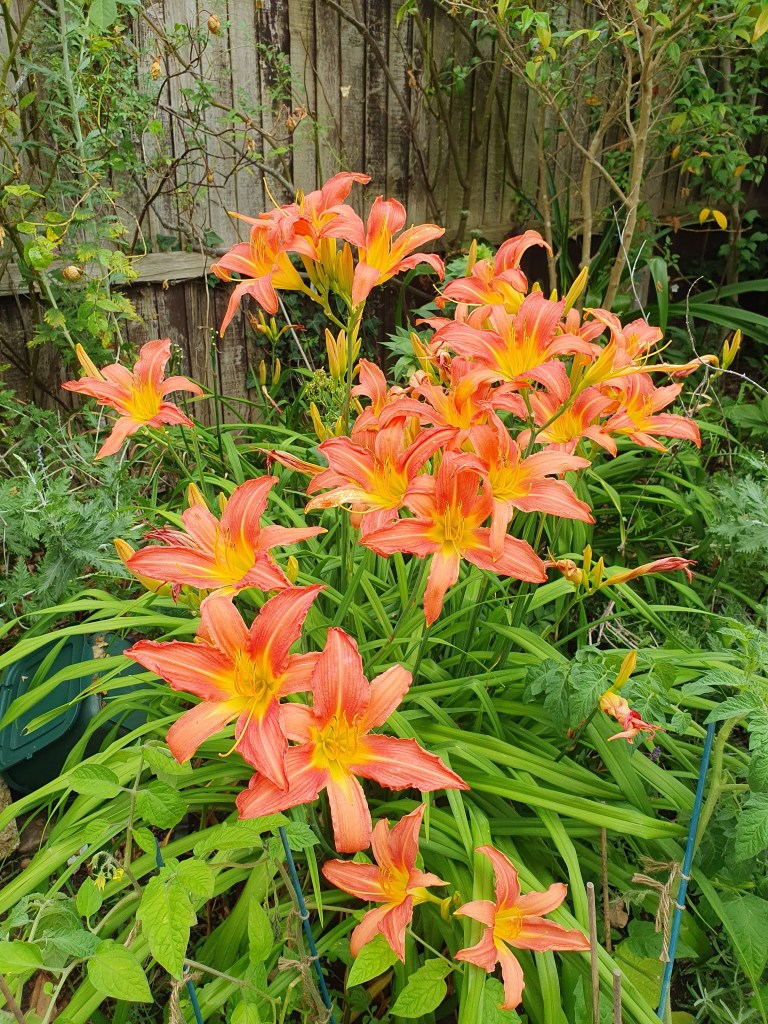
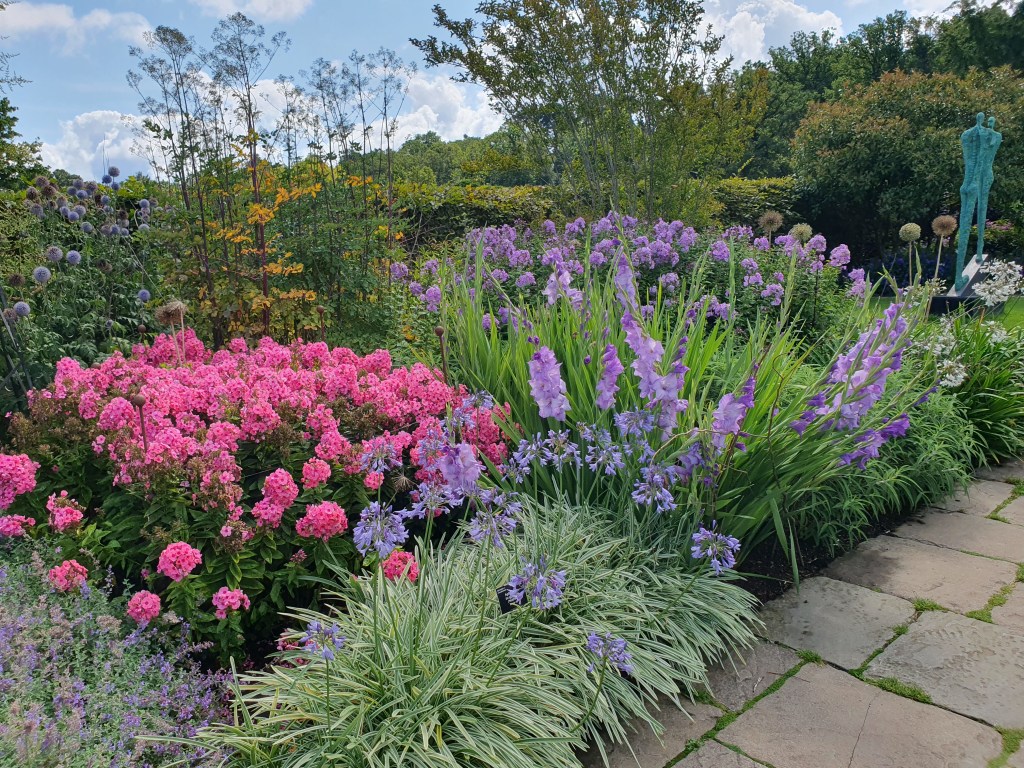
The height of summer in my garden sees the last of the daylilies going over beside the house, while the scent of giant Oriental hybrids on a warm day pulls me deeper into the garden. The borders are flooded with the colour of dahlias that will reach shoulder height by August, contrasting and blending with the second flush of roses, agapanthus, phlox and crocosmia.
On the plot, I’m harvesting raspberries, blackberries and blackcurrants, as well as a glut of tomatoes before the blight can get them. I start off outdoor cucumbers in a window ledge propagator, but they went outside in June and are pretty well established by now. They are trained up cane wigwams and I’ll keep cutting off the sideshoots to two leaves after a flower or fruit. Just like tomatoes, these hungry plants will appreciate a high-potash fertiliser as the fruits form.
Although there’s a feast for the eyes and belly, so much of July and August is also about keeping on top of everything I threw into the borders in spring thinking I didn’t have enough stuff. (Mental memo: must learn restraint.)
It’s time for the summer prune of my wisteria plants now – they’re well established and I’m training one of them over an arch. I’ll keep the whippy tendrils I need to tie in to create the new structure, but the rest of the plant needs attention before the end of July. Just find and cut back any unwanted tendrils to about 15cm (or five leaves) from their base.
A lot of pruning is also taking place in the mini-orchard now as it’s time to give my apple stepovers their summer prune (you can treat apples and pears trained as cordons, espaliers or fans just the same). This will ensure as much sun as possible reaches the fruit to help it ripen, but also maximises next year’s crop as you encourage fruiting spurs.
Look for new shoots that are stiff and woody along their bottom third – they should have a cluster of leaves at the base. Those that are more than 20cm long should be cut back to three leaves above this basal cluster – be careful not to prune shorter shoots as these often have fruit buds. If there are any shoots growing from the sections that remain, I’ll cut these back to just one leaf, while vigorous upright growth will be removed completely (these are stepovers after all).
As I’m going round with my secateurs, I’m also looking for candidates that will make good cuttings. These will bulk up my beds and borders for free or wind up in the Society’s plant sales.
I’ve a lovely tender fuchsia in a pot that I’ve somehow managed to bring through winter, but I’ll take some cuttings now as a precaution. Look for new growth that will root more easily and cut sections about 7cm long from the mother plant. Ideally, they won’t have flowers but if there are small buds, just pinch them off so all the energy goes into producing new roots. Cut neatly below a leaf joint, then remove those lowest leaves and any sideshoots so the cutting has at most two pairs of leaves – you can also pinch out the tip (it’s probably already wilting by now anyway). You can dip the tip in hormone rooting powder but it’s not always necessary before inserting each cutting around the edge of a pot of well-draining compost. Water well and put the cuttings in a propagator or plastic bag to keep the humidity high, then stand in a warm, light place but out of direct sunlight. Pot on after a couple of weeks at signs of new growth.
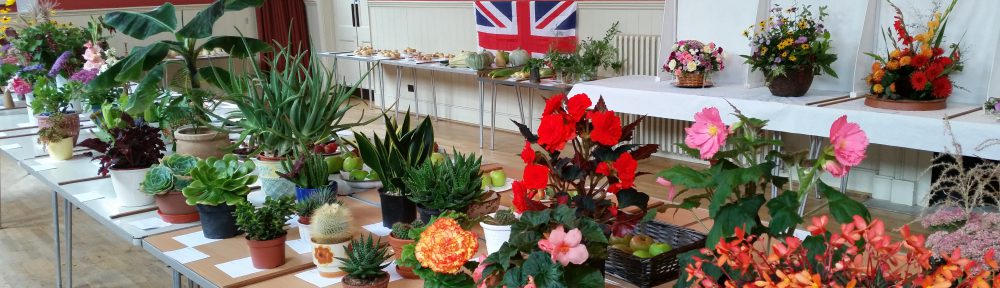
With all this care and attention, your gardens and plots will be looking fantastic, so (warning: unsubtle plug ahead) why not think about showing what you’ve grown in our annual Autumn Show on Saturday 7 September. The schedule will be out soon on the website and it’s fun – just find your best ten raspberries or blackberries, a vase of annual flowers or some stunning dahlias. Who knows how well you’ll do! Have a great summer in the garden everyone.
 Dedham Horticultural Society