As I write this, Dedham has been enjoying a week of gloriously sunny weather (not quite t-shirt temperatures though) and my honeybees have already been working hard.
They’ve been looking for nectar, pollen, water and the means to make propolis. Bees reduce the water content in nectar to create honey, while some is mixed with pollen and honey and ferments to become ‘bee bread’ for developing larvae.
Bees also collect sap to make propolis. This sticky resin hardens to help seal cracks in the hive and helps preserve honey. Bees even use its antibacterial benefits to embalm any hive intruders that they can’t remove on their own.
As they forage around Dedham, all sorts of plants will help my honeybees. They can see deeper into the ultraviolet (UV) spectrum to identify specific flowers and parts of those flowers. They cannot see true reds but do see the UV pattern of red flowers and forage on them as often as flowers of any other colour. Good news for those of us with ‘jewel’ or ‘hot’ borders in the garden.
It’s easy to think that bees visit only the flowers in our gardens but anyone who suffers from hayfever will tell you that trees have plenty of pollen too. I’ve apple stepovers and dwarf greengages in the garden and both offer blossom, as will ornamental crab apples and cherries.
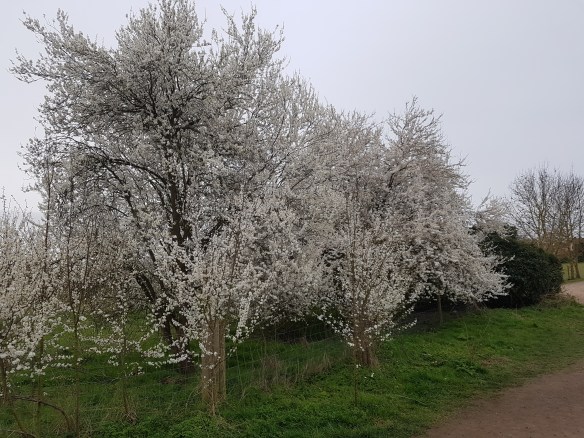
However, double flowers – while lovely to look at – can make it harder for bees to reach nectar. Other than fruit trees, Dedham’s countryside has alder, hazel and goat willow, which offer pollen-laden catkins as early as February, hawthorn blossom and, in May, magnificent horse chestnuts.
If you have a laurel hedge, my bees may be visiting you to take advantage of its prolific nectar in late spring. Here at home, one side of my garden is bounded by a large pyracantha hedge and in early summer is a froth of small white flowers that seems to summon almost every honeybee in the hive.
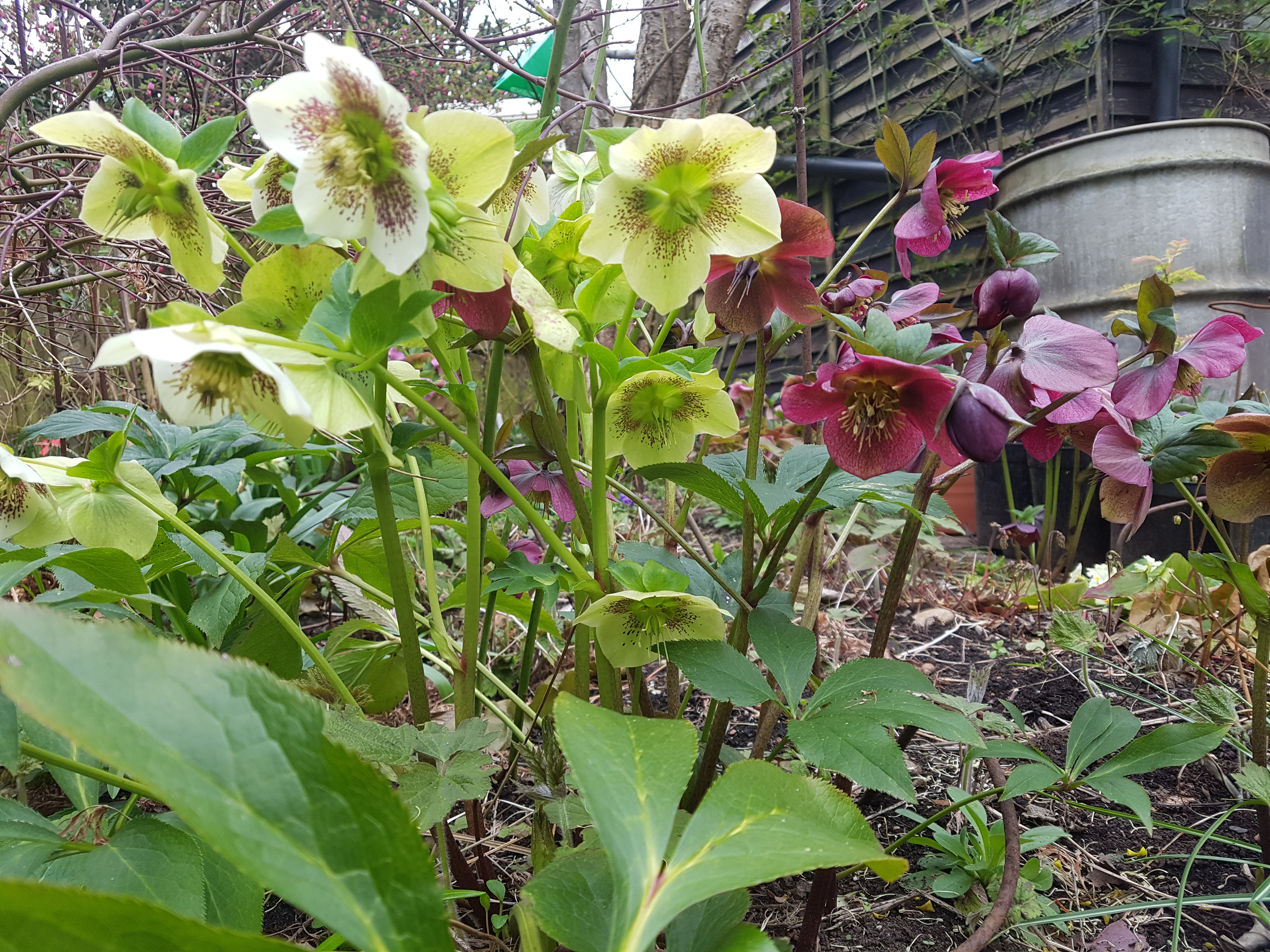
But what about the beds and borders? A good rule of thumb for your flowers is to keep it simple. Hellebores are great and will be flowering in winter for any bees that emerge early. Helleborus niger and single forms of the Oriental hybrids are great options and bring colour to the garden. If greens are your thing, try Helleborus foetidus, which has clusters of single, lime-green flowers that last for several months.
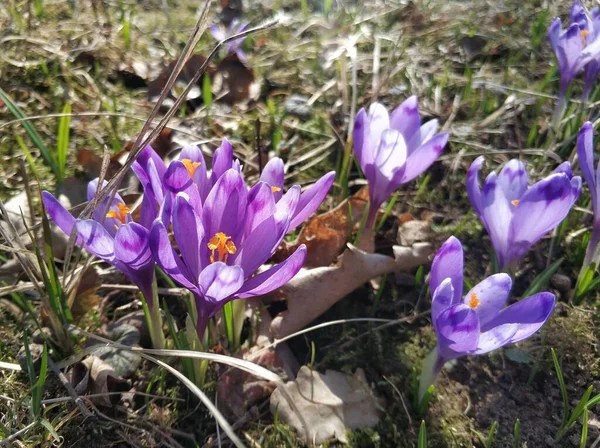
Close to the start of spring, loads of purple crocus start popping up throughout my garden and on sunnier, warmer days I can hear the bees bobbing from flower to flower. If you grow the grape hyacinth (I don’t love it, so only have the occasional rogue), it’s a fantastic producer of nectar.
As more of the garden flowers, my bees are foraging as much as they can. If you’ve read any previous articles here, you’ll know I love a dahlia (perhaps a little too much), so it’s good for me and my bees that there are plenty of single varieties offering pollen through the summer.
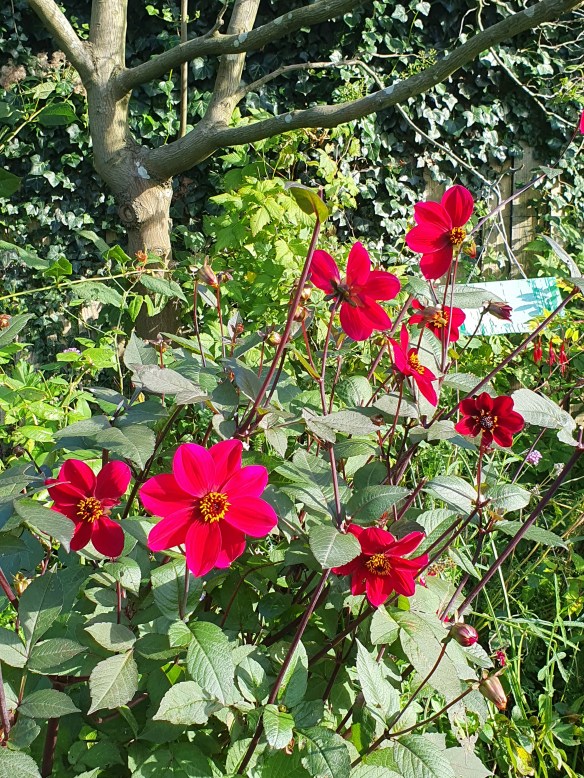
I have the red bishops of ‘Auckland’ and ‘Llandaff’, stunning cerise ‘Bishop of Canterbury’ (although semi-double, its centre is still accessible), as well as ‘Mexican Star’, a chocolate cosmos hybrid with its cocoa-scented blooms. Actual cosmos is also ideal and looks lovely in the border.
As we come to autumn, bees will turn to asters and sedum. I have clumps of the pale pink sedum ‘Autumn Joy’ which complements purple asters. The open daisy form and flat heads make great landing places for the bees and provide plenty of nectar as they start setting aside stores for the winter.
Ivy also does its business now, though I’ve usually taken my honey supers off before it comes into flower. This is a good thing as ivy honey crystallises quickly and can be tough to extract. It’s handy for the bees to store for winter use but less so if you want to collect honey for yourself.
If you have bees and are willing to throw a bit of caution to the wind and watch them return to the hive, you may see them bring back pollen of all kinds of colours. There’s practically a cottage industry in pollen identification and you can get charts to help you spot when bees have been gathering red pollen from horse chestnuts, pale blue from hazel or elder, or deep orange from dandelions.
Beekeeping is a fascinating hobby and complements my efforts to create a great-looking garden too. With luck, Dedham’s countryside and cultivated gardens will help the bees create another batch of multi-floral honey.
 Dedham Horticultural Society