
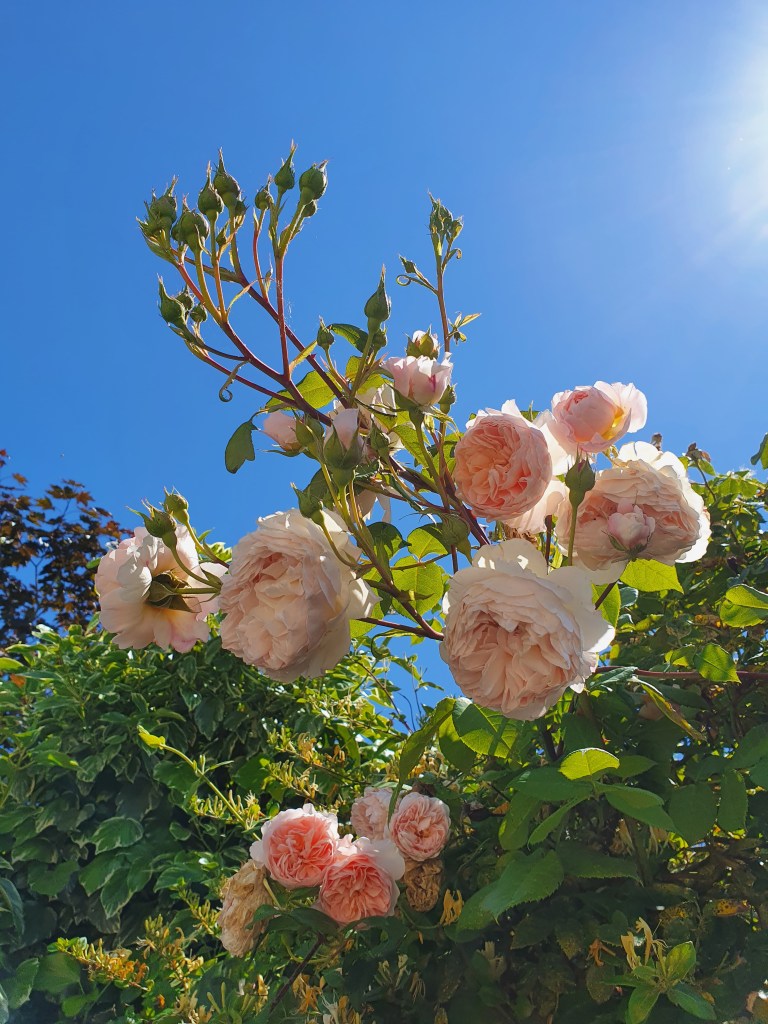
June is the month of roses, and my garden is filled with a huge range from clusters of small white double flowers to obelisks clothed in single pink climbers.
There are roses on the front of the house and over an arch as you walk to the front door. Every border and bed has at least one rose, ranging from white to pink to red, from cream to yellow. With so many, I will be busy deadheading them throughout the summer to keep them blooming.
The roses are complemented by early large-flowered clematis in pink and deep purple, as well as alliums, foxgloves, delphiniums and the white forms of valerian and rosebay willowherb. My bees are going mad on the pyracantha hedge that floats above one of my fences.
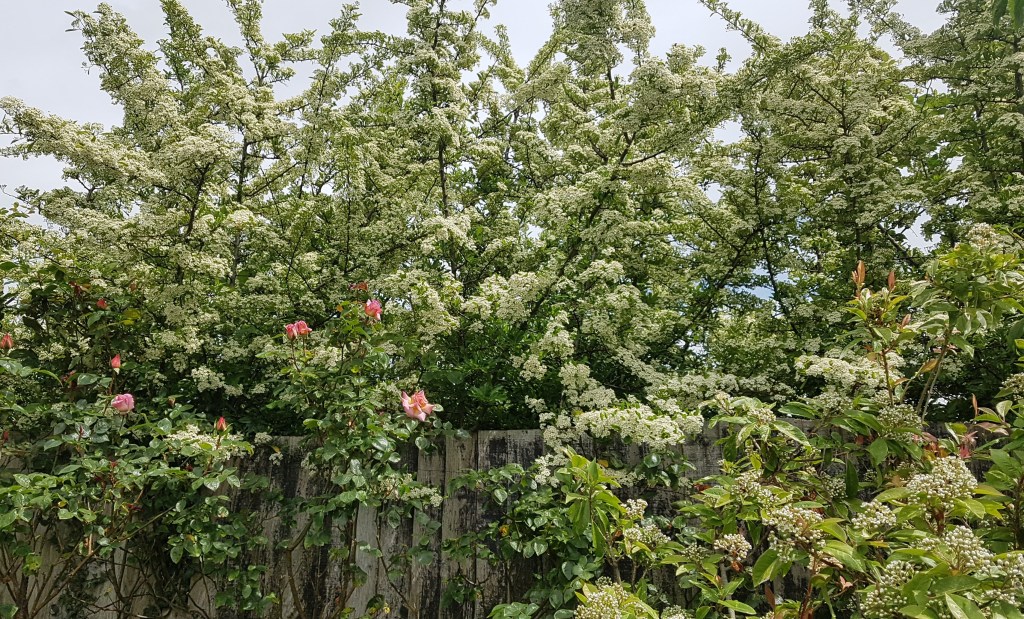
As we approach the longest day of the year, there’s plenty to do and even time to relax and enjoy the fruits of our labours.
The best way to deadhead your roses is to use your secateurs and cut right back down the stem to the next leaf or bud. This will prompt a side shoot to grow and eventually another flower.
You can deadhead other plants of course, both annuals and perennials. The production of flowers is part of how flowers reproduce. When the flowers die, they leave behind seeds (essentially the plant’s eggs) from which more flowers are born. Once seeds are produced, the plant thinks its job is done and has no further need to produce flowers. Deadheading therefore keeps the plant in a state of perpetually giving birth (flowering). I think I might be a bit mad about that if I were a plant and is probably why I come in from the garden covered in thorn scratches.
Although some plants will only ever flower once, deadheading will also work on asters, campanulas, delphiniums, daylilies and scabious. It is especially important for sweet peas, which is why you should pick as many as you can whenever you can so that seed pods aren’t produced.
I love aubrieta for its vibrant purple flowers, which look great against late flowering daffodils. It offers early nectar and pollen for my bees, but by now it can be looking a bit tatty so needs cutting back. Lightly trim your aubrieta if it still forms a quite neat mound, but if it’s straggly with an almost bald centre then it needs to be cut back harder to within a couple of inches of the base of the plant. Make sure to keep it well watered after cutting back and it will put on fresh foliage within a few weeks.
Cut back perennial Oriental poppies too after flowering, taking them back to ground level. Water – you can feed them with poultry pellets or tomato food if you like – and you’ll get new foliage and perhaps even some new blooms. Hardy geraniums (not the tender pelargoniums) can also be chopped back now too.
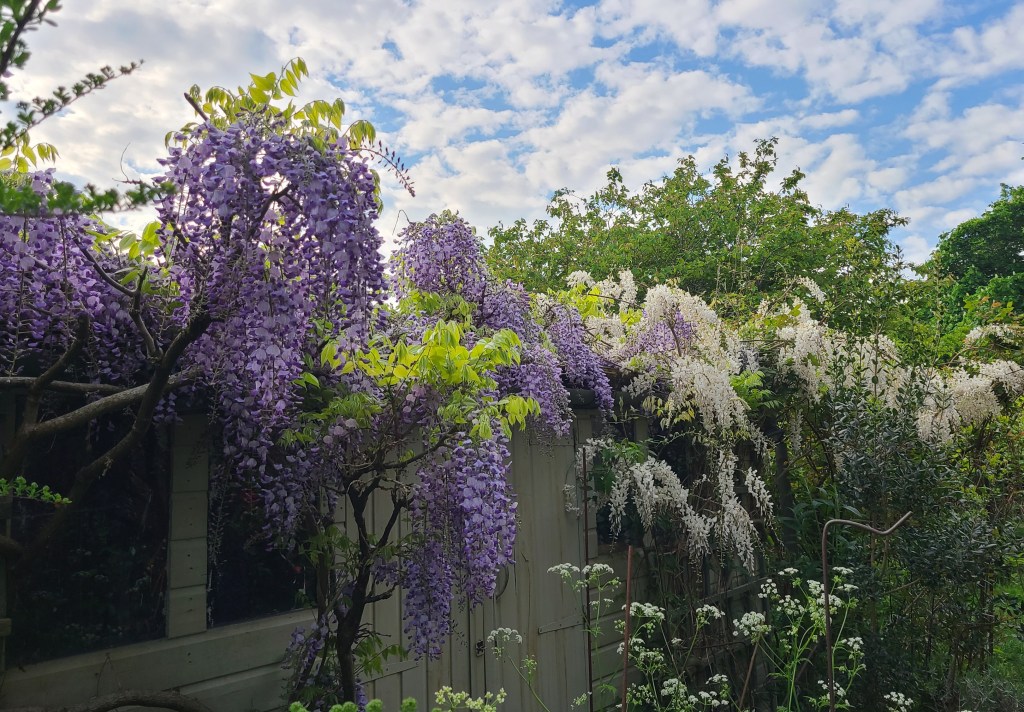
My wisteria plants have been magnificent this year, and their powerful scent seems to reach all round the garden. Once they’ve finished showing off though, it’s time for their first prune of the year this month.
Wisteria produces its beautiful racemes of purple, white or pink flowers on new growth, so to encourage lots of flowers next year, I’ll need to cut back the whippy new shoots that have grown this season. Prune back to the sixth bud from the base of the shoot. If you’re not sure, cut lightly as you’ll do a second prune in winter when it’s easier to see what you’re doing.
I put some garden pinks (Dianthus) around the beds last year and they are beginning to bulk up so I can take some softwood cuttings. Just pull a non-flowering shoot with four pairs of leaves off the plant using your thumb and forefinger. Use a sharp knife to cut below the lowest pair of leaves to make a cutting 5-10cm long. Remove the lower leaves and dip the base of the cutting in hormone rooting powder or gel. Make a hole in a pot of compost, insert the cutting so the lowest pair of leaves is just above the top of the soil, then water. Pop it in a propagator or under a plastic bag and place somewhere warm, and it should root within 2-4 weeks. Although it can be a busy time in the garden right now, don’t forget to take time to soak up the summer sun this month.
 Dedham Horticultural Society