Midsummer’s here

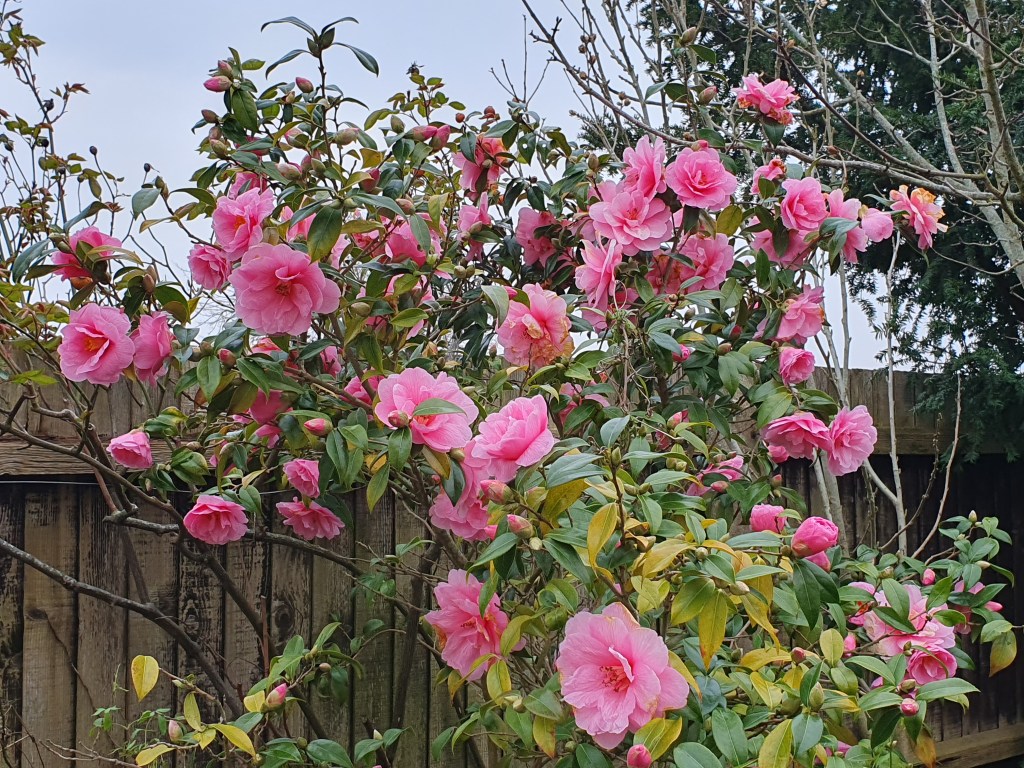
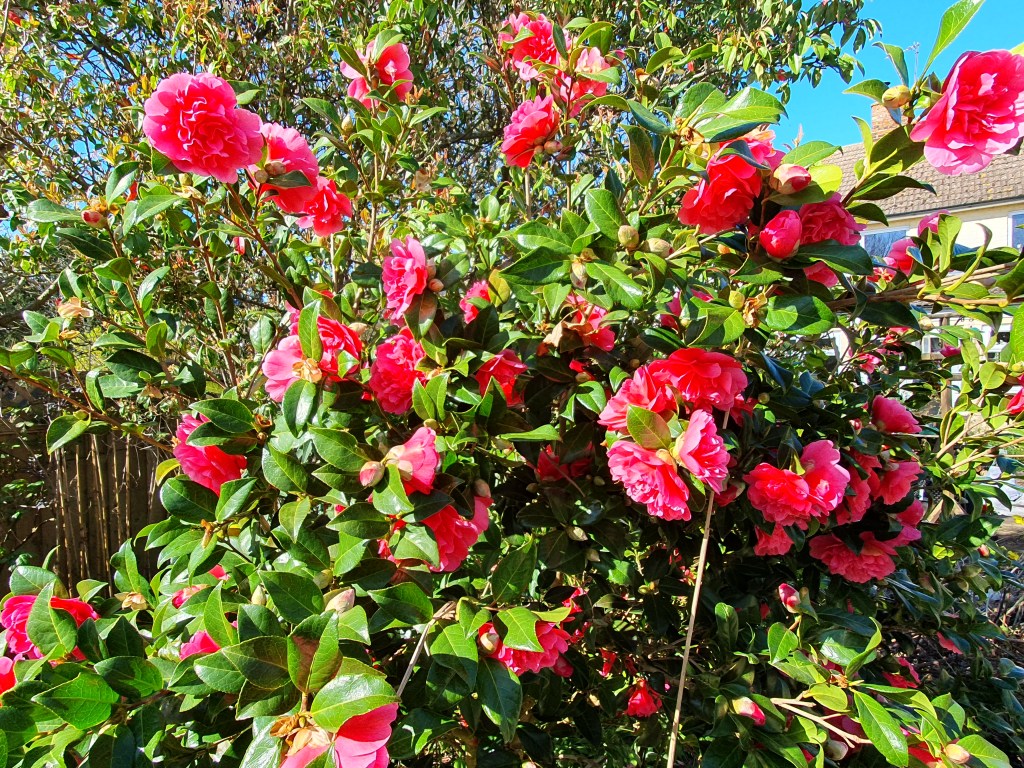
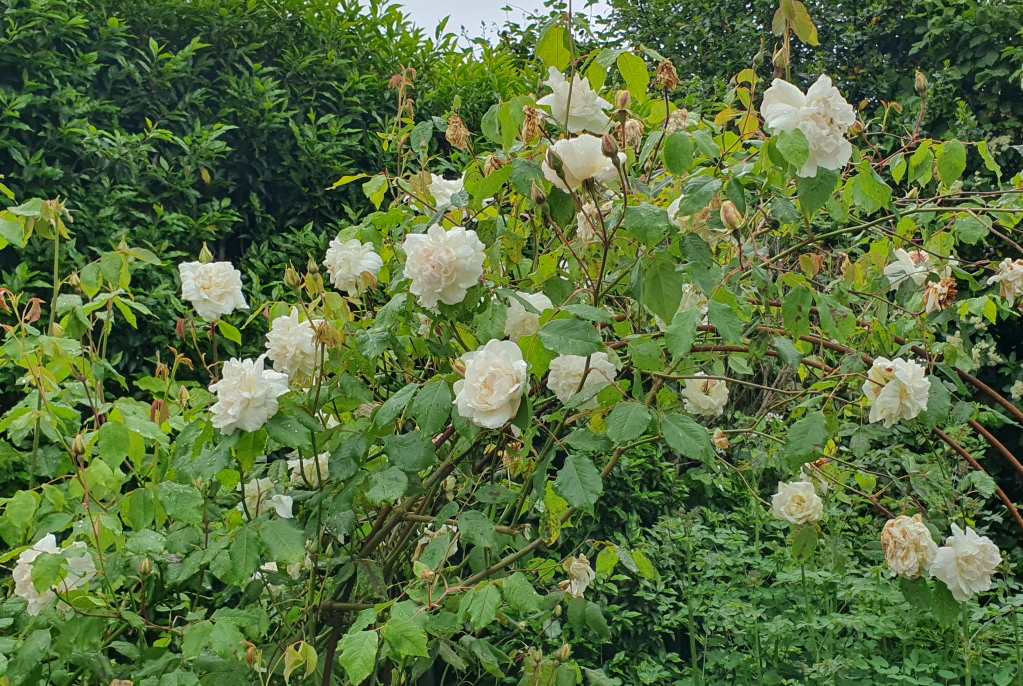
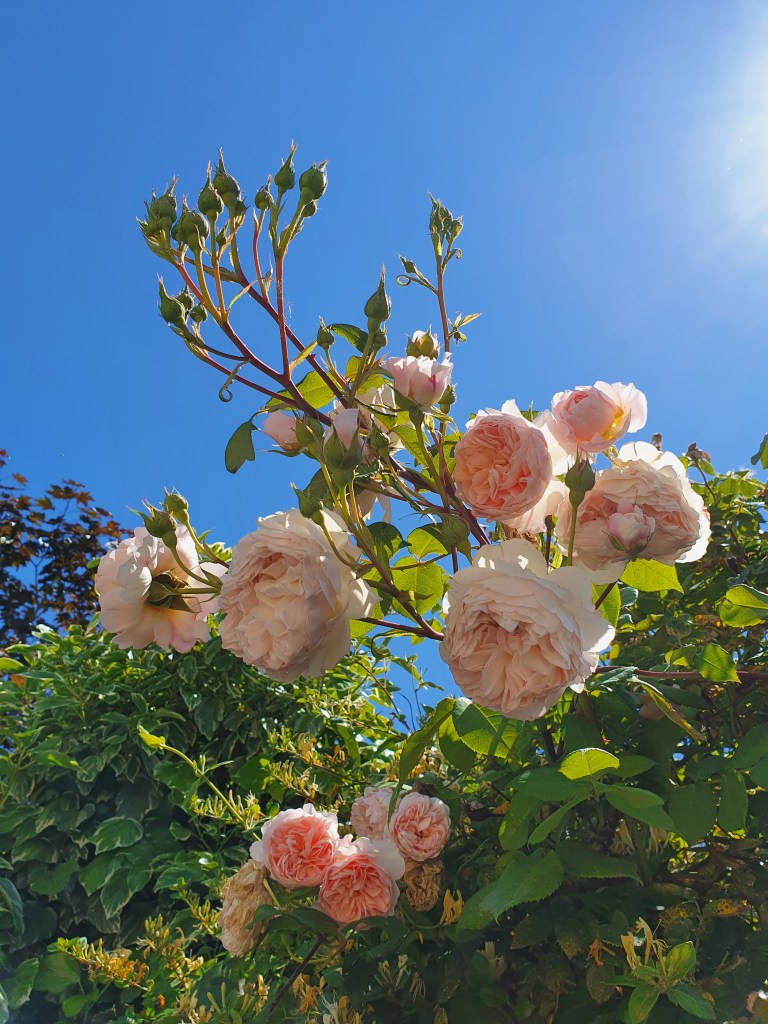
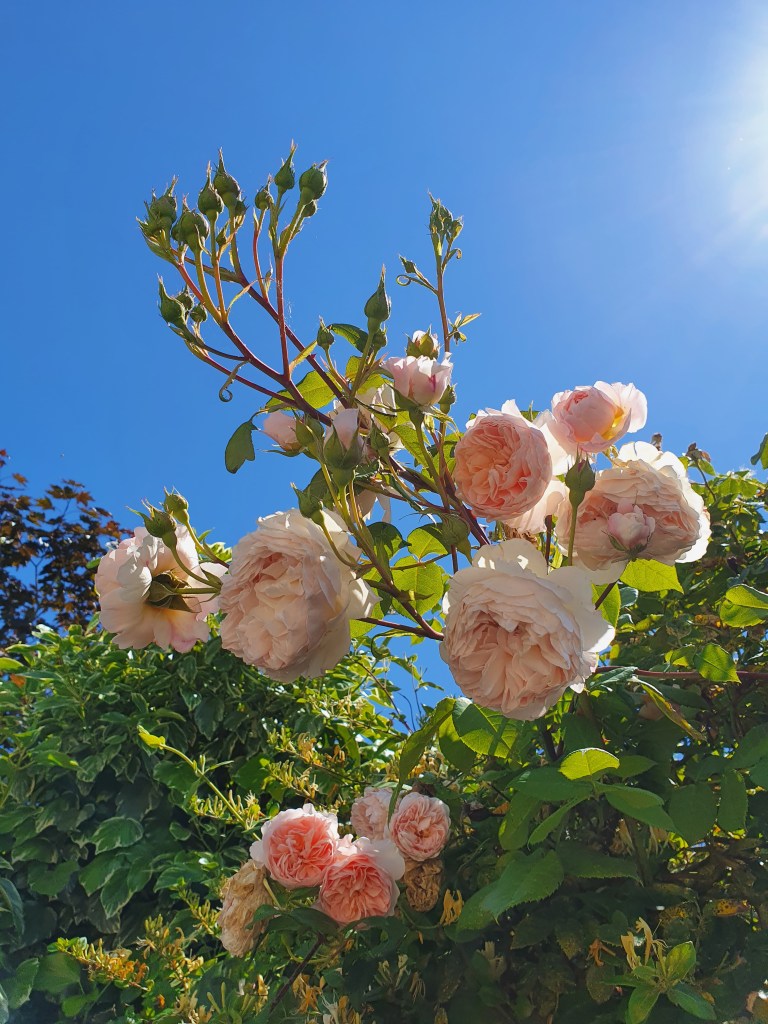
June is the month of roses, and my garden is filled with a huge range from clusters of small white double flowers to obelisks clothed in single pink climbers.

There are roses on the front of the house and over an arch as you walk to the front door. Every border and bed has at least one rose, ranging from white to pink to red, from cream to yellow. With so many, I will be busy deadheading them throughout the summer to keep them blooming.
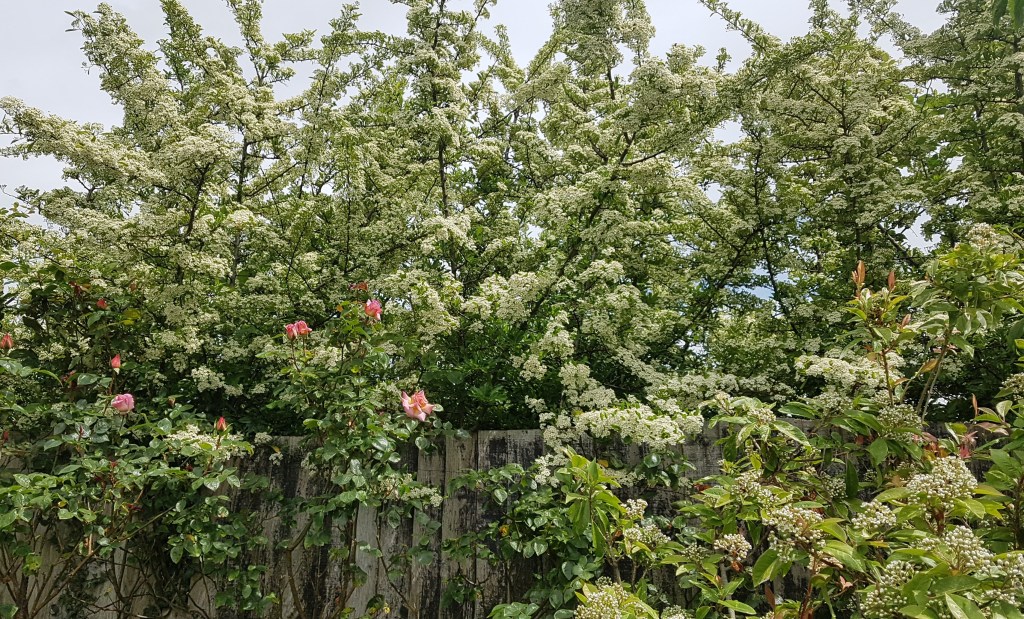
The roses are complemented by early large-flowered clematis in pink and deep purple, as well as alliums, foxgloves, delphiniums and the white forms of valerian and rosebay willowherb. My bees are going mad on the pyracantha hedge that floats above one of my fences.
As we approach the longest day of the year, there’s plenty to do and even time to relax and enjoy the fruits of our labours.

The best way to deadhead your roses is to use your secateurs and cut right back down the stem to the next leaf or bud. This will prompt a side shoot to grow and eventually another flower.

You can deadhead other plants of course, both annuals and perennials. The production of flowers is part of how flowers reproduce. When the flowers die, they leave behind seeds (essentially the plant’s eggs) from which more flowers are born. Once seeds are produced, the plant thinks its job is done and has no further need to produce flowers. Deadheading therefore keeps the plant in a state of perpetually giving birth (flowering). I think I might be a bit mad about that if I were a plant and is probably why I come in from the garden covered in thorn scratches.

Although some plants will only ever flower once, deadheading will also work on asters, campanulas, delphiniums, daylilies and scabious. It is especially important for sweet peas, which is why you should pick as many as you can whenever you can so that seed pods aren’t produced.

I love aubrieta for its vibrant purple flowers, which look great against late flowering daffodils. It offers early nectar and pollen for my bees, but by now it can be looking a bit tatty so needs cutting back. Lightly trim your aubrieta if it still forms a quite neat mound, but if it’s straggly with an almost bald centre then it needs to be cut back harder to within a couple of inches of the base of the plant. Make sure to keep it well watered after cutting back and it will put on fresh foliage within a few weeks.

Cut back perennial Oriental poppies too after flowering, taking them back to ground level. Water – you can feed them with poultry pellets or tomato food if you like – and you’ll get new foliage and perhaps even some new blooms. Hardy geraniums (not the tender pelargoniums) can also be chopped back now too.
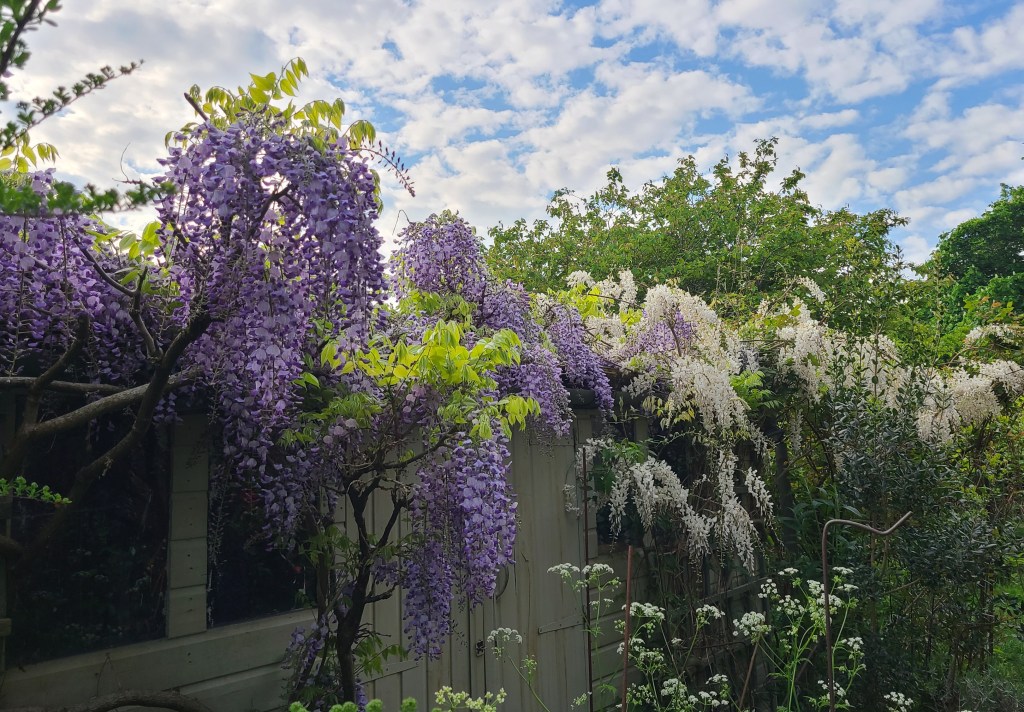
My wisteria plants have been magnificent this year, and their powerful scent seems to reach all round the garden. Once they’ve finished showing off though, it’s time for their first prune of the year this month.

Wisteria produces its beautiful racemes of purple, white or pink flowers on new growth, so to encourage lots of flowers next year, I’ll need to cut back the whippy new shoots that have grown this season. Prune back to the sixth bud from the base of the shoot. If you’re not sure, cut lightly as you’ll do a second prune in winter when it’s easier to see what you’re doing.

I put some garden pinks (Dianthus) around the beds last year and they are beginning to bulk up so I can take some softwood cuttings. Just pull a non-flowering shoot with four pairs of leaves off the plant using your thumb and forefinger. Use a sharp knife to cut below the lowest pair of leaves to make a cutting 5-10cm long. Remove the lower leaves and dip the base of the cutting in hormone rooting powder or gel. Make a hole in a pot of compost, insert the cutting so the lowest pair of leaves is just above the top of the soil, then water. Pop it in a propagator or under a plastic bag and place somewhere warm, and it should root within 2-4 weeks. Although it can be a busy time in the garden right now, don’t forget to take time to soak up the summer sun this month.
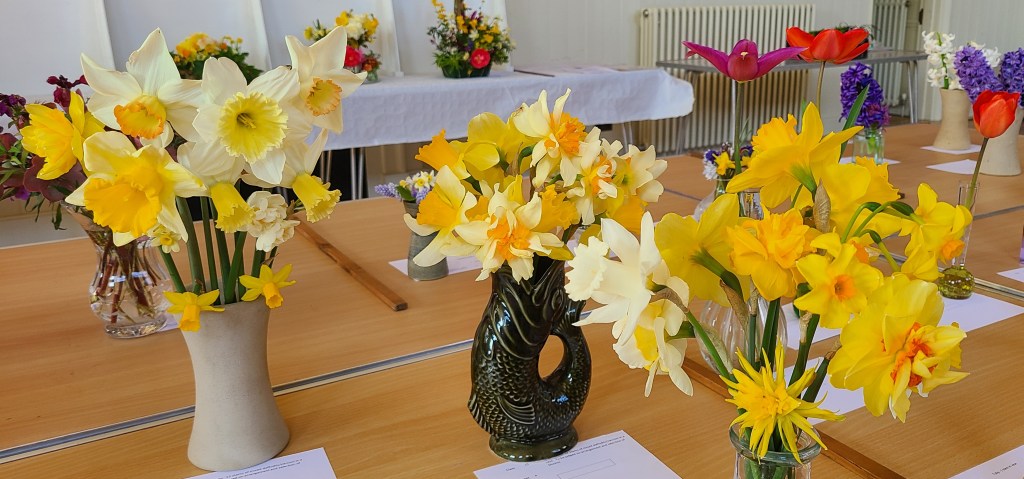
We put on a show!

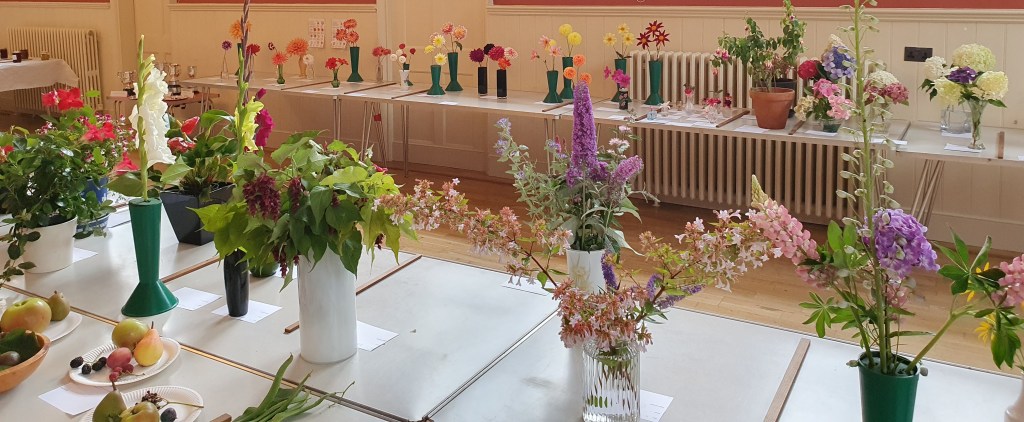
Thank you to everyone who exhibited at or came along to our annual Spring Show. More than two dozen people entered classes for plants and flower arranging, cookery and photography this year. Walking into the Assembly Rooms, visitors were hit with a riot of colour and the scent of spring.

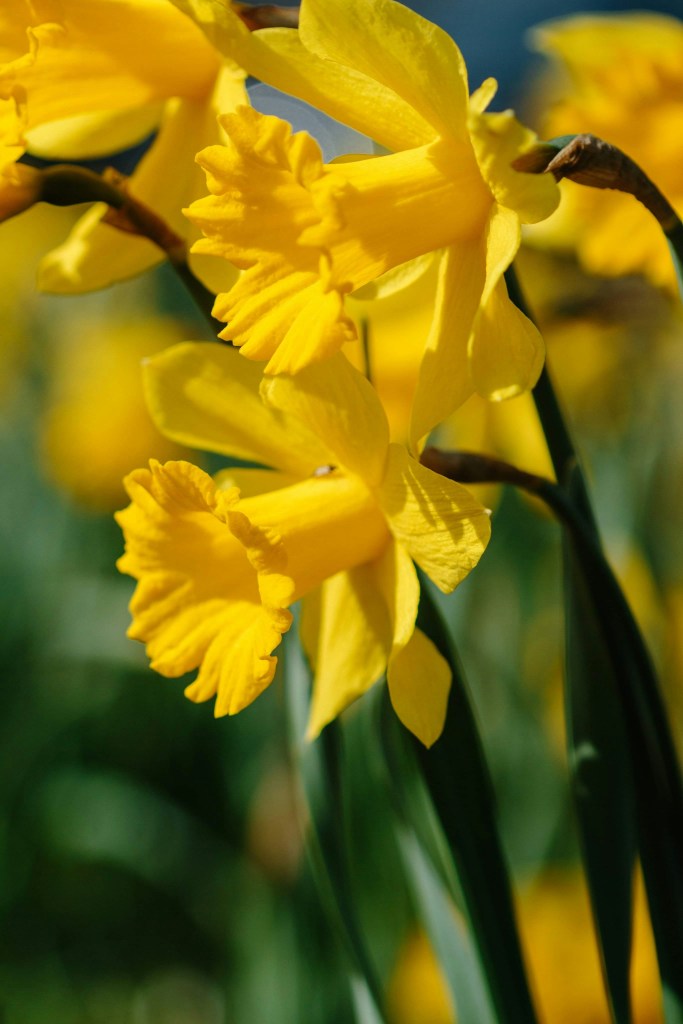
Spring is our daffodil show with 15 separate classes to exhibit the best of your blooms. It’s a great section to enter as nearly everyone has a daffodil or two in the garden or a planter. However, the classification of daffodils can be confusing, so – if you are thinking about planting a few bulbs this autumn – here’s more of an explanation.

Daffodil is the common name for the botanical classification of Narcissus (plural Narcissi). This bulbous perennial (it comes back and will slowly spread over the years) is typically shades of yellow but also white/cream and orange/peach. But what are we talking about when we say trumpet, corona and perianth?

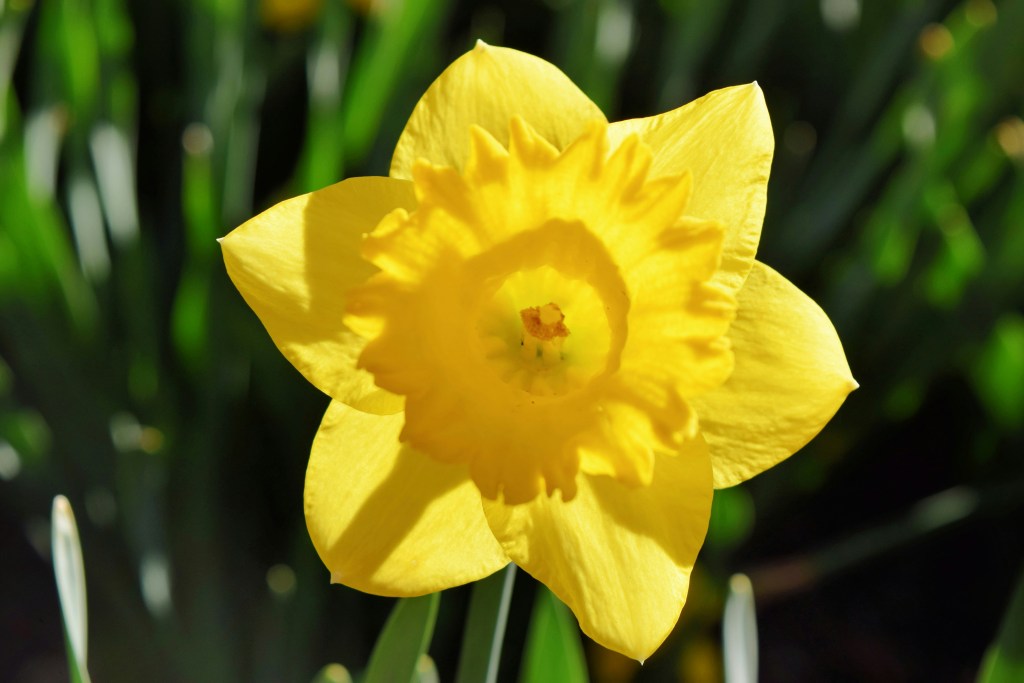
The stem and leaves sprout from the bulb planted in autumn and flower from February to May depending on variety and climate. The flower itself has two key parts: the corona in the centre, which is surrounded by the perianth.

If you think of the daffodil lying on the ground, sometimes it suggests a teacup resting on its saucer, and this gives a clue to one of the alternate names for the corona, the cup. Sometimes the corona is longer, so it’s called a trumpet (imagine the cone-like shape of the musical instrument). Still thinking of the flower lying on the ground, the perianth is the ‘saucer’ of six petals (they’re actually tepals, but you don’t need to care about that!).

Now that you know all that (you’ll thank me later), it will help you work out what to exhibit in which class.

Our classes are guided by the Royal Horticultural Society’s classification of daffodils into thirteen descriptive divisions. Classes 1-6 are for trumpet daffodils, identified by gently folding one of the petals forward. If they are the same length or shorter than the corona, then you have a trumpet.

Identify your large-cupped daffodils by folding the petals forward again. If they are longer than the corona (cup), then you have a cupped daffodil – some of the cups are small and will reach less than a third of the length of the petal, others are much wider/longer and dominate the flower. The latter are the ones to exhibit here.

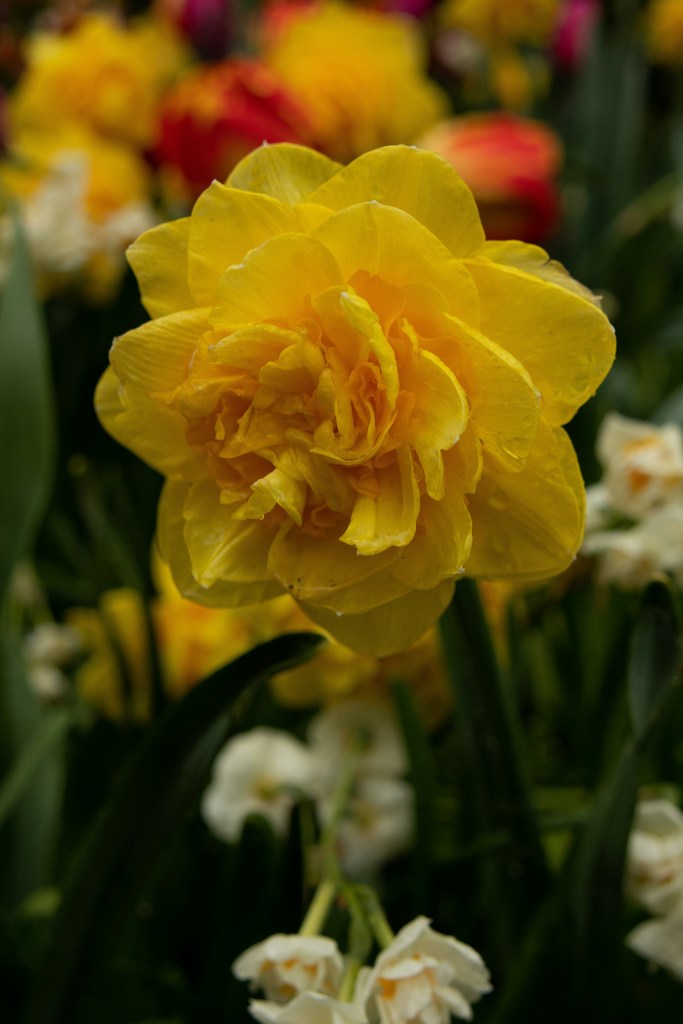
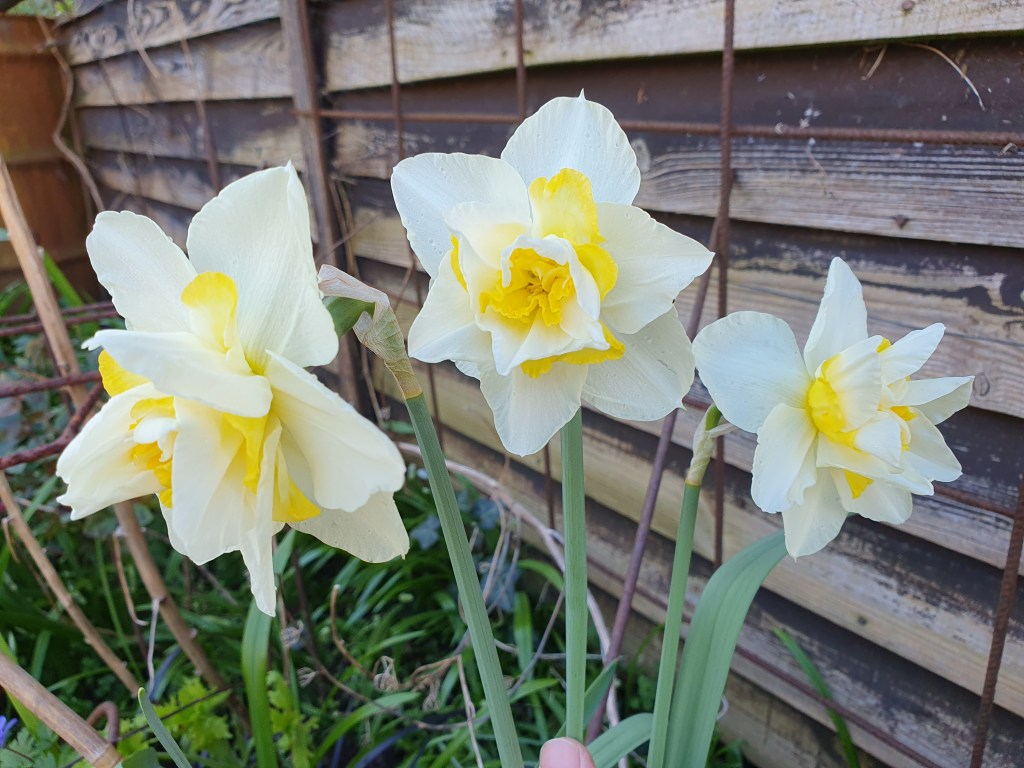
Double daffodils can be confusing. The flower itself should be doubled with a mass of petals. A daffodil with two or more flowers on the stem is NOT classified as a double daffodil unless each of those flowers has that mass of petals.

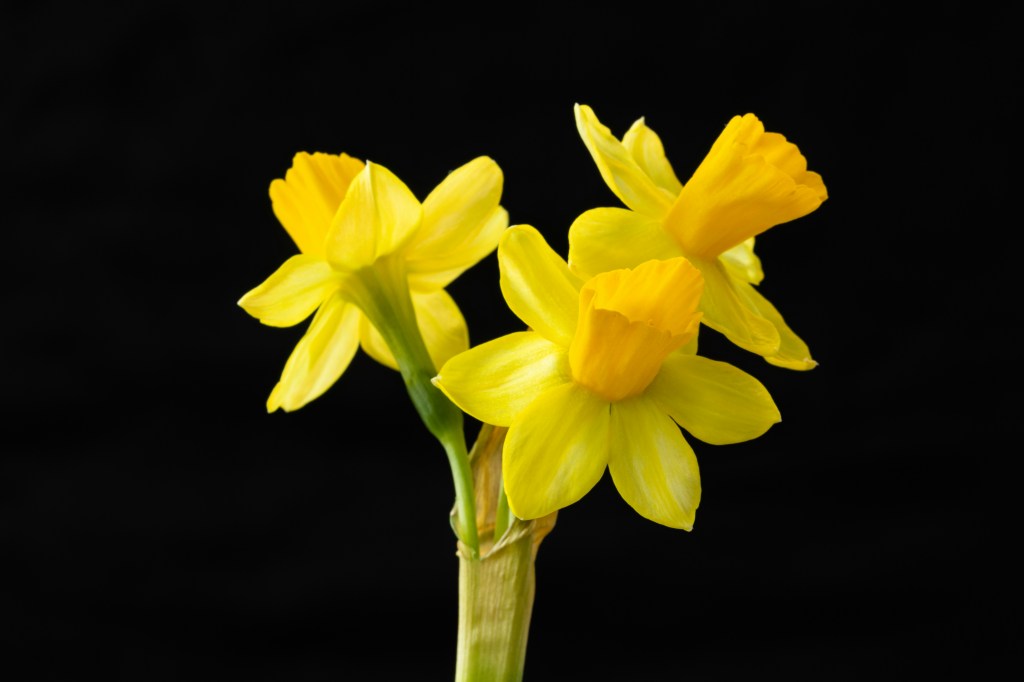
Two or more flowers on a stem is classified as triandrus and you can enter these in classes 13 and 14). These two classes are essentially for ‘any other’ type of daffodil. These include miniatures (flowers usually less than 50mm in diameter), weird-looking (I think) bulbocodium, and the pretty split-cupped. Then there’s the pheasant’s eye (classes 11 and 12) – also called poeticus – which has pure white petals and an almost flat corona with a red rim.

If you can’t be bothered remembering all that (though if you’re not sure, just enter everything on your entry form and we can help you out on the day), just find 12 daffs, make them look nice in a vase and enter class 15!

So now you know a bit more about how to exhibit daffodils in our next spring show and have a year to prepare! We hope you’ll also have a go in our Autumn Show, when it’s all about the dahlia. There’s no fee to enter as many classes as you like in either show.

Thanks for the honey, Dedham

As I write this, Dedham has been enjoying a week of gloriously sunny weather (not quite t-shirt temperatures though) and my honeybees have already been working hard.

They’ve been looking for nectar, pollen, water and the means to make propolis. Bees reduce the water content in nectar to create honey, while some is mixed with pollen and honey and ferments to become ‘bee bread’ for developing larvae.

Bees also collect sap to make propolis. This sticky resin hardens to help seal cracks in the hive and helps preserve honey. Bees even use its antibacterial benefits to embalm any hive intruders that they can’t remove on their own.

As they forage around Dedham, all sorts of plants will help my honeybees. They can see deeper into the ultraviolet (UV) spectrum to identify specific flowers and parts of those flowers. They cannot see true reds but do see the UV pattern of red flowers and forage on them as often as flowers of any other colour. Good news for those of us with ‘jewel’ or ‘hot’ borders in the garden.

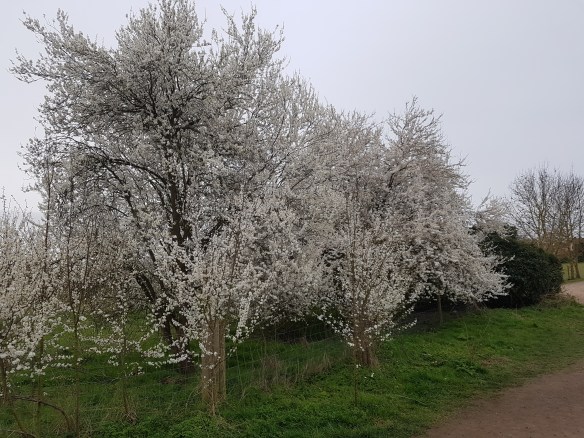
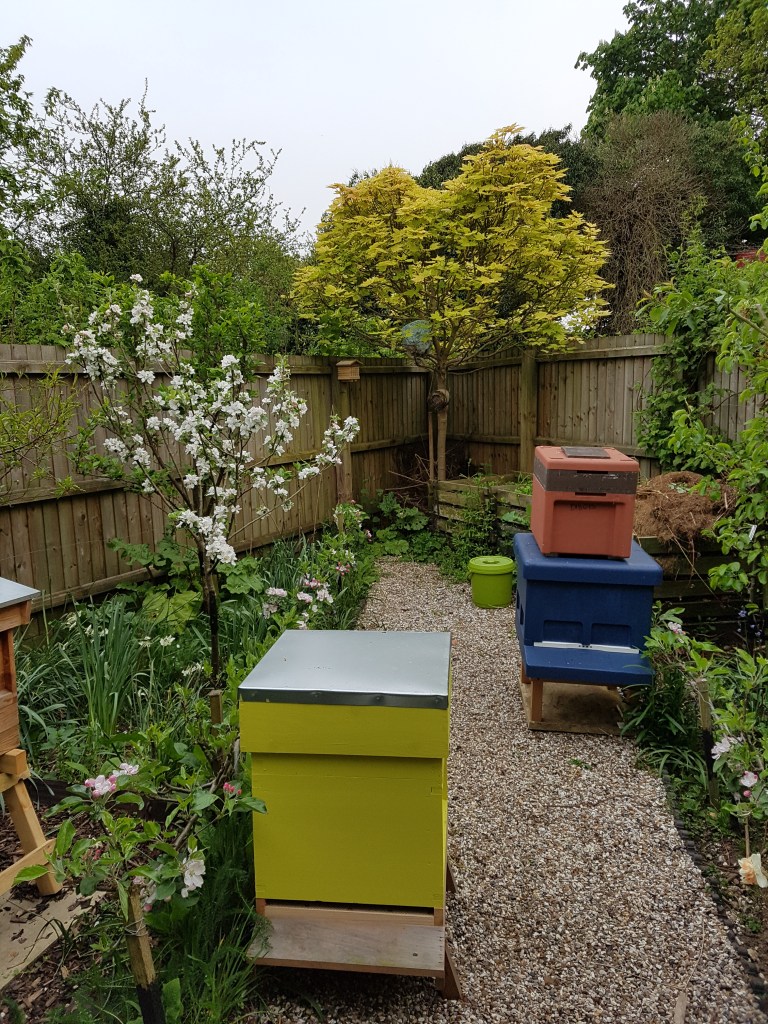
It’s easy to think that bees visit only the flowers in our gardens but anyone who suffers from hayfever will tell you that trees have plenty of pollen too. I’ve apple stepovers and dwarf greengages in the garden and both offer blossom, as will ornamental crab apples and cherries.

However, double flowers – while lovely to look at – can make it harder for bees to reach nectar. Other than fruit trees, Dedham’s countryside has alder, hazel and goat willow, which offer pollen-laden catkins as early as February, hawthorn blossom and, in May, magnificent horse chestnuts.

If you have a laurel hedge, my bees may be visiting you to take advantage of its prolific nectar in late spring. Here at home, one side of my garden is bounded by a large pyracantha hedge and in early summer is a froth of small white flowers that seems to summon almost every honeybee in the hive.

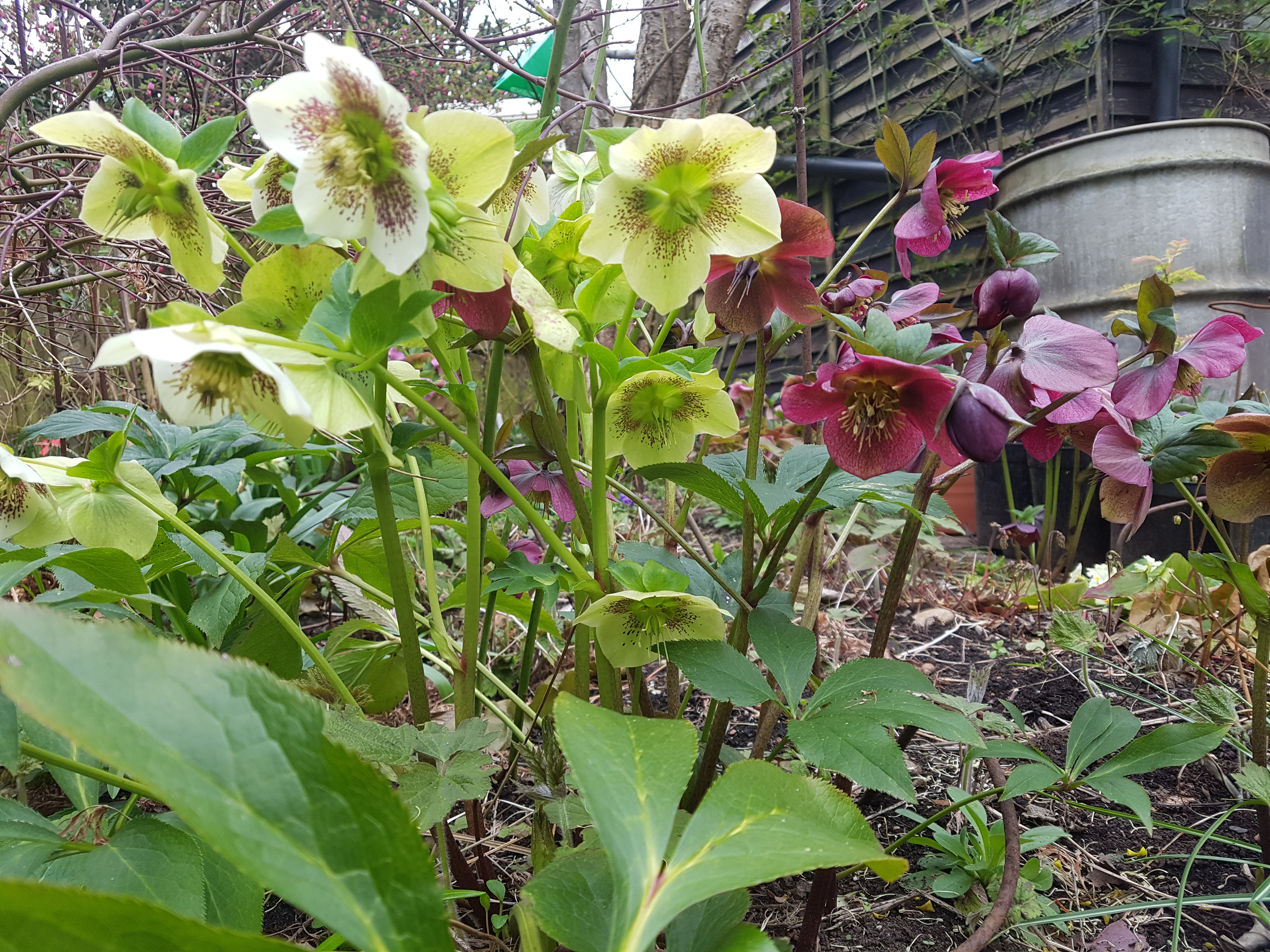
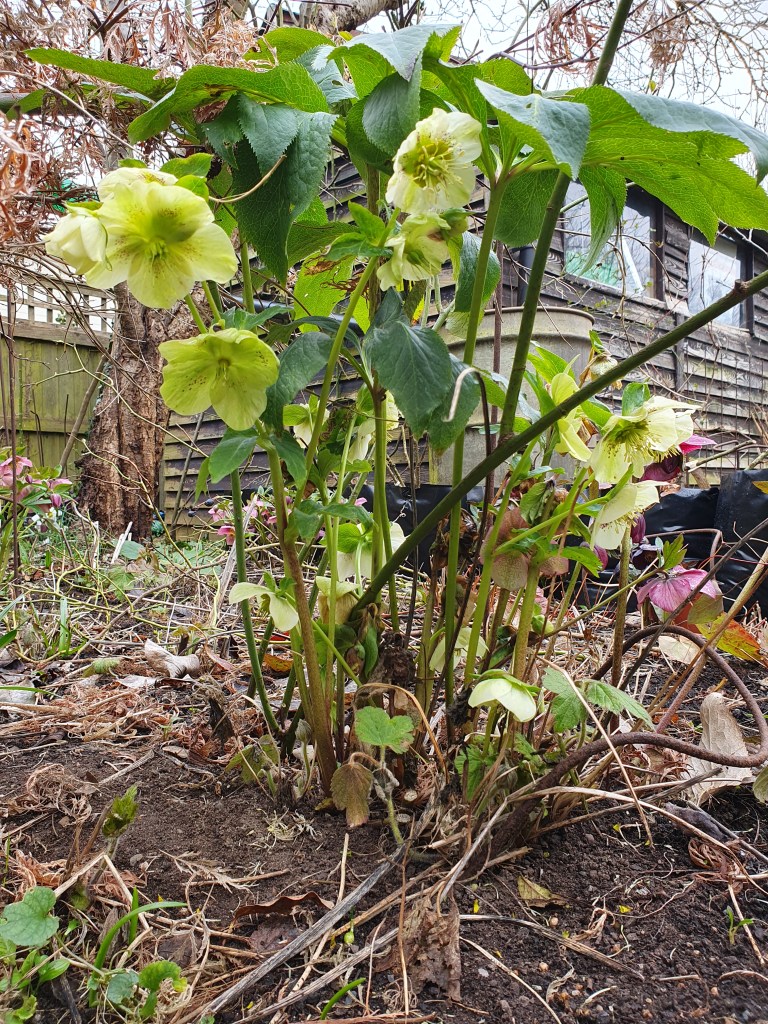
But what about the beds and borders? A good rule of thumb for your flowers is to keep it simple. Hellebores are great and will be flowering in winter for any bees that emerge early. Helleborus niger and single forms of the Oriental hybrids are great options and bring colour to the garden. If greens are your thing, try Helleborus foetidus, which has clusters of single, lime-green flowers that last for several months.

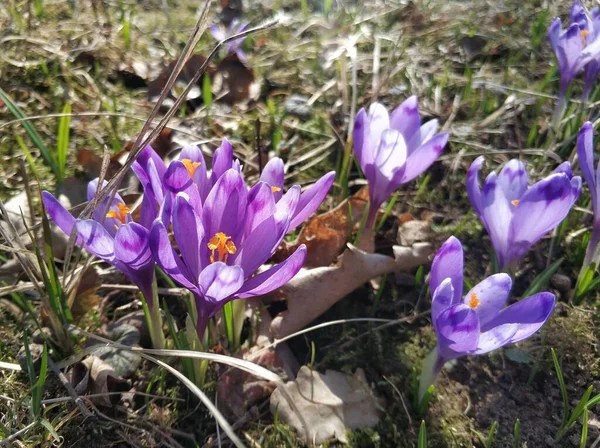
Close to the start of spring, loads of purple crocus start popping up throughout my garden and on sunnier, warmer days I can hear the bees bobbing from flower to flower. If you grow the grape hyacinth (I don’t love it, so only have the occasional rogue), it’s a fantastic producer of nectar.

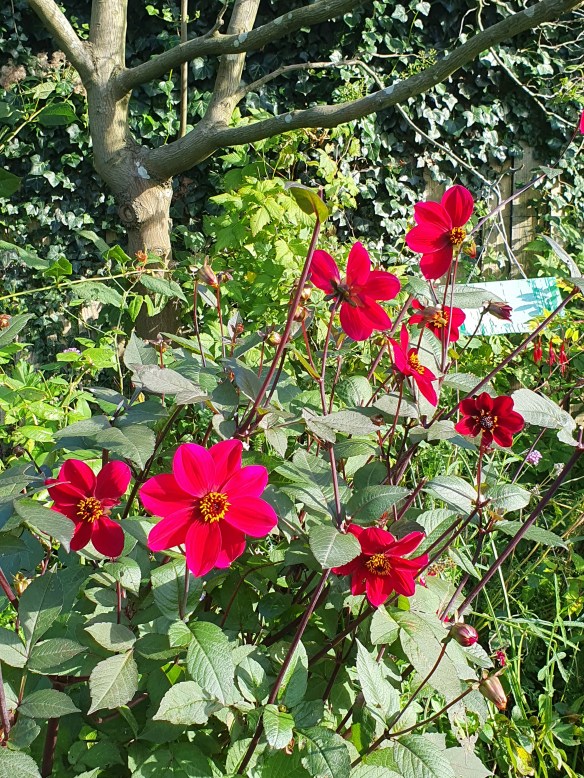
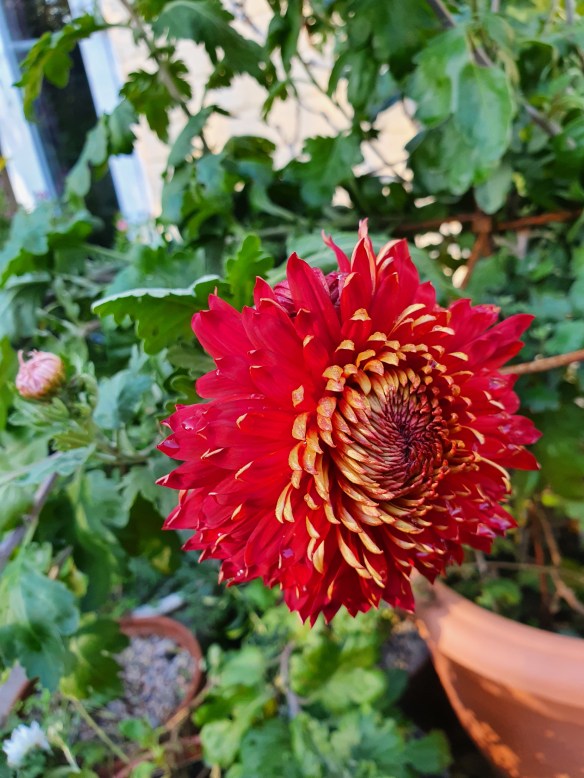
As more of the garden flowers, my bees are foraging as much as they can. If you’ve read any previous articles here, you’ll know I love a dahlia (perhaps a little too much), so it’s good for me and my bees that there are plenty of single varieties offering pollen through the summer.

I have the red bishops of ‘Auckland’ and ‘Llandaff’, stunning cerise ‘Bishop of Canterbury’ (although semi-double, its centre is still accessible), as well as ‘Mexican Star’, a chocolate cosmos hybrid with its cocoa-scented blooms. Actual cosmos is also ideal and looks lovely in the border.

As we come to autumn, bees will turn to asters and sedum. I have clumps of the pale pink sedum ‘Autumn Joy’ which complements purple asters. The open daisy form and flat heads make great landing places for the bees and provide plenty of nectar as they start setting aside stores for the winter.

Ivy also does its business now, though I’ve usually taken my honey supers off before it comes into flower. This is a good thing as ivy honey crystallises quickly and can be tough to extract. It’s handy for the bees to store for winter use but less so if you want to collect honey for yourself.

If you have bees and are willing to throw a bit of caution to the wind and watch them return to the hive, you may see them bring back pollen of all kinds of colours. There’s practically a cottage industry in pollen identification and you can get charts to help you spot when bees have been gathering red pollen from horse chestnuts, pale blue from hazel or elder, or deep orange from dandelions.

Beekeeping is a fascinating hobby and complements my efforts to create a great-looking garden too. With luck, Dedham’s countryside and cultivated gardens will help the bees create another batch of multi-floral honey.

Feed, divide, sow

Spring is here and there’s green everywhere! Spring bulbs are in full flower now and my bees will be taking advantage of every warmer, sunny day to gather pollen and nectar as their colony starts growing. But don’t get too confident, as it’s very possible that a cold snap could set everything back again, so have some horticultural fleece at the ready for anything tender.

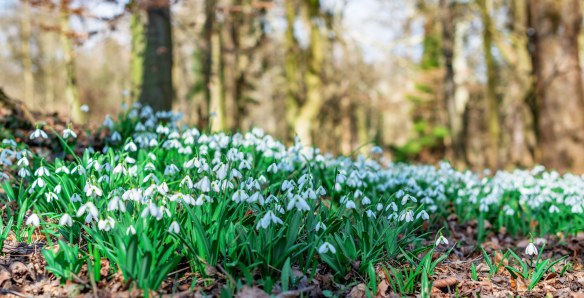
If your snowdrop clumps are getting too big for their space, it’s a good time to divide them once they’ve finished flowering. Dig up part of the clump – roots, soil and all – and drop it into another spot. Snowdrops transplanted like this, ‘in the green’, perform better than if they are planted as bulbs in autumn.

You can also divide herbaceous peonies now, just as they’re coming out of dormancy. According to the National Gardens Scheme, doing this every two or three years improves flowering. I’ll try this with one of my larger peonies; digging it up and using a knife to split it so each division has three or four flowering buds at the base. I’ll space them further apart and replant them with those buds just below the surface.

Some of my hostas also need dividing as they are outgrowing their pots. I’ve had to saw these apart in the past as the roots can be compacted and tough, but they quickly recover for a great display over the summer. You can do this with agapanthus, delphinium, primula and plenty of other plants now too.

If you buy dahlias as tubers, you can plant them in your beds about six weeks before the last frosts are expected. After six weeks, the new growth will be coming through, so if you time it right you can get an early start with your plants and protect the new growth from frost damage.

If you lifted your tubers in autumn, you can also start propagating them for more plants. Get them out of storage and pot them up using multi-purpose compost. Choose pots that will just fit the tuber – you don’t want too much wet soil surrounding them as they can rot – and fill them so that the old stalk or the top of the tuber is just above the surface. Water them and then leave them in a warm, light position or in a propagator. Check on them occasionally as they start to put on growth, and they’ll be ready to be planted out after the danger of frost has passed.

Once the fresh shoots have grown to about 8-10cm, you can take basal cuttings. Select a healthy shoot and, using a sharp knife, cut just above the point where the shoot emerges from the tuber and just below the lowest pair of leaves.

Cut off the leaves from the lower half of the stem – they will just rot once inserted into the soil. Pinch out the growing tip and dip the base of the cutting into hormone rooting power. Then push them into a pot containing cuttings compost and put them into a propagator or under a plastic bag supported by sticks. They should root after a few weeks.

If you grow dogwood (such as Cornus alba ‘Sibirica’) or willow (try yellow Salix alba var. vitellina ‘Britzensis’) for colourful stems in winter, it’s time to cut them back at the end of this month to just above ground level. This will stimulate fresh growth over the season, which will give you the most colour by the time winter rolls round again.

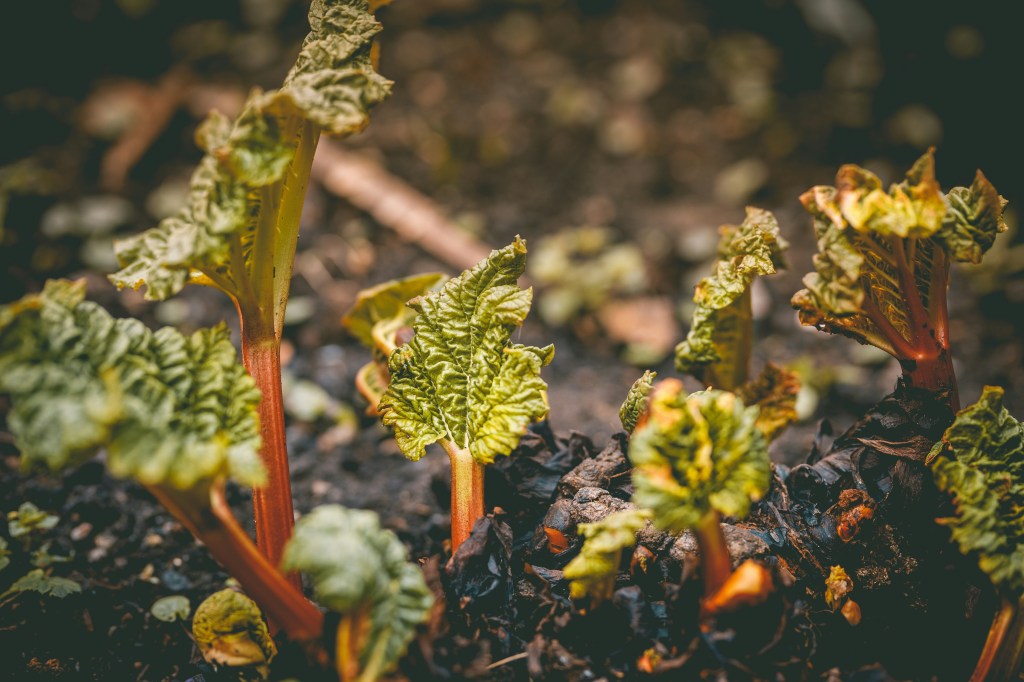
Having cut back and pruned my roses last month, March is the time to feed them with a slow-release, granular fertiliser forked into the soil around them. I’ll also give my rhubarb plants a high-nitrogen feed like sulphate of ammonia or chicken-manure pellets, so I can harvest the first stalks next month.

Finally, I’ll get my plant supports into the beds and borders: getting stakes, tripods, grow-throughs, wigwams, hoops and fluted peony supports into the ground now, as well as trusty twine, will ensure they get hidden by the plants as they grow.

Happy New (Gardening) Year

I hope you enjoyed the festivities and that any events (say games night) brought you together for plenty of fun and just the right amount of competitive spirit. Winters being what they are these days, the garden is already alive with pops of colour with plenty of plants flowering their little hearts out right now.

Bulbs like snowdrops, crocus and iris reticulata are competing with the hellebores, primroses and primulas, while over them shrubs from mahonia and forsythia to pussy willow and hazel are offering up pollen and nectar to early-emerging pollinators.

If you’re looking for something to do (I know you are), February is a great time to prune roses and give them the best start to the year ahead. Make sure you use your sharpest secateurs to make the job easier and for cleaner cuts that cause less damage to the plant. Have some loppers and maybe a sharp pruning saw to hand for thicker stems (if you have to strain to cut with secateurs, switch to a bigger tool). Don’t make random cuts; always go back to something – just above a bud, leaf or the joint with another stem.

Roses are pretty tough, so don’t worry too much about how you prune them. You might get a bit of die back or lose some flowers if you cut at the wrong time, but pruning is unlikely to kill your plants.

Bush roses hybrid teas (large-flowered) and floribunda (cluster-flowered) flower on the current season’s growth, so prune them hard now. Remove all weak, wispy, damaged or crossing stems first. Then take back anything that remains to form an open bowl or cone shape. I know some who traditionally cut hybrid teas back to 60cms each year and RHS Wisley aims to cut out all three-year-old wood in favour of younger more vigorous growth.

Shrub roses have a wide range of varieties and need very little pruning. It’s fine to do these now too and you can even whip over them with a hedge-trimmer or shears, though I quite like the zen-like use of secateurs. You can also cut them back in late summer once they have finished flowering.

Then there are the true climbers, flowering from early summer to autumn with single large blooms. Aim to remove about a third of the plant – the oldest, woodiest stems – to maintain a framework or long shoots trained horizontally so side shoots (which carry the flowers) break from them come spring. You can do this any time after they’ve flowered but certainly no later than this month. If you do it when the sideshoots have started growing, you’ll cut off flower buds.
Ramblers are also climbers (I know, confusing) but carry clusters of smaller flowers once, around mid-summer. These don’t need a lot of pruning but should be trained and trimmed immediately after flowering as the flowers grow mostly on stems that sprout in late summer.

From roses to grasses – ornamental that is, not the lawn – which are starting to look ragged now. Don’t worry about evergreen varieties, like Stipa gigantea, which just need the flower spikes cutting off at the base at the end of this month or in March, and maybe a comb through with your hands (wear thick gloves) to rake out dead leaves.

Instead, focus on deciduous grasses – I have Miscanthus sinensis ‘Flamingo’and ‘Malepartus’, and Calamagrostis × acutiflora ‘Karl Foerster’– which should be cut back hard, close to the ground. Right now, the new green shoots shouldn’t be too long but be careful not to cut off any that are emerging. If you want to move your ornamental grasses, wait until late May or early June, when they are growing strongly and will have the best chance of surviving.

I hope 2025 has started well for you all and you are looking forward to the year ahead.

Christmas (and New Year) prep

Happy (almost) Christmas everyone, I bet you think it’s time to get the heating (or a fire) on and cosy up indoors, rather than spend time in the garden or on the allotment. Well, I’m afraid there are still jobs to do and now is the time to get ahead before spring. It’s amazing how you think you have plenty of time, but suddenly everything’s sprouting, and the weeds are taking over.

My gardening is maturing now, and perennials are spreading out; plants that fit nicely in a square metre a few years ago, are now looking overcrowded. The winter months, when many plants are dormant, is a good time to assess the garden’s structure and layout. A border might need expanding (I don’t think I can get rid of any more lawn though), perennials and shrubs might benefit from moving to give them more space, or I’ll adjust for better combinations of colour and form.

With the branches bare of leaves throughout the dormant season, it’s possible to prune and renovate deciduous trees, hedges and shrubs. This includes roses of course, though I usually wait until February to do those, but you can also cut back hawthorn, holly, lilac and shrubby honeysuckle. Cuts made now on Japanese maple trees (Acer palmatum) and silver birch (Betula) will bleed less sap.

While trimming hedges to shape them is better left to late summer or early autumn, dormancy is a good time for more drastic, hard pruning to reduce overall size. You’re aiming to take older, less productive stems back to ground level. Evergreens are better left until spring, while Prunus species (ornamental cherries) and other stone fruit should be pruned in summer to avoid silver leaf disease.

If you’re growing fruit in the garden or – like me – on the allotment, there’s plenty you can do to maximise your crop next year.

Large clumps of rhubarb can be lifted and divided now. Sometimes the centre gets unproductive as the plant spreads outwards, so lifting lets you split it, cut out the middle and replant, enriching the soil first with well-rotted manure. You can start forcing a clump this month by putting it under a bucket, bin or a proper forcer – anything that cuts out light and gives it a little insulation and warmth. You should be able to harvest the lovely, sweet and tender pink stems about seven or eight weeks later. It’s better not to use one of your recently divided plants as they’ll be feeling a bit stressed. Only force the clump every other year, but if you’ve just split your plants, next year you’ll have another ready to go. Handy!

Although they can last longer, it’s been a decade since I first planted my raspberry canes on the allotment and, given a couple of challenging growing years, I think they are beginning to lose productivity. So, I’ve treated myself to some more canes. I’ll dig out the old canes (which are pretty shallow rooted so won’t take long) before digging in some well-rotted manure and planting the canes about 45cm apart, firming them in well. Then I’ll mulch with some good garden compost.

If you like a gooseberry (and – if you remember the A-Team – who doesn’t like a gooseberry, fool), keep them productive by pruning now. Cut back stems crowding the centre and establish a good framework, then prune back sideshoots to three buds. Blackcurrants will benefit from removing about a quarter of the oldest stems as younger shoots will bear most of next year’s fruit.

Get just a few of these jobs done and – though it won’t seem like it at first – consider the improvements to your plants a gift to yourself.

Merry Christmas everyone and Happy New Year.

Seek out the last little jewels of colour in the garden this month

I should be clear, this is not my favourite time of the year. The seasons have definitely turned and with the clocks changing, I rise and finish work in the dark. It’s getting chillier and I refuse to have the heating on until my fingertips turn a kind of greyish colour (a nice fire is better anyway).

My mood – like my garden – feels worn out and bedraggled and generally un fun. One antidote – apart from a fire and the cosy hot water bottle of a Scottish terrier on my lap – is a bit of retail therapy: like a quick trawl through the end of the bulb sales for some cheery tulips at bargain prices.

Or I’ll take advantage of bare-root season (typically November to February) to add more roses to the borders. You can usually find a much wider range available as they are often lifted and despatched fresh from the field (rather than vying for limited space on a nursery display bench). They are usually better value for money and they take better too.

Don’t be disappointed when they arrive. They won’t look like much: twiggy, cut back and with damp muddiness around (bare) roots, but with a bit of a soak and planted quickly, they’ll take advantage of any milder spells to get their roots down and will be ready to suck up nutrients and burst into growth as soon as they sense spring.

As I’m giving a light prune to taller and more vigorous roses to prevent damage by windrock, I’ll take hardwood cuttings this month. They don’t always succeed as a lot of roses are grafted on onto the roots of stronger plants, but it’s very satisfying when the magic does happen.
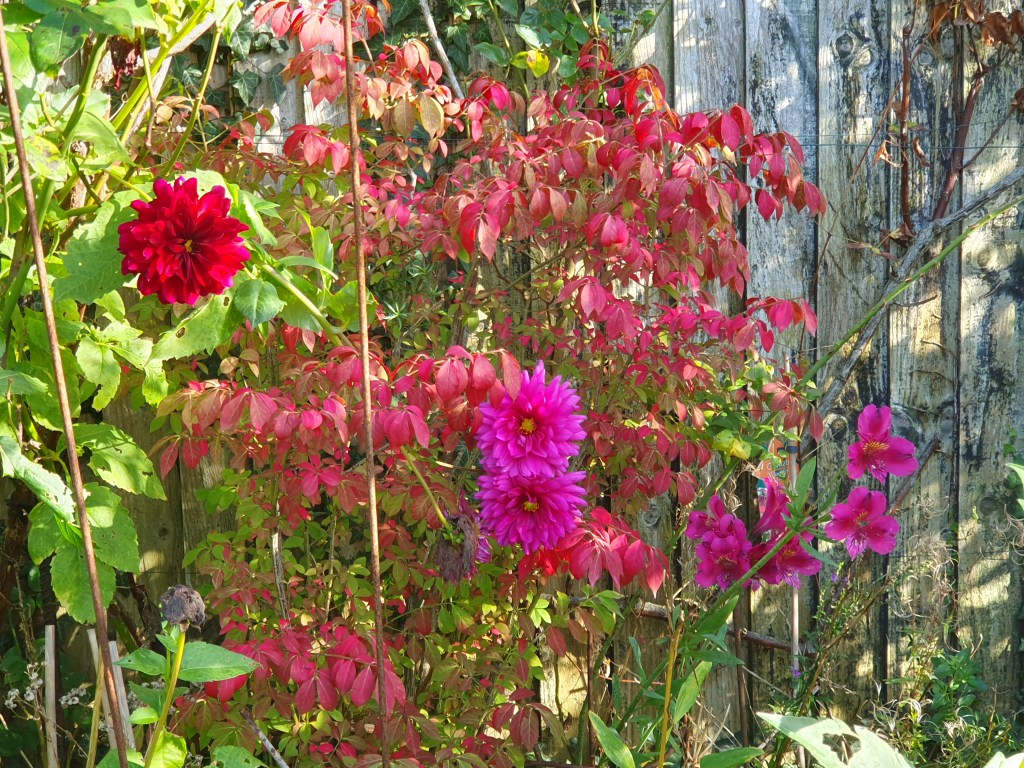
Look for fairly recent growth that hasn’t flowered and is about the thickness of a pencil. Cut straight across just below the point where a leaf meets the stem (called a node), then – about 15cms further up (about the length of your secateurs) – cut diagonally just above a leaf node. The diagonal cut doesn’t really do anything to help rooting, it just reminds you which is the top of the cutting, so you don’t plant it upside down (upside-down cuttings definitely won’t grow).

Put the cuttings around the edge of a deep plant pot – you can dip them in some hormone rooting powder or gel if you like, but it’s not essential – making sure to leave enough space at the bottom of the pot for the cuttings to grow roots. Find an out of the way spot and leave them to get on with it. Check on them every month or so, especially if it hasn’t rained, so they don’t dry out but don’t expect to see much action until later in spring when you’ll hope to see some signs of fresh growth. I usually leave mine untouched for 18 months or so, pulling out any that die and keeping the pots watered through summer until I’m ready to pot each cutting on individually.

As well as roses, plenty of shrubs can be propagated this way; try Cornus, Euonymus, Hydrangea and Salix as well as fruit bushes.

With dahlias done and frost blackening the foliage, they’re cut back, their tubers lifted, and I fill the gaps they leave with tulips. I bury the bulbs good and deep – deeper bulbs mean stronger stems apparently – and I can then drop dahlias in on top of them come the start of summer as the tulip foliage dies back.

I take pleasure in anything still blooming right now and there’s still some colour in places.

A few sheltered spots shine with shockingly pink trumpets of Salvia microphylla ‘Cerro Potosí’ or the sumptuous, glowing purple Salvia x Jamensis ‘Nachtvlinder’. These shrubby salvias tend to be hardier than some of their cousins and mine usually make it through the winter. Don’t cut them back until spring and their shrubbiness will give some frost protection to the delicate crown at ground level.

Chrysanthemums are also a slatwart at this time of year. Maybe you’re growing the bigger bloomed varieties under glass, but hardy spray types are giving it their all in my borders. I have an unidentified small-flowered pink variety that looks amazing and clumps up rapidly to put on a great display every year.

Whatever is still flowering in your gardens, do try and get out to enjoy it before everything gives up for winter and we pack in the gardening in favour or fires, heating and a toasty Scottie or two.

Winter is coming; let’s go!

Well summer is well and truly over, and the days are getting cooler and shorter, but there is still plenty to do in the garden before wetter and more wintery weather makes it harder to be on or working the soil.

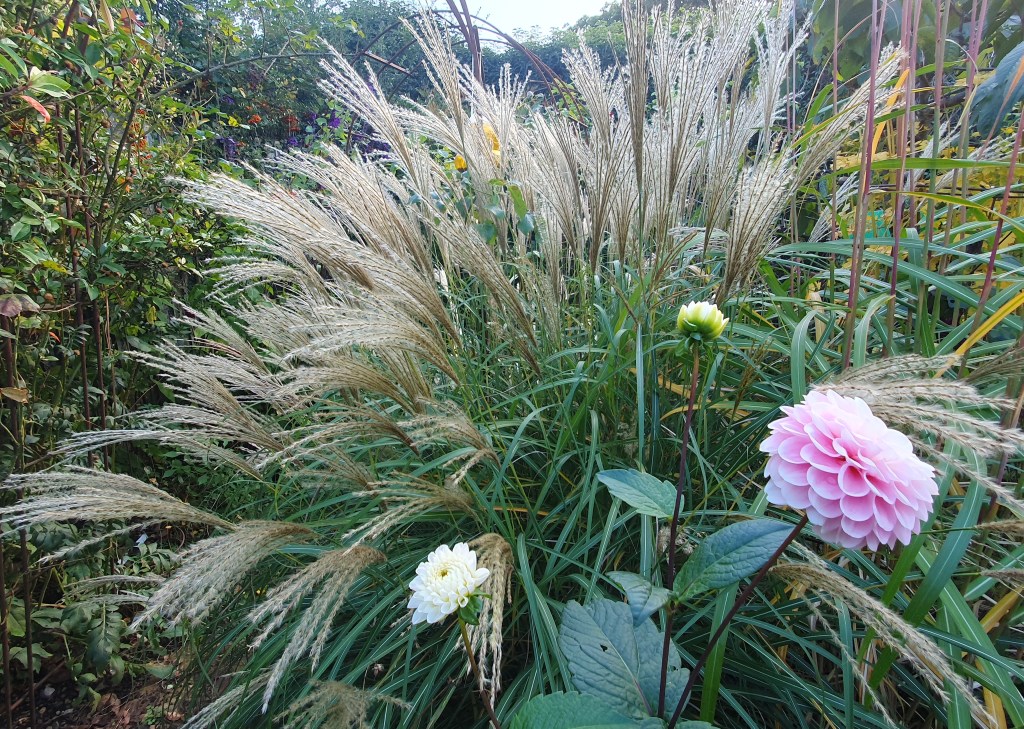
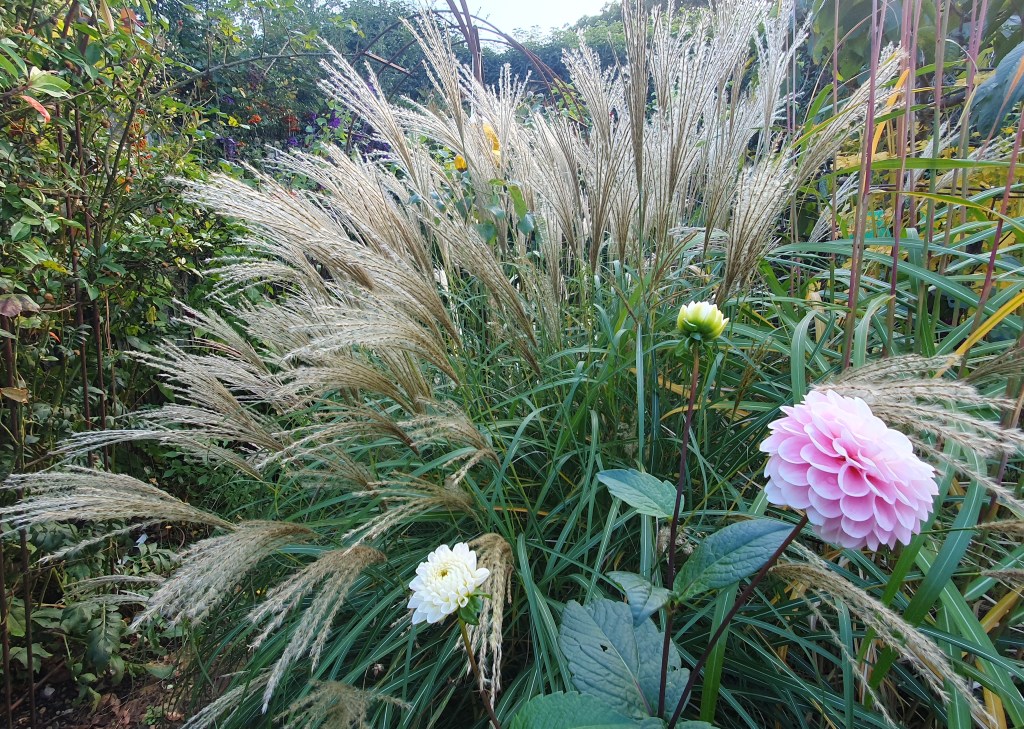
I still have some dahlias flowering and with continued deadheading they may carry on into November, before the first proper frosts blackens them and I have to cut them down and decide which ones to lift. Plumes of Miscanthus grasses glow red and silver in the sun, alongside asters and sedums giving bees the last of the nectar to turn into winter stores.

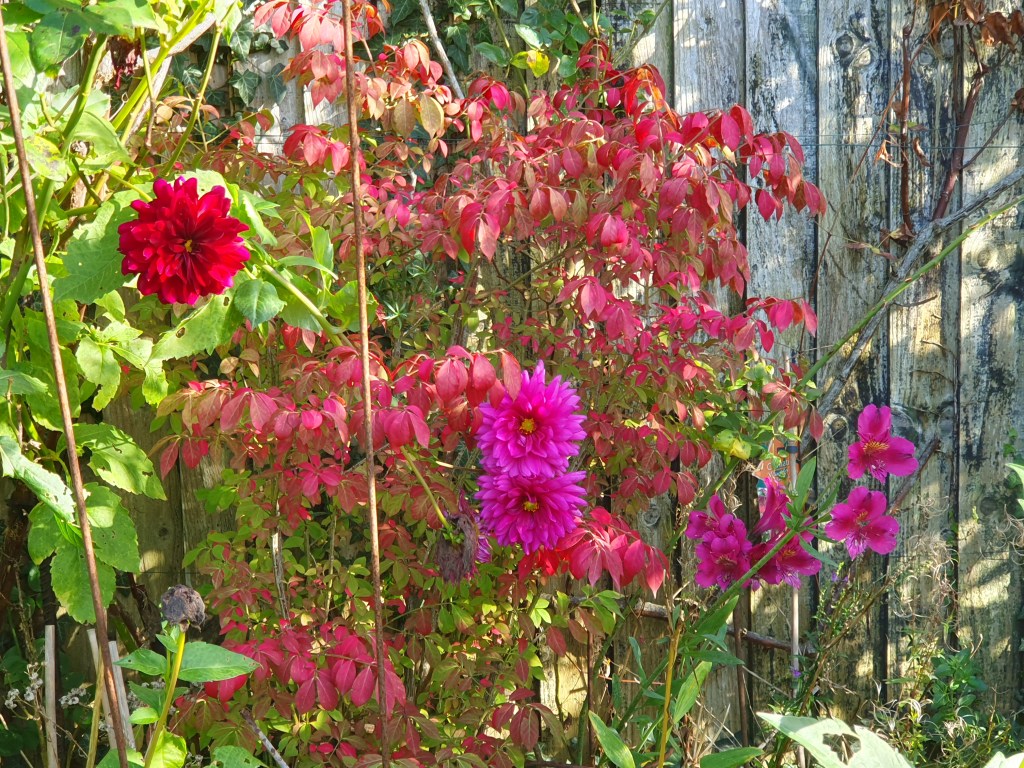
Although the chill may be ending some perennial flowers, it’s also turning my Euonymous alatus – the winged spindle or burning bush – shades of deep pink and red. Last year, I even had some grapes on a vine in the middle of the month.
You can be getting ready for a colourful spring by getting your bulbs in now. Get daffodils in as soon as you can but tulips will be better off if you plant in November as the colder weather will provide some protection from tulip fire (which sounds very dramatic and means brown spots on flowers with withered and distorted leaves). Plant bulbs to three times their own depth: the deeper you plant the better protected they are and the more likely they are to return.

The planners among you may be looking ahead to our Spring Show in April and thinking about what daffodils to exhibit. Search ‘daffodil’ on our website for a brief article on key classes so you can buy bulbs to match.

I’ll start preparing my pelargoniums for overwintering indoors, which basically means protecting from frost, reducing watering as the plants go dormant, and maximising the amount of light they get. Botrytis cinerea can be the biggest problem as winter plants need good air circulation to prevent this grey mould, so I avoid wrapping them against frost, spacing plants well apart instead. As things are never certain, I’ll also take some cuttings and bring them on in a heated propagator.

If you have a fruit and veg patch, you might be cutting back the fruited canes of summer raspberries and tying in the green canes that grew this year for harvest next. I’ve several clumps of rhubarb in the garden and on the allotment and I’ll check to see if any are congested and need dividing by digging them up and splitting them with a sharp spade. Chuck any that look past it and replant the rest.

I start raising the blades on the lawnmower this month and will trim when the weather is drier. I also run my electric scarifier over it to lift the thatch and dead grass that has accumulated from the summer months. I’ve really reduced my lawn to expand my borders, so it’s more likely that I’ll get round to spiking it with a fork to loosen any compaction and improve drainage. When rain is forecast, I’ll spread some autumn lawn feed and maybe some seed mixed with a bit of compost to revive it a bit.

There’s plenty to do this month – so let’s go!

Winter is coming; let’s go!

Well summer is well and truly over, and the days are getting cooler and shorter, but there is still plenty to do in the garden before wetter and more wintery weather makes it harder to be on or working the soil.

I still have some dahlias flowering and with continued deadheading they may carry on into November, before the first proper frosts blackens them and I have to cut them down and decide which ones to lift.

Plumes of Miscanthus grasses glow red and silver in the sun, alongside asters and sedums giving bees the last of the nectar to turn into winter stores. Although the chill may be ending some perennial flowers, it’s also turning my Euonymous alatus – the winged spindle or burning bush – shades of deep pink and red. Last year, I even had some grapes on a vine in the middle of the month.
You can be getting ready for a colourful spring by getting your bulbs in now. Get daffodils in as soon as you can but tulips will be better off if you plant in November as the colder weather will provide some protection from tulip fire (which sounds very dramatic and means brown spots on flowers with withered and distorted leaves). Plant bulbs to three times their own depth: the deeper you plant the better protected they are and the more likely they are to return.

The planners among you may be looking ahead to our Spring Show in April and thinking about what daffodils to exhibit. Have a look at this brief article on key classes so you can buy bulbs to match.

I’ll start preparing my pelargoniums for overwintering indoors, which basically means protecting from frost, reducing watering as the plants go dormant, and maximising the amount of light they get.

Botrytis cinerea can be the biggest problem as winter plants need good air circulation to prevent this grey mould, so I avoid wrapping them against frost, spacing plants well apart instead. As things are never certain, I’ll also take some cuttings and bring them on in a heated propagator.

If you have a fruit and veg patch, you might be cutting back the fruited canes of summer raspberries and tying in the green canes that grew this year for harvest next. I’ve several clumps of rhubarb in the garden and on the allotment and I’ll check to see if any are congested and need dividing by digging them up and splitting them with a sharp spade. Chuck any that look past it and replant the rest.

I start raising the blades on the lawnmower this month and will trim when the weather is drier. I also run my electric scarifier over it to lift the thatch and dead grass that has accumulated from the summer months. I’ve really reduced my lawn to expand my borders, so it’s more likely that I’ll get round to spiking it with a fork to loosen any compaction and improve drainage. When rain is forecast, I’ll spread some autumn lawn feed and maybe some seed mixed with a bit of compost to revive it a bit.

There’s plenty to do this month – so let’s go!

Coming this season with Dedham’s Horticultural Society

I’m writing this freshly back from special visit to a local garden with some of our members and their guests. Following a fantastic talk in June by Ed Fairey about the National Garden Scheme (https://ngs.org.uk/) with photos from his own garden, we were inspired to visit him at Mayfield Farm in Ardleigh for a tour followed by tea and cake. There was a fairly even division between those who went for a nose about the garden and those who went for the tea and cake, but all agreed it was a wonderful afternoon and great way to round off our events for the year.

Our 2024/25 programme kicks off on Saturday 7 September with our annual Autumn Show and the schedule to enter is available now to download from our website. Classes are free to enter and there’s usually a one or more that works for everyone.

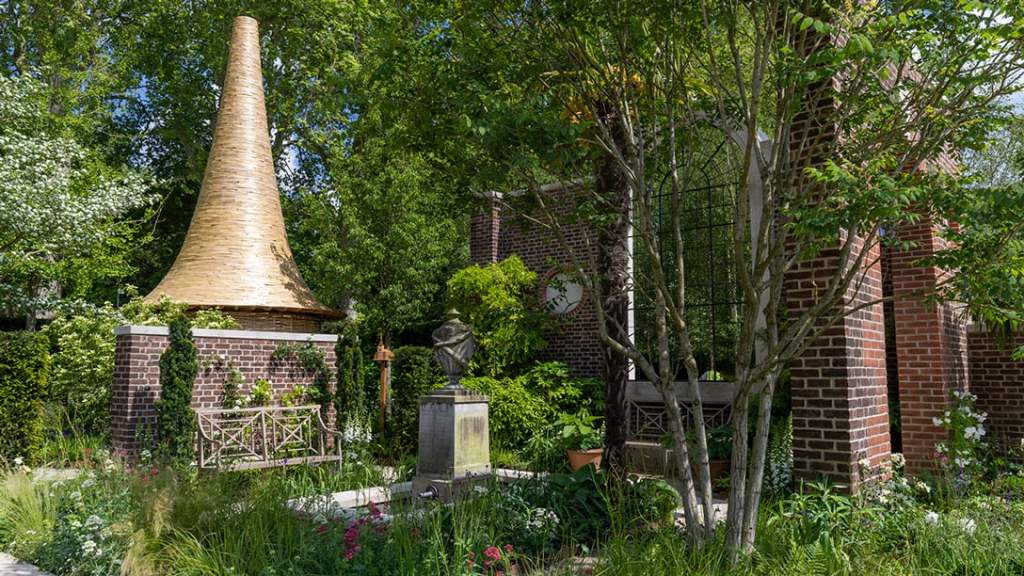
Then in October, our programme of monthly speaker evenings starts again offering insight into a wide range of topics. We’re very excited about our first from Mark Richardson, who will take us ‘behind the scenes at the Chelsea Flower Show. Based in Fordham, Mark has worked with several designers to build Chelsea Gardens including the Gold-medal winning St James’s Piccadilly: Imagine the World to be Different with designer Robert Myles and the Bridgerton Garden with Holly Johnston and Netflix.

With landscaping being as important as plants in our gardens, he’ll give us a fascinating insight into the challenge of building some of the structures while also being conscious of planting going around him. We hope to be joined by one of his local design partners too, so this is one not to be missed.

One of our regular Show judges, Brenda Eyers, will give us a demonstration of flower arranging in November and we’ll raffle off her creations at the end of the evening. These will make wonderful centrepieces or talking points for any Christmas entertaining you’re planning. Then in December, we host our third Christmas curry and quiz. Spaces go fast for this one (and I get an early opportunity to go all out with the festive sparkle). Members and their guests get first dibs on tickets, so worth joining the Society if you don’t want to miss out.

In February, we host a virtual talk to save us venturing out until springtime returns and Ben Pope will take us ‘treading gently through the borders’ before it’s my turn to give a loosely garden-related talk on my beekeeping year. I’ve been keeping bees for several years now – not always successfully – and as the bees start waking up, will share some of the joys and utter failures of the hobby.

We’ll hear about the Eden Project and Lost Gardens of Heligan, get an introduction to Bonsai from the chairman of the Ipswich Bonsai Society and finish the programme in June with Roy and James from local Shadows Pit Nursery, who will bring along some plants and demonstrate how to propagate them. There will be an opportunity to have a go ourselves too, so if you want to learn how to make more of your plants for free, put 4 June in your diary now.

Speaker evenings take place at the Assembly Rooms, usually on the first Wednesday of the month, but do check our website for dates. Guests are always welcome – you don’t need to be a member, though there is a small charge if you’re not – so we hope to see you there.

As well as these events, our annual programme includes the spring show, a busy plant sale in front of Dedham’s church, coffee morning for members and our annual outing to a well-known garden attraction (we’re still finalising the details for 2025, so stay tuned to the website).

It’s quite a job to make all this work well and the committee is still looking for a couple of people who might have some time to help out. We’re a friendly bunch and regardless of how much time you think you can contribute – all help is welcomed.

Our Shows and Speaker Programme benefit from the generosity of two local sponsors, Horizon Landscapes and Bland Landscapes. Their sponsorship lets us offset some of the costs of these events, keeping them free for members and only £2 entry for other guests. So, as I sign off for another month and get back to planning the programme with my fellow committee members, I’d like to thank Marc Everett, Joe Bland and their respective teams, as well as all our members and casual visitors for their support.