Let’s put on (another) show!

It’s June as I write this and the garden is lush and green with flowers. Although it looks beautiful, most of my activities focus on weeding, supporting, pruning and cutting back (and weeding).

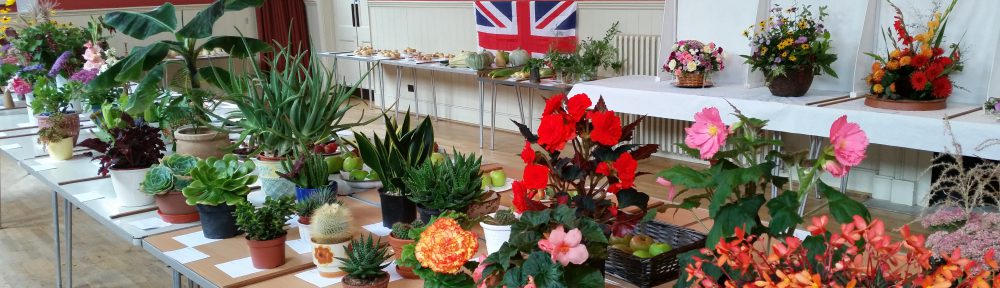
It’s not very exciting or interesting, so I thought instead I’d look ahead to our Autumn Show on Saturday 3 September at Dedham’s Assembly Rooms. Now’s a great time to help you think about submitting an entry or two. There’s no cost to enter and you don’t need to be a member of the Society.

The autumn show schedule has separate sections dedicated to fruit and vegetables, as well as the flowers, floral art, cookery and photography we see in spring. In several of these classes you’ll need to exhibit 3, 5, sometimes 10 of a kind, which can be harder than you think. However there are plenty of classes that if you have a small garden or just pots and containers, you can enter and have a chance to win!

You can exhibit ‘a vase of mixed herbs’ and only need three varieties. Chances are there’s a some basil on a window ledge or mint or chives. You might have sage, a lavender shrub or rosemary bush in a pot outside. If so, then gather some sprigs for the vase you use more than three stems in your arrangement, just make sure you have three different kinds of herb.
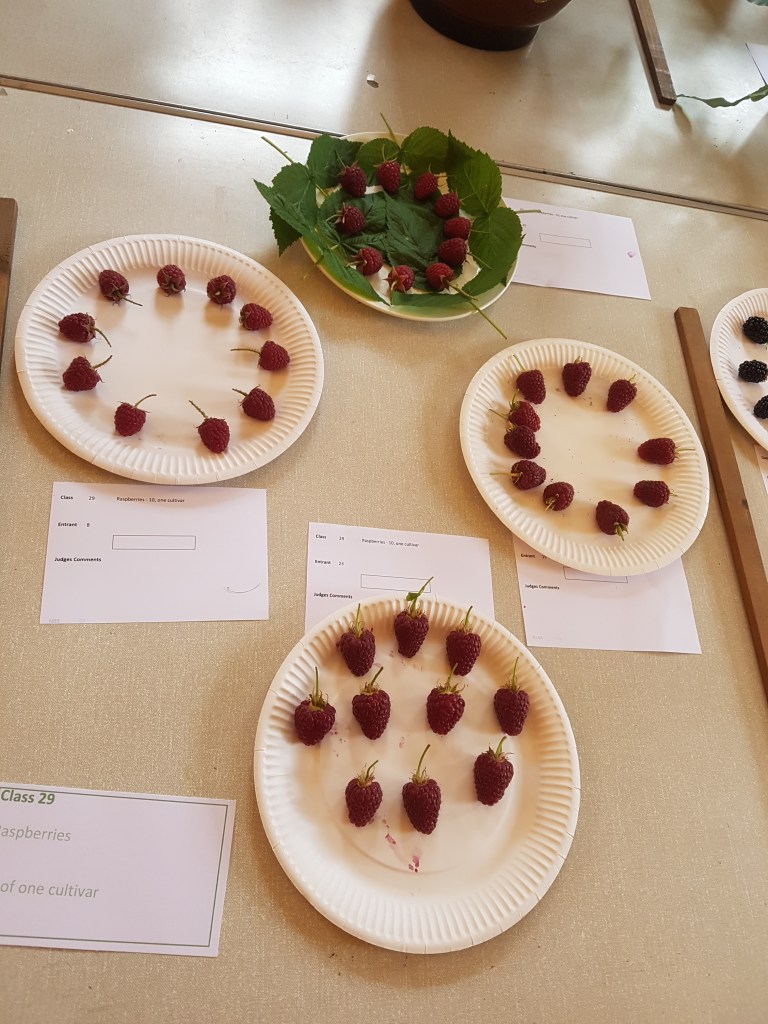
You’ll need to find 10 of the same cultivar to enter the blackberries or raspberries classes and they’ll need to look as near-identical as possible. The advantage of blackberries though is that you can use hedgerow varieties – so you don’t even need to grow them in your garden or allotment to enter this class! It also means you don’t need to worry about cultivars: just raid as many brambles as you can get to.

Remember to keep the stalks on though – the exhibiting world has a great fear of supermarket perfection accidentally making it onto the show bench.

Now. Flowers. If our spring show is all about daffodils and bulbs, autumn is all about the dahlia and the rose.

There are five classes for dahlias and it’s worth doing a bit of reading to understand the difference between them. Beginners might prefer to avoid the pompon class, as it’s not easy to tell the difference to ball dahlias, and know that ‘three single blooms’ means the shape of the flower not just one flower per stem.

Instead, if it’s your first time I think the best dahlia class is ‘two vases, three blooms in each, any cultivar(s)’ as it’s the most flexible. Although it’s not specifically stated, most (but not all) exhibitors make the content of each vase identical. You could try six of the same dahlia or two each of three different kinds. The best thing is that you don’t need to know the difference between decorative, cactus, pompon or ball, you just need to take them from the same plant.

The rose section is another that anyone should feel able to enter. There are roses for containers and small spaces as well as the border, but know that this section is highly competitive among your fellow villagers.
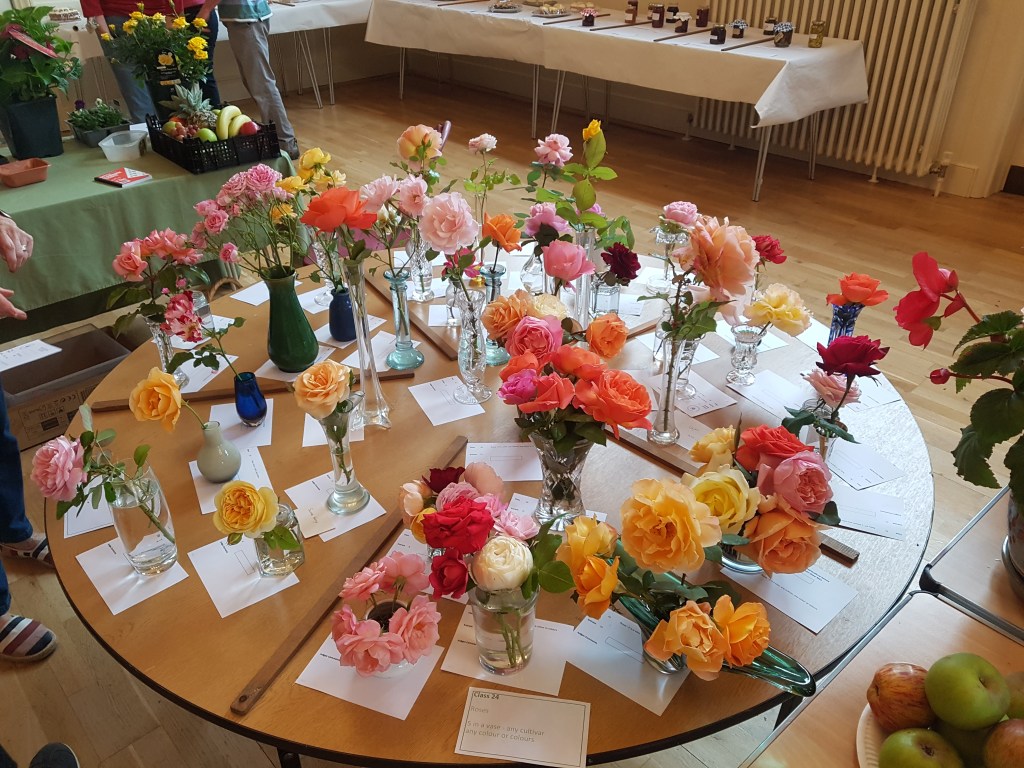
You could do a bit of research into the different kinds – the hybrid tea (HT), the floribunda (clusters of blooms on a stem) and shrub – but you don’t need to do that if you enter ‘five roses in a vase’. They can be any kind and any colours, just make sure there’s five. Give ‘em a bit of a zuzh and you’re done!

There are plenty of other classes and if you can’t grow, then bake or submit a photo instead. It’s only a village show at the end of the day (yes, any old vase really will do). So don’t be shy, give it a go. It’s free to enter and we’d love to see you.
Midsummer madness!

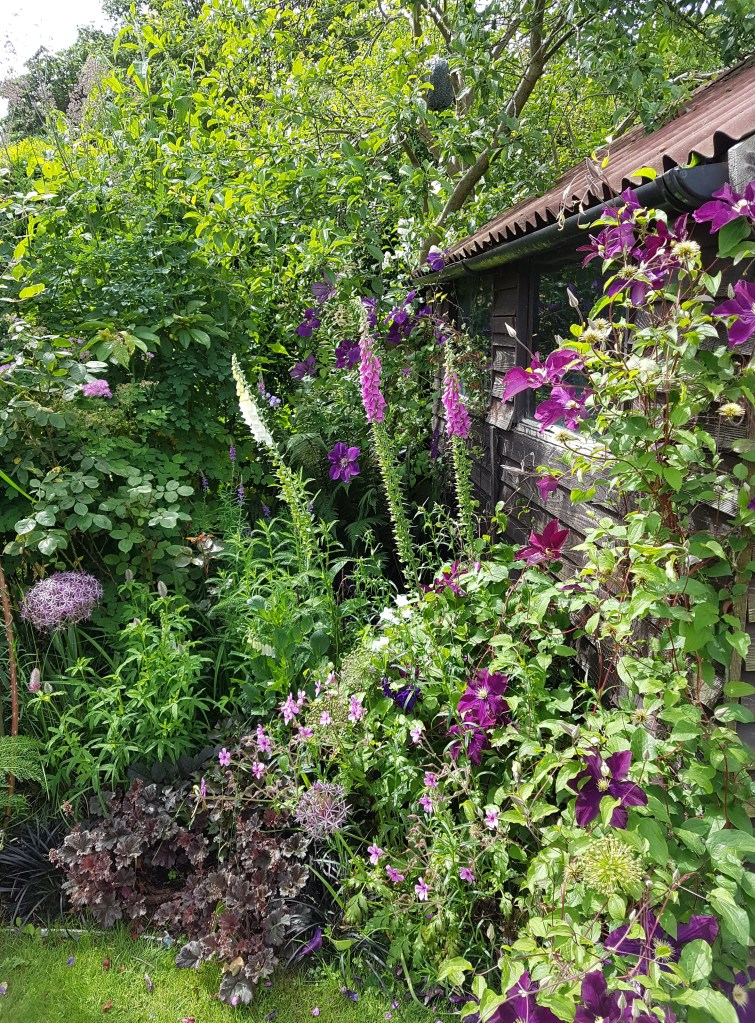
With the longest day on the 21st, there’s plenty of daylight (and hopefully sunshine and warmth) in which to get in the garden or on the plot.

So to work! Stop slumping about with a cup of tea. Those longer days (and hopefully sunshine and warmth) will be encouraging plants to grow vigorously; they’ll need staking and supporting to keep them from flopping about in an ungainly fashion.

It’s suprising how tall dahlias can get and I’ve got a lot of them in the borders. I’ve found if I use a cane the stems can snap where they are tied due to the weight of the flowers, so this year I’m trying grow-throughs. If you get the supports in early enough, they’ll soon be hidden by foliage.

Provided the weather is dry, it’s a good time to clip topiary plants such as privet (Ligustrum ovalifolium) or box (Buxus sempervirens). If you’re clipping box, you should already be checking for signs of box tree caterpillar. Eggs (flat, pale yellow discs around 1mm in diameter) can be laid during the March to October breeding season on the underside of leaves. If you find overlapping clusters about the size of a fingernail, just wipe them off.

Sadly and far more likely, you won’t realise you have an infestation until you see the white webbing surrounding the feasting caterpillars. By that time, you’ll likely need some professional pest management to fend off the doom. (Sorry).

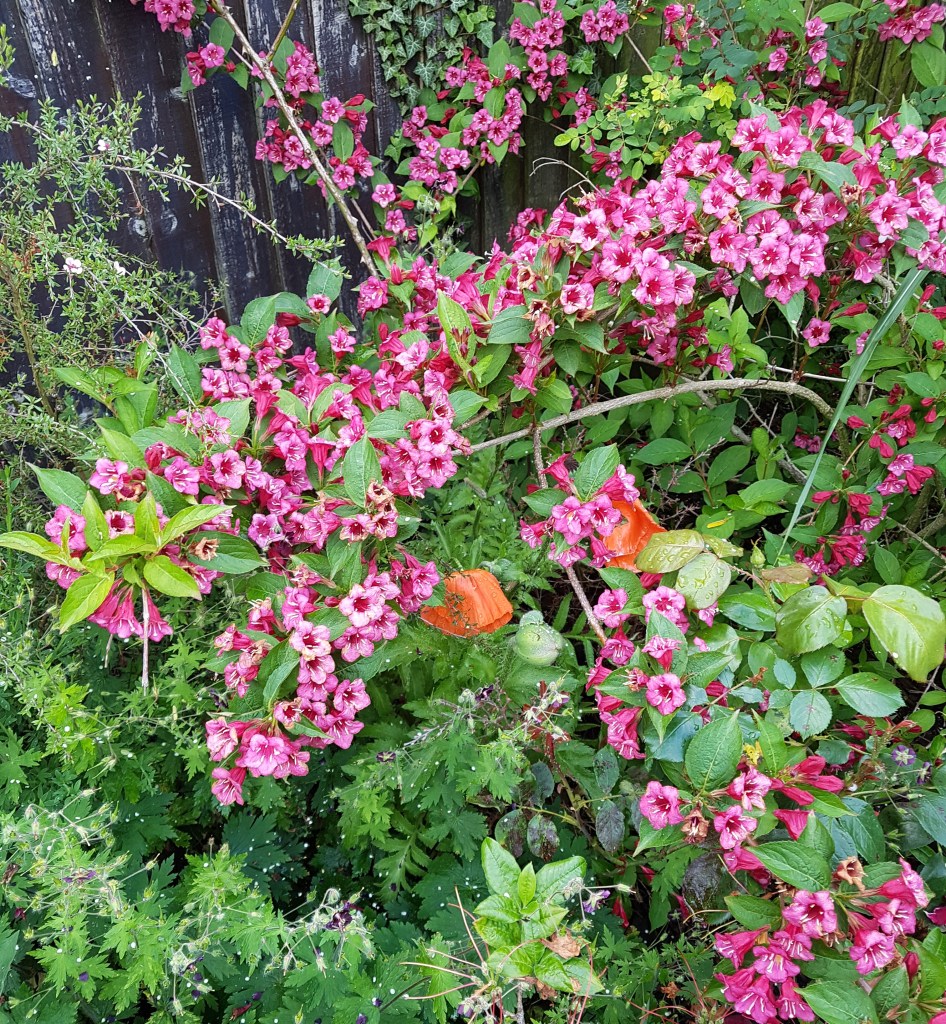
A more significant cutting back is needed on my Weigela ‘Bristol Ruby’, Deutzia × hybrida ‘Strawberry Fields’ and Spiraea ‘Arguta’ (bridal wreath) shrubs to keep them in shape and flowering well. Now they are finishing flowering I’ll thin out the older, thicker stems with secateurs or loppers. It’s important to do it now so new growth this year has enough time to ripen over the summer for good flowering next.

Sow biennials – foxgloves, honesty or wallflowers – in seed trays or modules now and put them outside in a cold frame or cool, sheltered spot. Once the seedlings are big enough, transfer them to 9cm pots where they have plenty of room to grow on before planting them out in autumn. They’ll grow strong roots and foliage so they can make it through the winter ready to flower next season.

I want to try taking softwood cuttings from the pelargoniums I bought last year. I lost some over winter so this will give me backup plants this time round. I’ve also got a lovely Sambucus nigra ‘Black Lace’ and several salvias I want to propogate. You can take these cuttings at any time from March to August.

Cut strong shoots – no more than 10cm long – from the current season’s growth. Use a sharp blade to cut the stem back to just below a leaf joint, then carefully remove the leaves from the bottom half. Pinch out the soft tip and cut each remaning leaf in half to reduce water loss. You can increase your success rate by dipping the base of the cutting in rooting hormone, but it’s not strictly necessary. Put the cuttings into 7cm pots of moist cuttings compost so that the lower leavves rest just on the surface.

Put the pots in the greenhouse or a propagator or make a DIY version with canes and a clear plastic bag to go on a warm window ledge. You’ll know you’ve been successful when you see fresh growth. Softwood cuttings work well from ornamental shrubs and woody herbs, like that spiraea as well as buddleia, callicarpa, fuchsia, lavender, rosemary and more. Hopefully, that’s given you enough inspiration to keep busy in the garden this month. Enjoy!

Let’s put on a show

As I write this, Dedham Horticultural Society has just finished its first Spring Show after a two year ‘pandemic pause’. Almost two dozen people entered, raiding gardens and allotments (and possibly a verge or two) for daffodils and other spring flowers, blossoming shrubs and assorted other plants.

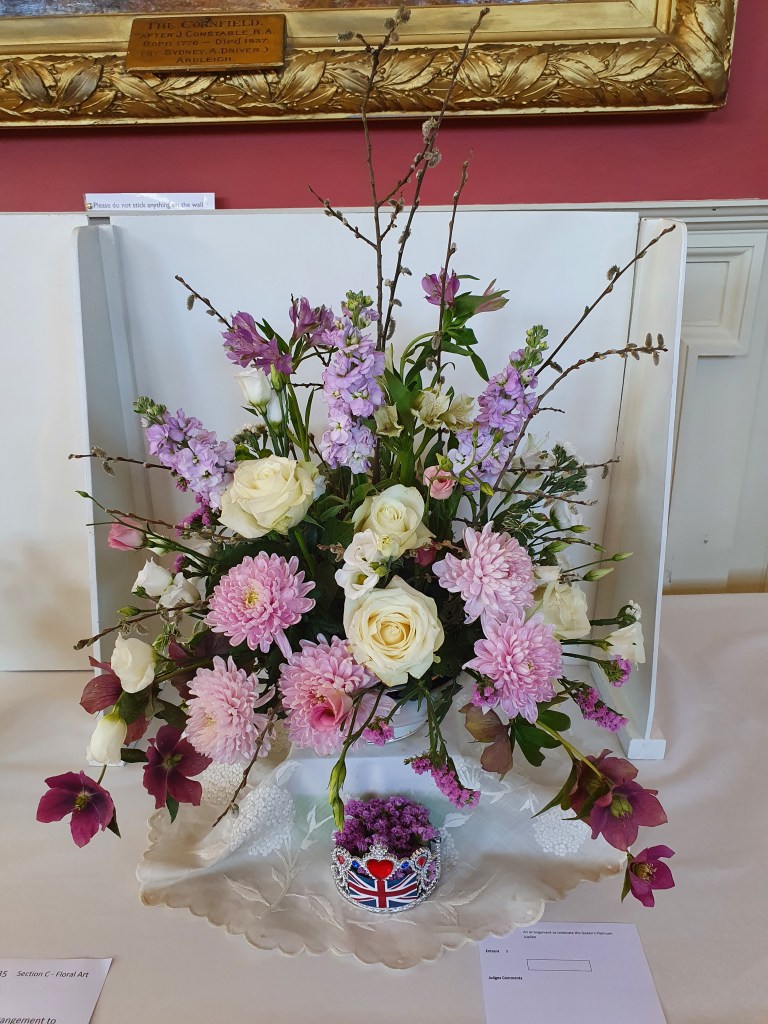
Baking abound with coffee and walnut cakes (of various heights), hot cross buns (a heavyweight class) and marmalade. Creative villagers brought out their floral art skills to mark the Queen’s Jubilee and there was a roaring trade at the plant sale.

If you’ve never exhibited in one of our shows before, it’s free and very easy. Although exhibits are professionally judged, they are generous with their assessment and plenty of first-timers have found their entries winning first, second or third place. The vagaries of the British weather means the Spring Show is often a better option if you want to dip your toe into the water of exhibiting your flowers and plants – there’s usually less competition and more chances for a win!

There can’t be a garden or container that doesn’t have some spring bulbs in it and the daffodil (Narcissus) gets pride of place. There are several categories but we are more likely to have trumpet or large-cupped daffodils in our garden. The corona or trumpet is the part of the flower that sticks out like a nose with (usually) six petals splayed out behind it.

If you gently fold a petal forwards and it is no longer than the trumpet, then you have a trumpet daffodil and should enter it into that class. If it’s longer, then you likely have a large-cupped daffodil and the best of these very clearly have a short, wide corona: imagine laying the daffodil on its back so the petals form a saucer and the trumpet makes a squat tea cup. There’s a class for that!

There’s also a class for the double daffodil, those multi-petalled, frilly, almost ball-like blooms. But remember, two flowers on a single stem is not the same thing as a double. IF you look at the list of classes and don’t seem one dedicated for your daffodil, there’s even a class for that – basically ‘any other daffodil’!

Another tip for beginners is to enter the ‘single specimen’ classes. There is usually a ‘three of a kind’ class for daffodils, but judges expect them to be the same: you really have to grow a lot to find three of anything the same size and colour, unblemished and out at the same time. It’s much easier to plonk one of something in a vase and call it a success. Speaking of, you can exhibit in any old vase – we don’t mind. Another good class is 12 daffodils in a vase – they can be a mixture of any type: just zush them a bit and try to make them all face the front and you’re done.

While daffodils are a focus, there are plenty of other classes you can enter, that just ask you to have a look round the garden: a small branch from that evergreen hedge – consider the foliage class; a tulip – yes there are three classes for that; those lovely primulas – snip a few heads and you’ve got an entry there too.

We also have several baking classes and there’s usually at least one that’s good to do with the kids (Easter cupcakes this year); one we regret putting in (four hours to prove and bake cement-like hot cross buns!); and one that everyone has a go at (coffee and walnut cake).

The Autumn Show is coming up in September – keep an eye on our website for details – and for that, we celebrate the dahlia (also dead easy to grow with varieties suitable for pots or the border). There’s baking and flower arrangements, but also fruit and veg to exhibit. So have a think, have a go – it’s free and lots of fun.

Shooting, spreading and supporting

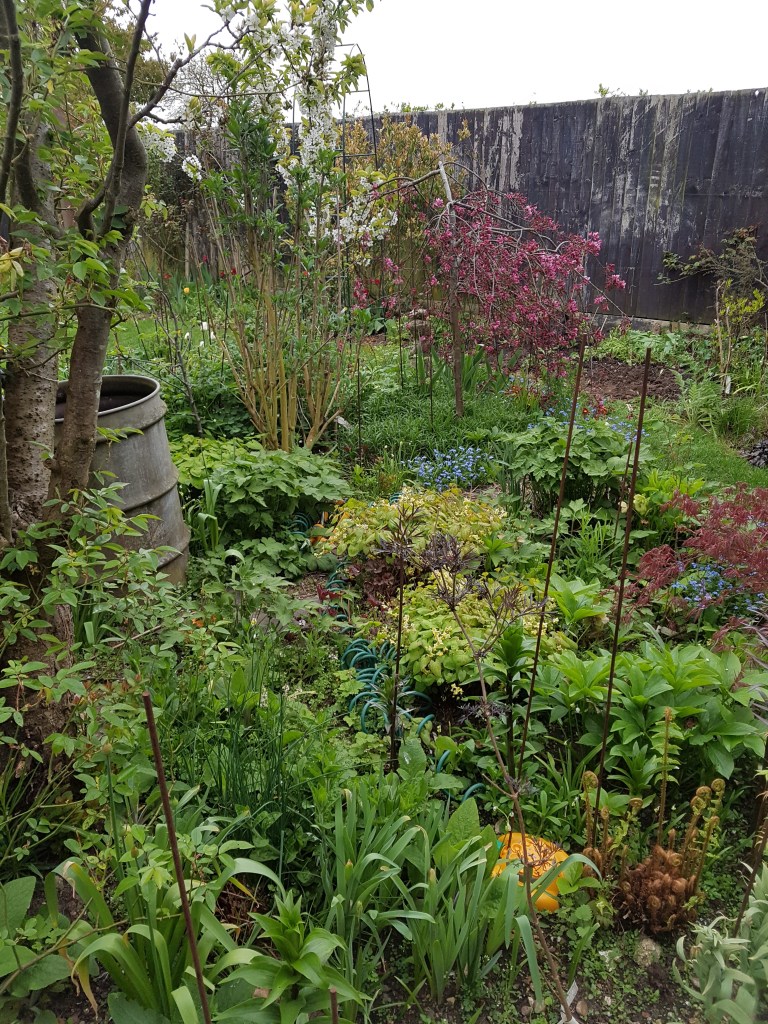
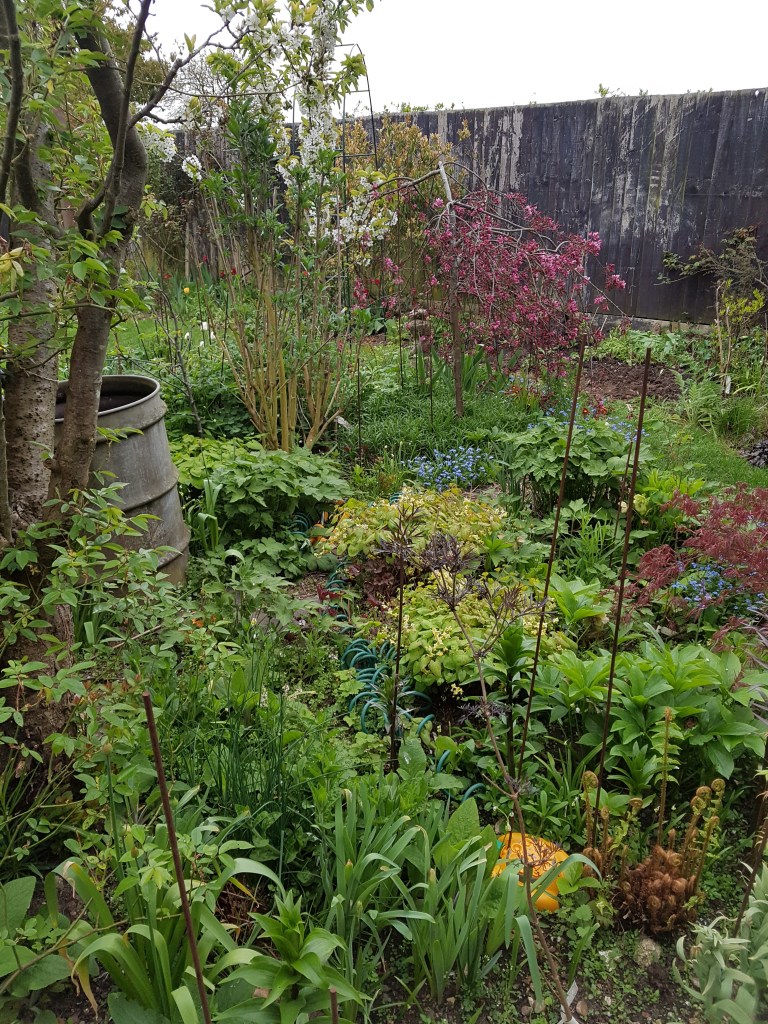
The garden’s in full on growth mode now. Everywhere I look something is shooting up or spreading out, which of course means weeds need pulling up or hoeing off (if the weather stays dry), stems need supporting and something always – always – needs pruning.

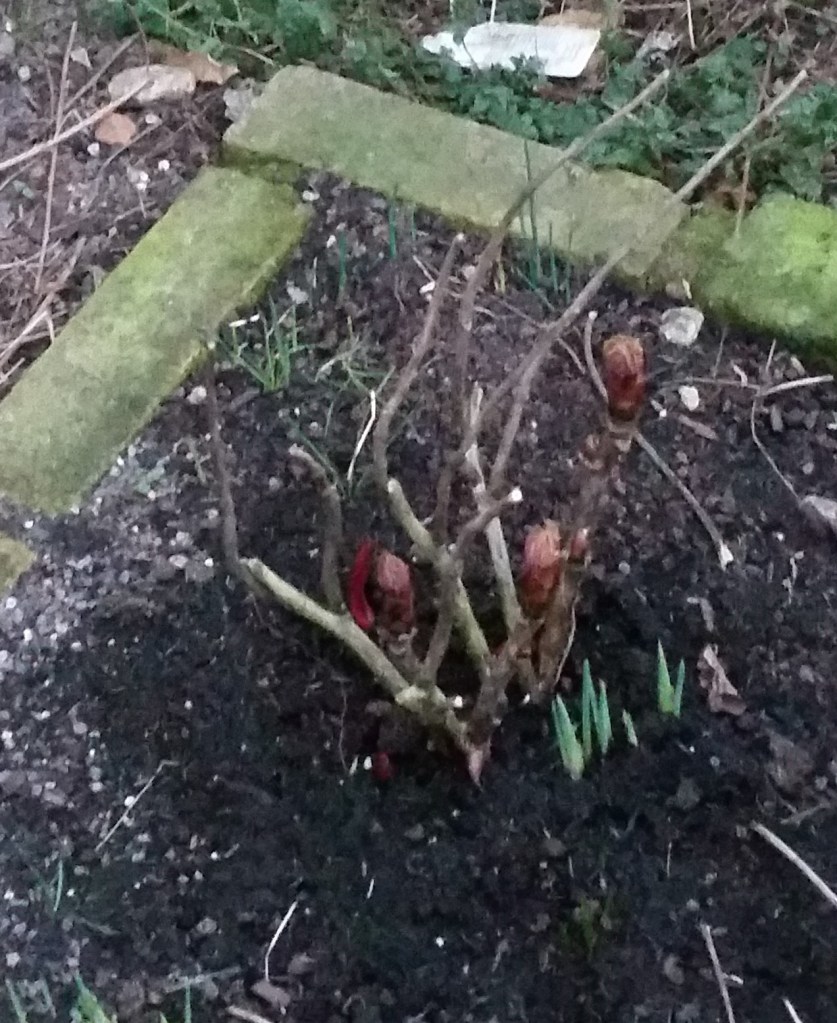
As I’m trucking secateurs, hand fork, trowel, Japanese razor hoe (best thing ever, you should get one), tubs and white bags of cut material back and forth across the garden, there’s still time to enjoy the fat buds of rhododendrons and peonies waiting to burst later in spring, as well as blossom, wall flowers, primroses and Erysimum ‘Bowles’s Mauve’ in bloom. I’ll pull some tender, bright pink stalks of forced rhubarb for the kitchen too and enjoy the huge amount of colour seen in the greens, purples and reds of stems and foliage.

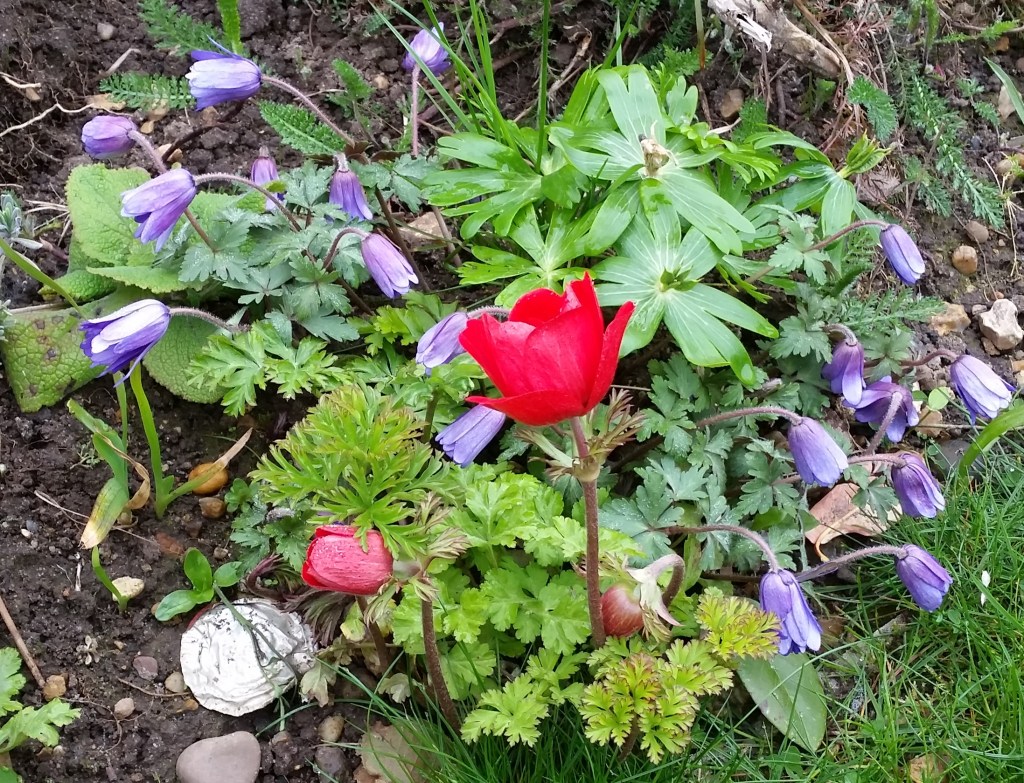
Many of the bulbs are still going strong and, alongside the usual, two anemones are looking especially good: the soft blue Anemone blanda alongside the stronger jewel tones of Anemone cornaria. The petals of the red coronaria contrast with the blue of the blanda, but there’s also a touch of blue around its boss of stamens that complements perfectly.

It’s our Spring Show early this month (hope we’ll see at the Assembly Rooms), so anything I like the look of could end up being cut for exhibition.

I’ll also check to see which – if any – of my overwintered pelargoniums (often called geraniums, although they’re nothing alike and shouldn’t be treated alike) have made it through. I’ve only just started growing these in pots and I’m not sure I’ve quite got their needs right to get them through the worse of the weather. But I learn something new in every gardening year, so will persevere.

I planted tomato seeds on the window ledge in early March and they should be ready to pot on into larger containers with split canes for support. It’s still too early to plant them out but when I do, I always have spares that go to the Horticultural Society’s plant sale in May.

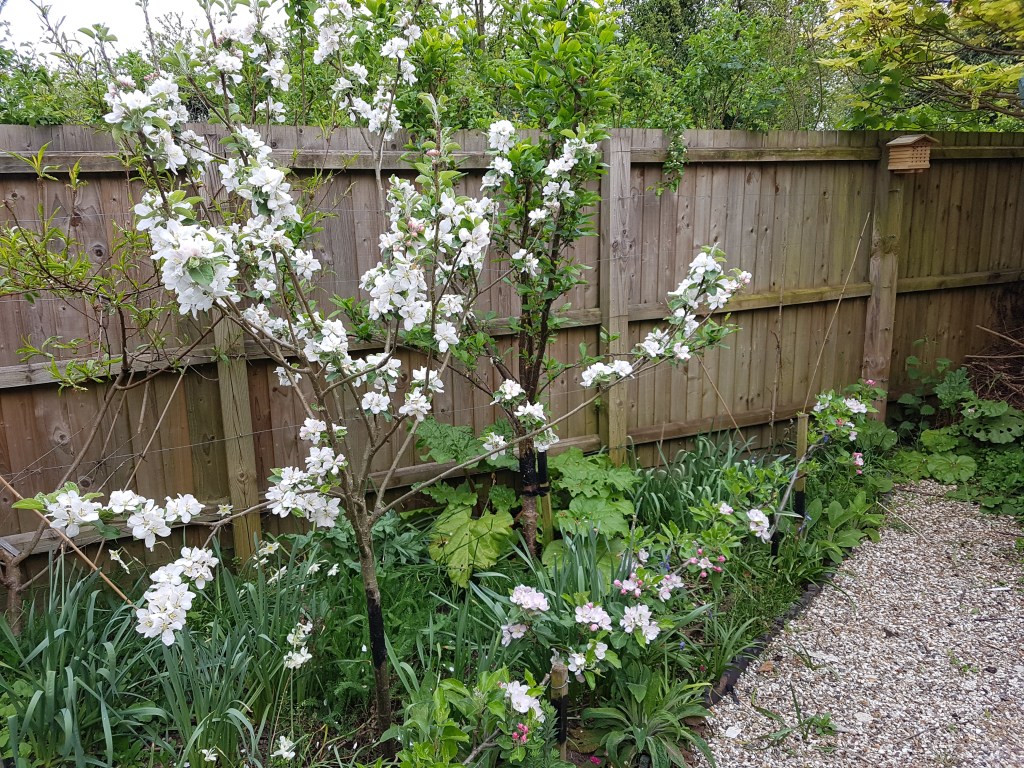
The blossom looks great as always, but I’m mindful of the late and heavy frost last May which meant my fruit crops were much less than hoped for. I doubt I’ll be able to protect every tree (and certainly not the large old greengage) but will get some fleece draped over my St Edmunds Pippin apple treet, which I bought because my dad lives in Bury.

I’ll also check on the hardwood rose cuttings that I’ve had in pots for a couple of years now. A quick look underneath to see if roots are starting to show through the pots’ drainage holes will indicate whether they need potting on. I usually put a few of these into our plant sale too, so you might find some if you’re able to pop along to Dedham’s churchyard on the day.

Then there’s lawncare. I don’t love a lawn, though it certainly sets off the rest of the garden (I’m told) and I’ve boosted mine with a clover mix that encourages pollinators. This year or next, I’m going to reduce my grassy areas to just a small circle and pave the rest in the hope I can maintain the smaller area to a better level of ‘perfection’ (hah).

First job in April is to scarify the grass, which essentially means scraping away with a spring-tine rake to get as much moss (or thatch) out and let air to the roots of the grass. It’s hard work, but I bought a cheap electric scarifier which is easier and quicker, and it’s amazing just how much comes out. Very compacted areas that get walked on a lot will benefit from spiking with a garden fork: just drive the tines in, wiggle them gently back and forth and move six inches or so to the next spot and repeat. I’ll dig out any perennial weeds (dandelion is my lawn’s bête noire), feed it with a high-nitrogen fertiliser and, if it’s dry enough, give it a mow with the blades high.

When not outside, I need to read (again) about how to grow peaches. I cannot seem to get more than the odd fruit (and competing with wasps for that one) and suspect I’m cutting back the wrong branches when I prune later in the year. (No stone fruit should be pruned in winter).

Most peach trees suffer from leaf curl and, while there aren’t any chemical sprays to control it, you can try an organic winter tree wash. You can also try shrouding the tree with a polythene lean-to (I know, what next?!) to protect it from rain which spreads the spores. You’ll need to leave it open on the sides or remove it on dry days so pollinators can get to the blossom. However you’re spending these (hopefully) warmer, longer days in the garden, I hope you find something here to motivate or inspire.

Shooting, spreading and supporting

The garden’s in full on growth mode now. Everywhere I look something is shooting up or spreading out, which of course means weeds need pulling up or hoeing off (if the weather stays dry), stems need supporting and something always – always – needs pruning.

As I’m trucking secateurs, hand fork, trowel, Japanese razor hoe (best thing ever, you should get one), tubs and white bags of cut material back and forth across the garden, there’s still time to enjoy the fat buds of rhododendrons and peonies waiting to burst later in spring, as well as blossom, wall flowers, primroses and Erysimum ‘Bowles’s Mauve’ in bloom. I’ll pull some tender, bright pink stalks of forced rhubarb for the kitchen too and enjoy the huge amount of colour seen in the greens, purples and reds of stems and foliage.

Colour without flowers

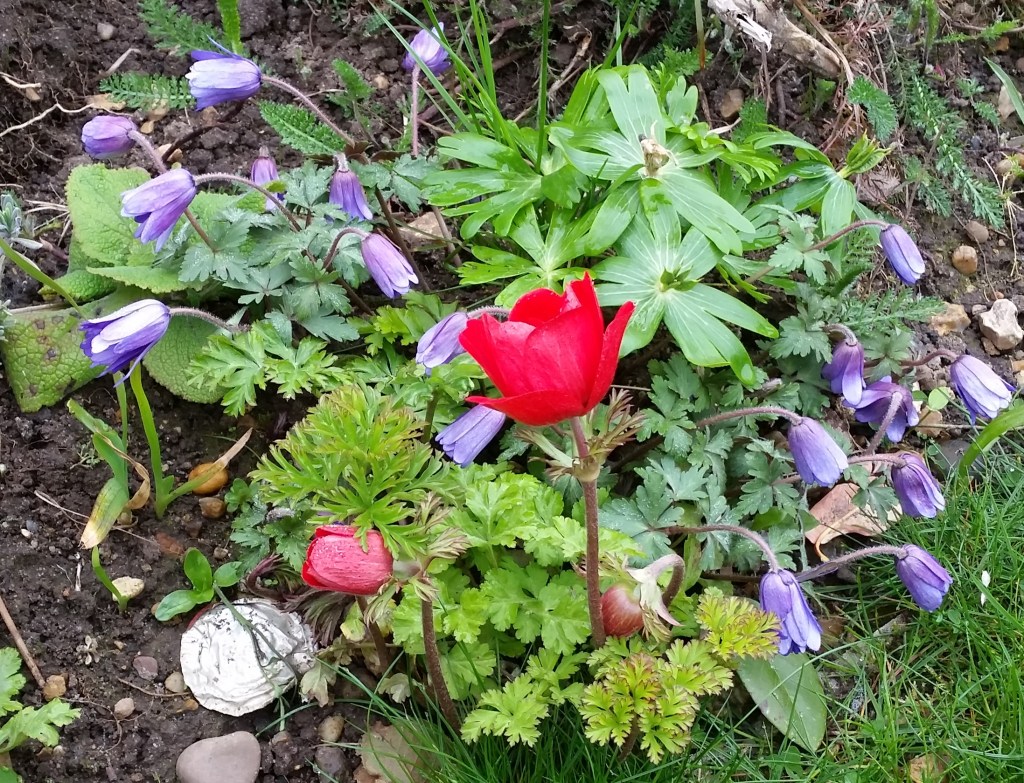
Many of the bulbs are still going strong and, alongside the usual, two anemones are looking especially good: the soft blue Anemone blanda alongside the stronger jewel tones of Anemone cornaria. The petals of the red coronaria contrast with the blue of the blanda, but there’s also a touch of blue around its boss of stamens that complements perfectly.

Anemones

I’ll also check to see which – if any – of my overwintered pelargoniums (often called geraniums, although they’re nothing alike and shouldn’t be treated alike) have made it through. I’ve only just started growing these in pots and I’m not sure I’ve quite got their needs right to get them through the worse of the weather. But I learn something new in every gardening year, so will persevere.

I planted tomato seeds on the window ledge in early March and they should be ready to pot on into larger containers with split canes for support. It’s still too early to plant them out but when I do, I always have spares that go to the Horticultural Society’s plant sale in May.

The blossom looks great as always, but I’m mindful of the late and heavy frost last May which meant my fruit crops were much less than hoped for. I doubt I’ll be able to protect every tree (and certainly not the large old greengage) but will get some fleece draped over my St Edmunds Pippin apple treet, which I bought because my dad lives in Bury.

I’ll also check on the hardwood rose cuttings that I’ve had in pots for a couple of years now. A quick look underneath to see if roots are starting to show through the pots’ drainage holes will indicate whether they need potting on. I usually put a few of these into our plant sale too, so you might find some if you’re able to pop along to Dedham’s churchyard on the day.

Then there’s lawncare. I don’t love a lawn, though it certainly sets off the rest of the garden (I’m told) and I’ve boosted mine with a clover mix that encourages pollinators. This year or next, I’m going to reduce my grassy areas to just a small circle and pave the rest in the hope I can maintain the smaller area to a better level of ‘perfection’ (hah).

First job in April is to scarify the grass, which essentially means scraping away with a spring-tine rake to get as much moss (or thatch) out and let air to the roots of the grass. It’s hard work, but I bought a cheap electric scarifier which is easier and quicker, and it’s amazing just how much comes out. Very compacted areas that get walked on a lot will benefit from spiking with a garden fork: just drive the tines in, wiggle them gently back and forth and move six inches or so to the next spot and repeat. I’ll dig out any perennial weeds (dandelion is my lawn’s bête noire), feed it with a high-nitrogen fertiliser and, if it’s dry enough, give it a mow with the blades high.

When not outside, I need to read (again) about how to grow peaches. I cannot seem to get more than the odd fruit (and competing with wasps for that one) and suspect I’m cutting back the wrong branches when I prune later in the year. (No stone fruit should be pruned in winter).

Most peach trees suffer from leaf curl and, while there aren’t any chemical sprays to control it, you can try an organic winter tree wash. You can also try shrouding the tree with a polythene lean-to (I know, what next?!) to protect it from rain which spreads the spores. You’ll need to leave it open on the sides or remove it on dry days so pollinators can get to the blossom. However you’re spending these (hopefully) warmer, longer days in the garden, I hope you find something here to motivate or inspire.

Spring bulbs

As I look around the garden this month, the first flowers I see rising from the ground at the start of a new season are the spring bulbs I planted at the end of the last. Bulbs represent an easy way to fill beds and borders (or containers) with a range of colour and form, and they seem to start earlier every year.

As easy as they are, there are several things to remember when planting with bulbs. First, size matters, so choose the highest quality you can afford. Top size bulbs will give you bigger and stronger plants. Secondly, a general rule of thumb is to plant them at three times their depth – though the deeper you plant tulips, the stronger their stems tend to be.

Sadly it’s too late now to plant spring bulbs, but hopefully you can look forward to enjoying some of these as they emerge over coming weeks.

One of the first coming up in my garden is the dwarf iris (Iris reticulata) which ranges from icy – almost white – blue through royal to midnight blue and purple. I prefer the darker, jewel-like tones of ‘JS Dijt’, ‘Blue Note’ and ‘Pauline’. Last year, I planted some Dutch irises (Iris × hollandica) for the first time, which flower later in spring and into early summer (just in time for the bearded iris to take up the baton in the border). Making great cut flowers, Dutch iris are up to 50cm tall in white, dark blue and a wonderfully sunny deep yellow.

At the same time, small clumps of snowdrops (Galanthus nivalis) are coming up among the dwarf iris. Although you can find a wide range of different varieties that can be double-flowered, taller than usual, and have yellow touches instead of green, I like the simplicity of the common form that grow to just 6 inches or so with dainty white and green blooms. Although they will thrive in all kinds of locations, snowdrop bulbs can dry out more easily than others if they are lifted and stored to be planted in autumn. Instead, it’s better to plant them ‘in the green’: in other words at this time of year when they are freshly lifted and still in leaf. Bluebells (Hyacinthoides non-scripta) are the same.

Then there’s Crocus, which I still think are pretty much a waste of time, though they do tend to come up early following the snowdrops and early iris. Coming in white and shades of purple, yellow or orange, they can be naturalised under trees, through grass and in the border. My problem with crocus is their frailty, a bout of rain or wind and they become soggy, droopy things. I also find the colours a bit weak, so would prefer to plant something bolder and bigger. They do have one major value (at least to me); encouraging masses of honey bees (and other pollinators) just as they emerge from their winter rest.

If you fancy something a little different, try Crocus sativus, which flowers in autumn. Harvest the bright orange stamens and dry them to make saffron you can use to cook with.

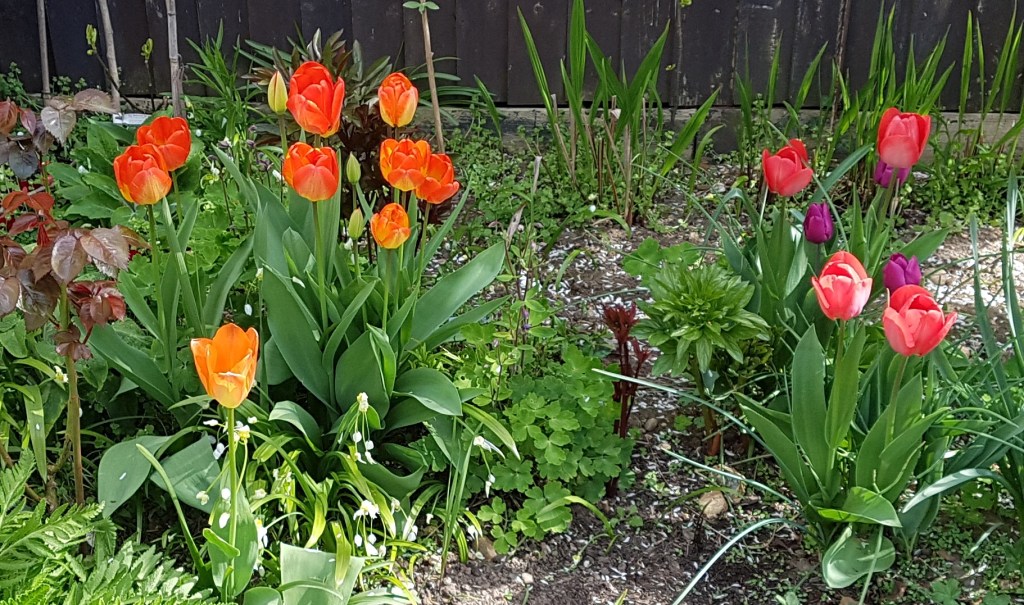
I love the colour range, different shapes and flowering times of tulips and if you choose different varieties, you can get weeks of blooms in the garden. While most spring bulbs should be in the ground by November, tulips can be planted later – as late as December – so if I’m too busy with other gardening jobs, I can still chuck some in a pot and be sure of flowers in spring.

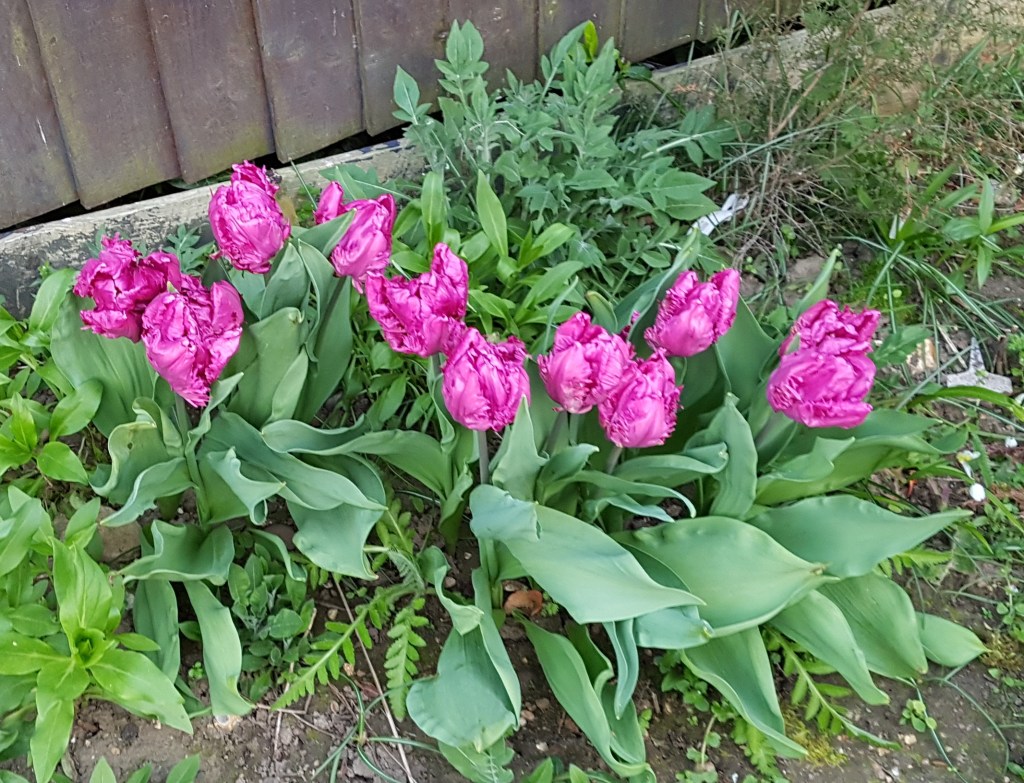
My favourites are the blousy, peony-like, doubles and the showy parrots, though both are top heavy and can be damaged by heavy rain and strong wind. Darwin hybrids have the classic tulip shape and are more reliably perennial when most other tulips deteriorate year on year. Triumphs offer the widest range of colours, but I find fringed tulips too fussy and just can’t get on with the shape of the lily-flowered type. There are others too and a bit of research online will reveal a range of ideas to suit your planting scheme, whether modern, minimialist or cottage-garden.

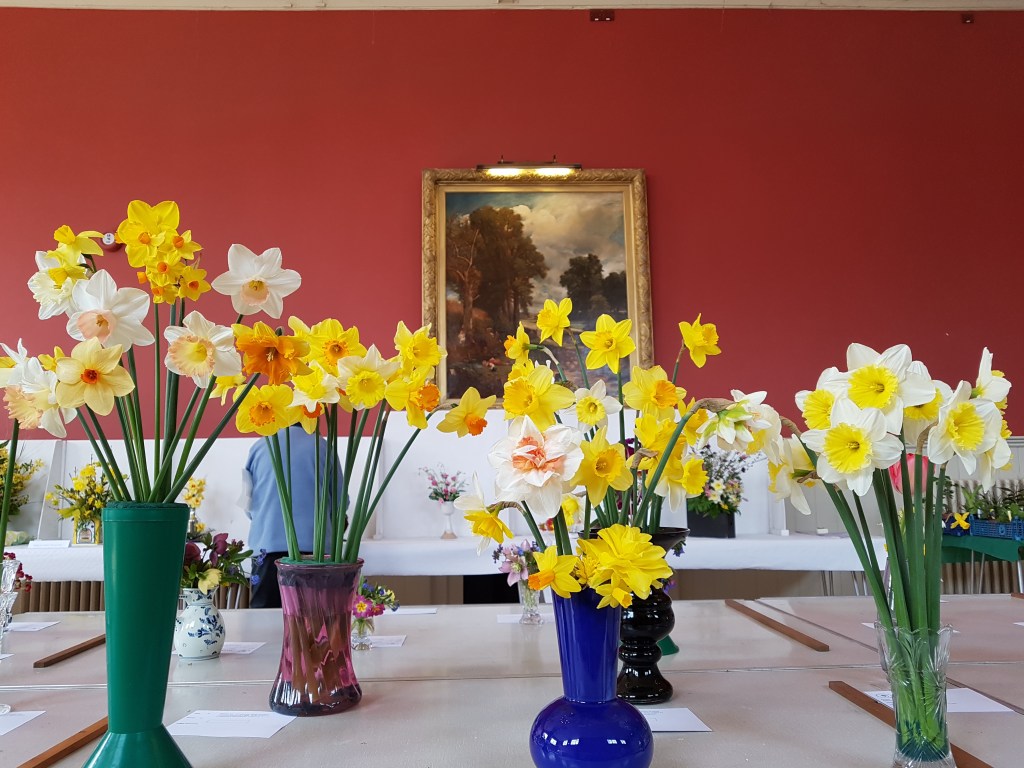
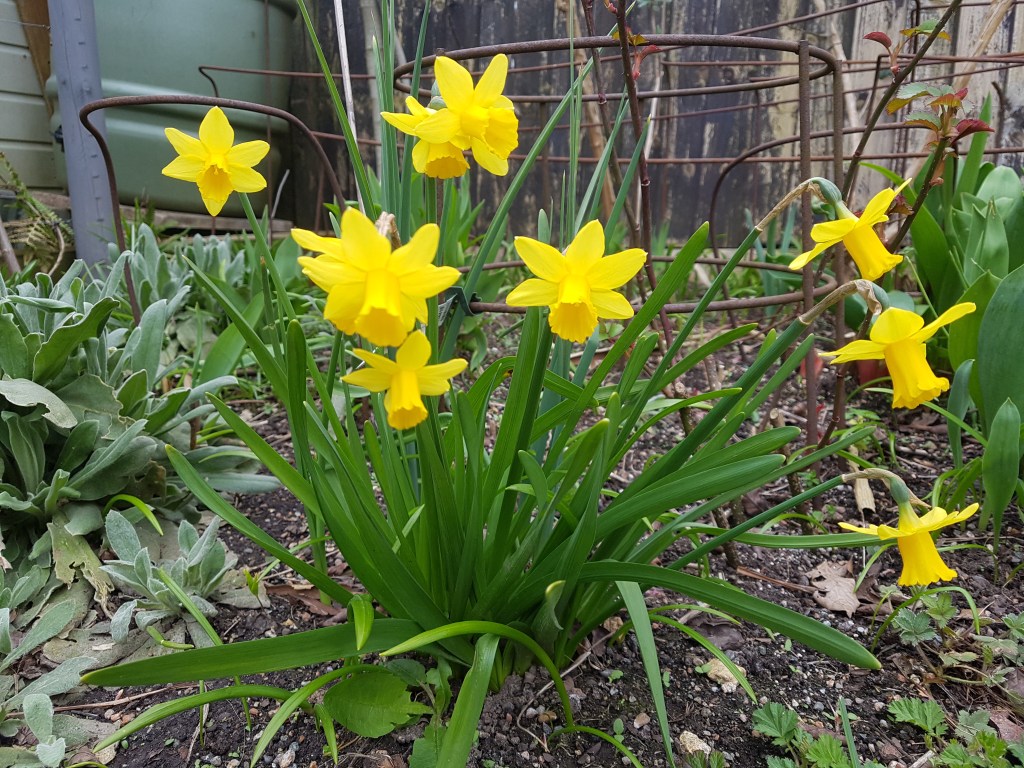
Along with tulips come good old daffs (properly called narcissi) and, if you’ve ever exhibited at or visited our Horticultual Society’s Spring Show (on 9 April, check the website for the schedule) you’ll know there a huge range of cultivated varieties in different shades of yellow, white, cream, even orange and peach.

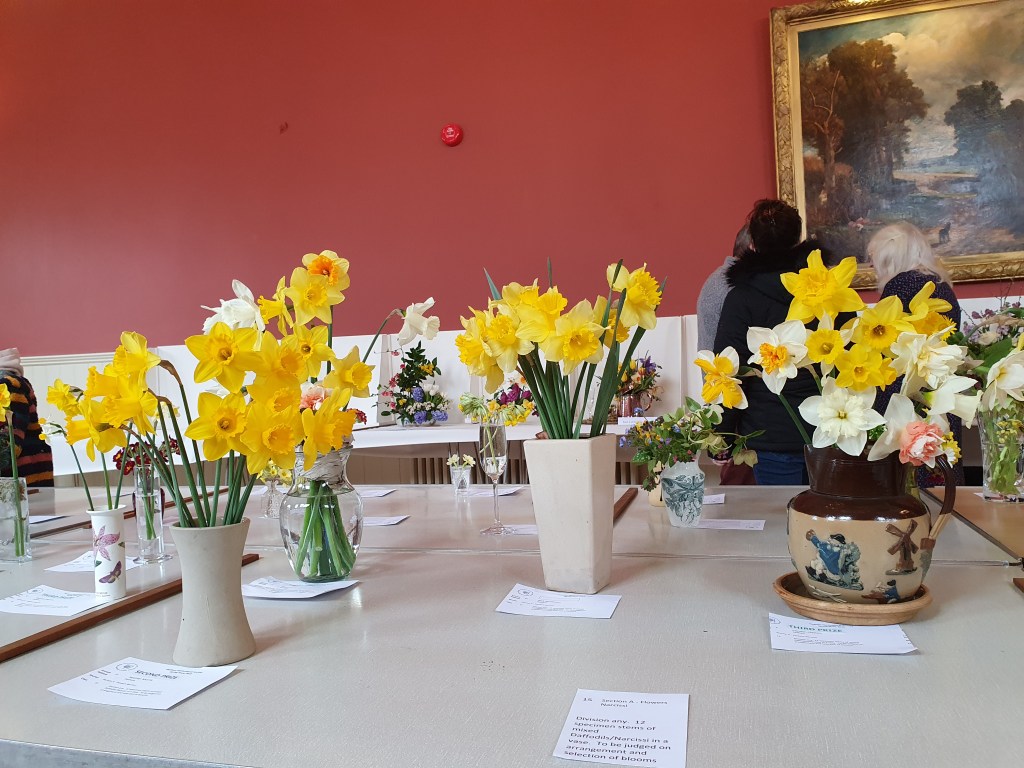
Daffodils at our Spring Show

Coming back year after year, trumpet and large-cupped varieties provide a shape that’s most familiar, but there are also perfectly formed miniatures, doubles (doubled flowers, not two or more flowers on a stem, which is different), or the poeticus or ‘pheasant-eyed’ with clear white petals and an orange-rimmed yellow cup. There are also the odd-looking Bulbocodium, which are so weird they can only be worth growing for novelty value.

I could go on: there are plenty of other bulbs to choose from like Hyacinthus orientalis (powerfully scented and often ‘forced’ for Christmas displays); deep blue Muscari or pale blue Camassia; architectural alliums (you can keep the flowerheads for winter but mine have usually broken off by then), and the bells of fritillaries (snakes’ head, crown imperial, Persian and more).

Whatever your favourites, remember that a bulb’s foliage feeds it for next year’s display, so let it die back naturally rather than cutting it off. If you need the space, you can dig them up and plant them somewhere out of sight.

Spring is sprung

The official start of spring, March sees the garden getting into its stride as the clocks go forward and days get gradually longer. It’s a great time to be outside but remember it’s still early and there’s plenty of opportunity for frost and other bad weather to undo your work.

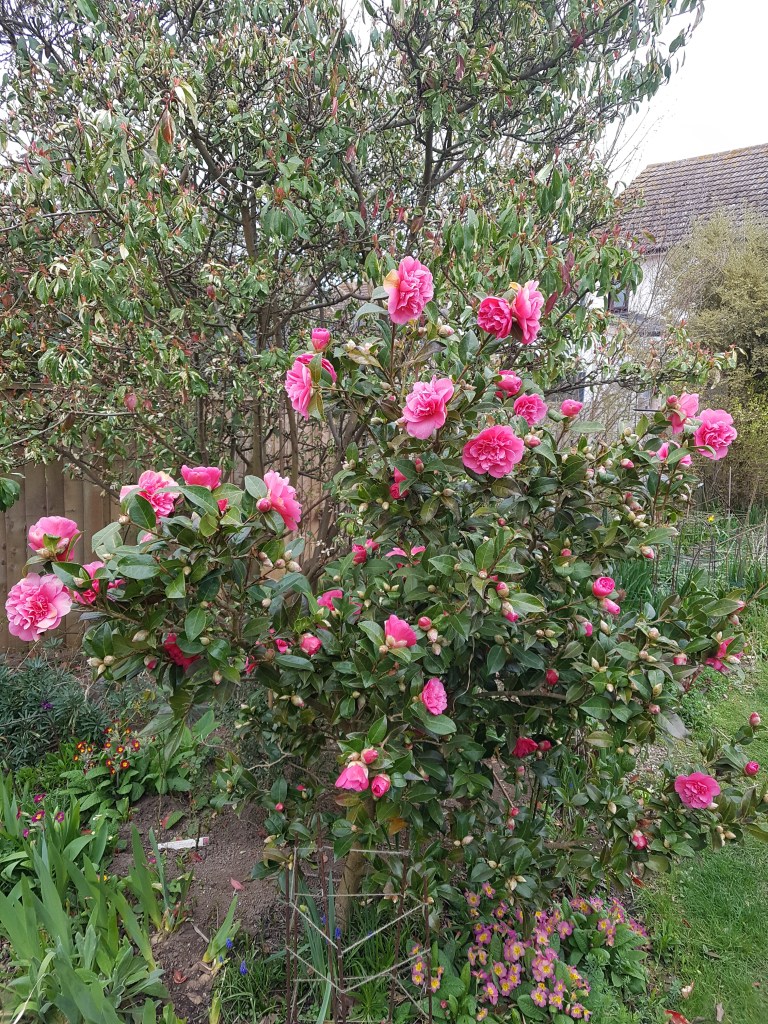
Camellia japonica

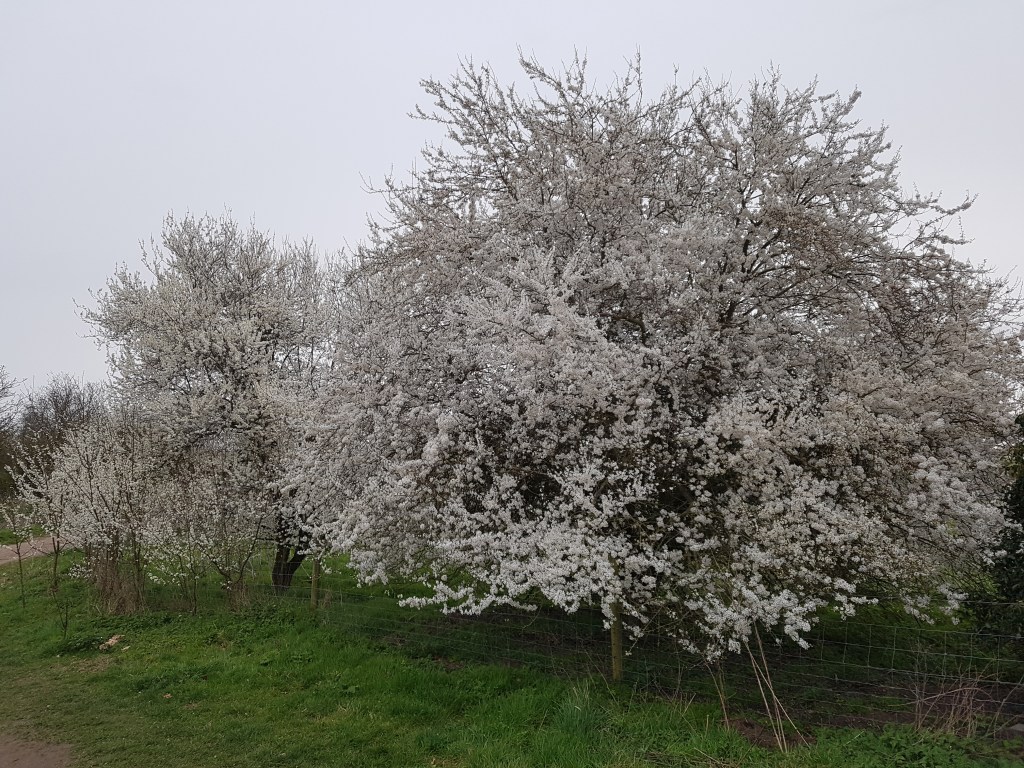
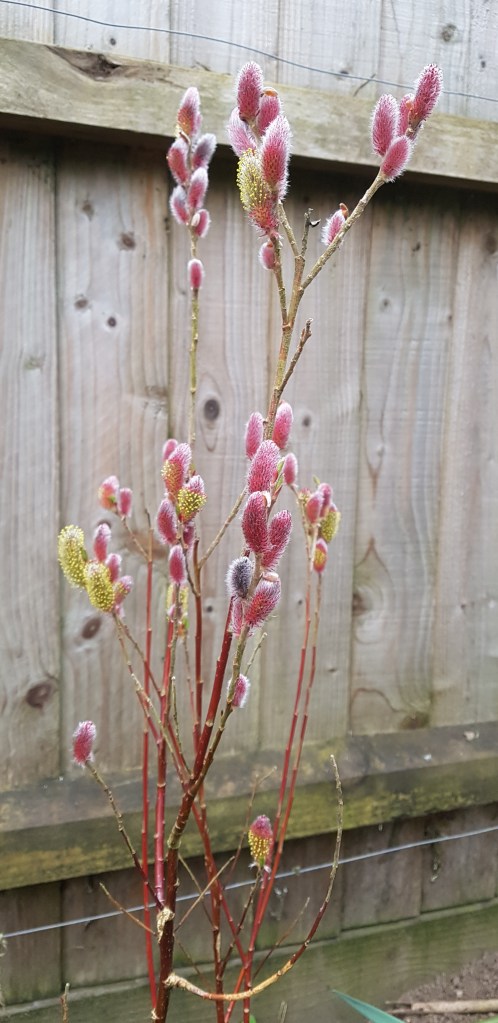
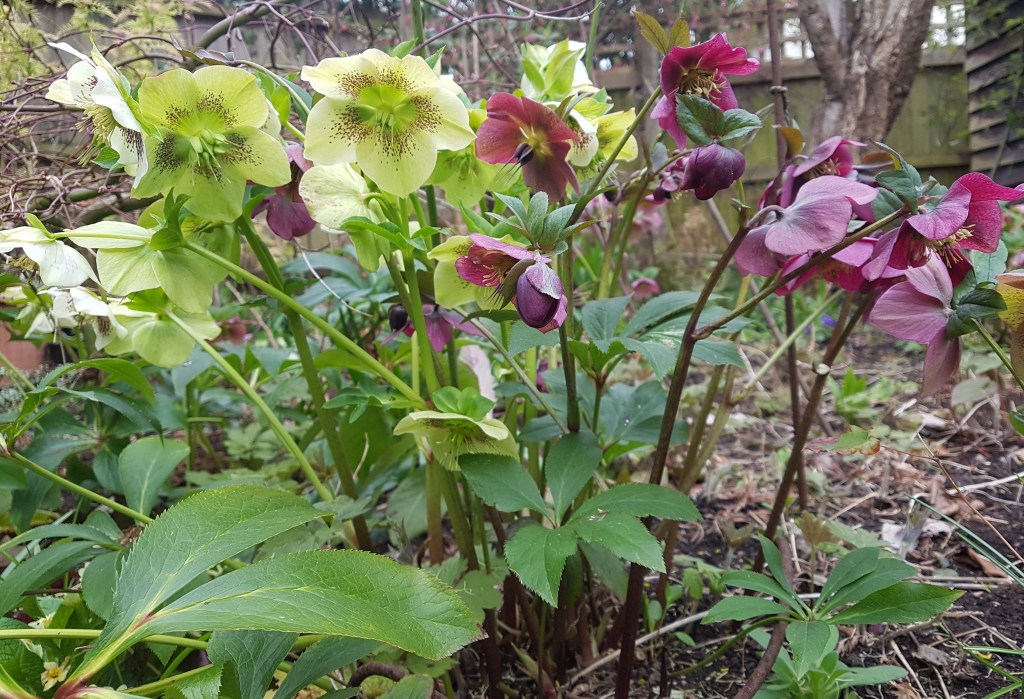
Around the garden, I see pink Camellia japonica, flowering currants (Ribes sanguineum) and even pink pussy willow (no I’m not sure why either), spring-flowering heathers (I grow pink and white Erica carnea), trailing Aubrieta in deepest pink and purple, Clematis montana, a range of hellebores, primroses, and a rainbow of bulbs. There’s blossoming Amelanchier lamarckii and apple trees in the borders, and more shrouding tree after tree on village walks with the dogs.

When I’m not standing around marvelling, chances are I’ll still be clearing the beds, scattering some general-purpose fertiliser and mulching with 2-3 inches of homemade compost (mm-mmm, gooood). There’s rarely enough compost to do every border though, so I rotate through them but half the job is trying to remember which ones get to benefit each year. The compost will be taken down by the worms and other crawly things to return nutrients, lock in moisture, improve soil structure and (in theory) suppress weeds. Plus it makes the beds look amazing.

Some of my spring bulbs have gone over now and as I’m mulching I snap off the seedheads so the plants focus all their energy into growing their bulbs for next year. If bulbs are your thing, spring is the time to plant some summer-flowering ones. If you follow these columns (back issues available online), you’ll know I do like a lily and you can plant all kinds and colours – several of them strongly scented. But if you do, be prepared to pick off lily beetles so they don’t destroy your plants.

If you lifted dahlia tubers for winter protection, pot them into fresh compost now and put them in a light, frost-free place (a cold greenhouse is fine, maybe a cold frame) to bring them into growth. They’ll reward you with bigger plants and earlier flowers.

Plant the tubers shallowly so their tops are just showing and keep them well watered. As they start to shoot, I’m going to take cuttings for the first time and try to raise new plants for free. Let the shoots reach about 8cm in length, then use a sharp knife to cut just where the shoot emerges from the tuber, below the lowest pair of leaves. Pinch out the tip and take off the leaves from the lower half of the stem, before dipping in rooting powder. Each cutting goes into its own small pot, in a warm bright spot away from direct sunlight.

Cuttings not your thing? Try seeds! You can direct sow hardy annuals – like poppies – now into weed-free soil: there is a wide range of poppy colours from delicate pastels to deep jewel tones, but all like to grow where they are sown and resent being moved. You can also try half hardy annuals, like Cosmos bipinnatus in colours from white to deep pink and red. I like the tall white ‘Purity’, but have never had much luck growing them early; someone who’s a bit of a Cosmos expert plants his late (entirely by design, of course) and gets strong plants quickly and in plenty of time for the summer and autumn border. Whatever you’re planning on doing, I hope the weather stays fine for you this month and you enjoy the chance to be in the garden.

Paving the way for Spring

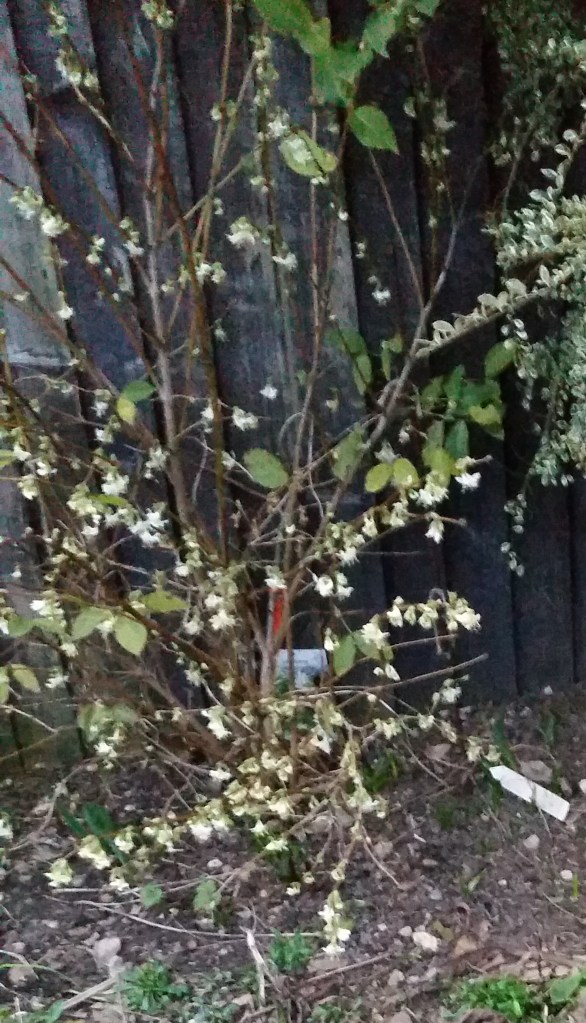
February is a great month in the garden. Although it’s still cold, a poke about soon reveals the early signs of a new season, especially if its mild as our winters seem to be recently. The days are definitely getting longer; crocus, iris reticulata, hellebores and winter honeysuckle are offering nectar and pollen to early-rising bees; while other bulbs are pushing their way above ground and there’s new growth on the peonies,  roses and fruit trees.

Work in the garden right now is about making the most of the time before March is upon us.

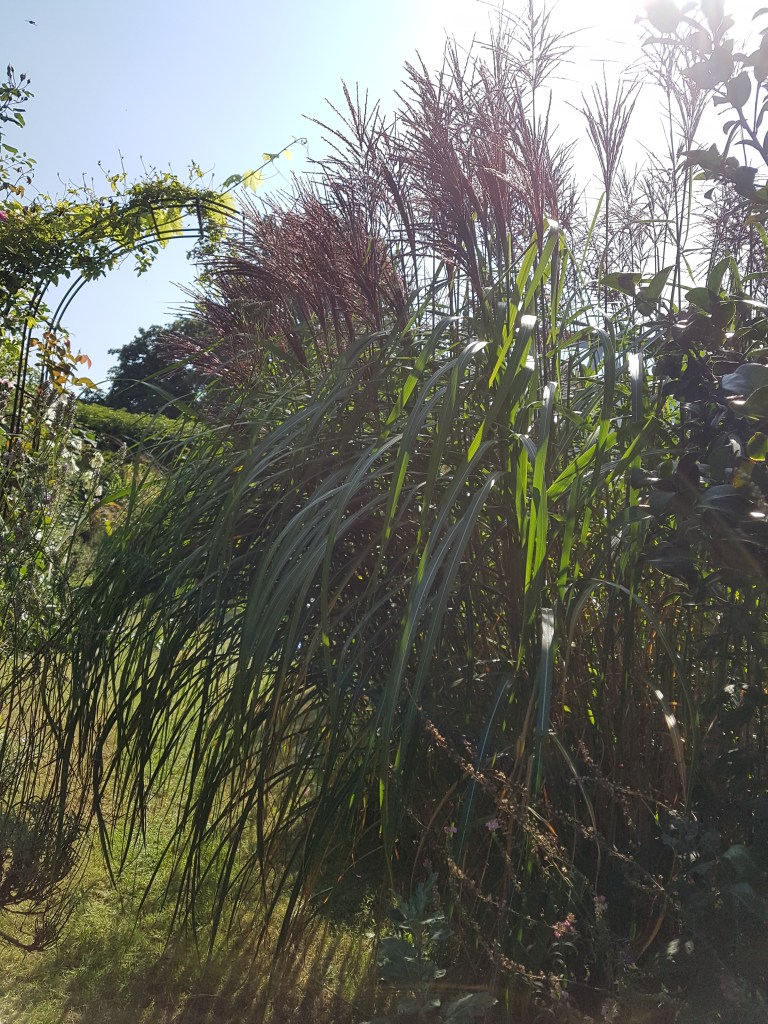
I’ve some beautiful Miscanthus Malepartus and last year moved a clump into a bed that’s closer to the house. This partly obscures the rear of the garden, apparently creating ‘intrigue’ and encouraging the desire to explore deeper into the garden.

Miscanthus is a deciduous grass, so the advice is to cut them right down to the ground ready for new growth in spring. You can just shear them off if you like and I know some take a hedgetrimmer to them, but my clumps are small enough that I can prune them stalk by stalk, looking for early growth that is already coming through to avoid cutting it off.

Miscanthus at its peak in September. Time to cut it back before spring.

If you grow evergreen grasses like Pennisetum or Stipa, just remove dead material to make space for the new growth.

Last year, I bought my first lemon tree with a vision of growing my own G&T lemons. When the weather warms enough I can think about bringing them outdoors again. A gentle prune first can encourage bushier plants when growth starts, so cut back congested branches by two thirds.

This is a greedy plant, so it’s also a good idea to refresh the top few inches of old compost and replace it with fresh. While there are specially formulated composts for citrus plants, you really just need something nutrient-rich and well-draining, so John Innes No 2 with 20 percent sharp sand or grit will do fine.

Provided it’s mild, late February is a good time to prune ‘group 3’ clematis which flower from mid to late summer. This is just before the plants start active growth in the spring. Group 3 Clematis include late-flowering species which will be in bloom from summer to late autumn, flowering on stems grown in the same year. Group 3 in my garden include Clematis Rooguchi with purple bell-like flowers, yellow Lambton Park and Clematis texensis Princess Kate and Prince William. I also know someone with clematis Alionushka, who lets the  beautiful deep mauve-pink flowers get tangled into a seething mass of stems and leaves instead of neatly trained to the lovely tripod they should be attached to. You know who you are.

You can afford to cut away a large amount of last year’s growth, back to healthy buds about 30cm from the base. Once pruned, spread the stems that are left and tie them into a frame or tripod so they don’t all clump together as they grow – and they’ll grow fast.

The end of the month is also time to start the fertlising and pruning regime that worked so well for my roses last year. Prune bush roses – hybrid teas and floribundas (the latter carrying several blooms in tight clusters) – which flower freely on this year’s growth and can be cut down hard. Whether they get a pruning or not, I’ll fertilise all my roses now with a sprinkling of fertiliser like Growmore (or if you want to be organic blood, fish and bone), which will give them a good boost as they get going. A layer of mulch will keep the moisture in too.

Finally, turn your compost heap – or heaps, I have 7 – and get anything you can onto your beds. While manure is useful for retaining moisture and adding structure to very heavy or light soils, garden compost still retains plenty of nutrients that will help your plants grow. You can fork it in but I tend to leave it and let the worms and grubs work it into the soil.

So make the most of February, fellow gardeners, and the signs of coming spring.

It’s Christmaaass!

Yes, I know you’re as excited as I am at the prospect – though I expect there are some of you planning on hunkering down with the fire on and forgetting you’ve got a garden to care for. Just remember that if the dark mornings and nights seem interminable now, then rejoice that December also brings the shortest day of the year and a couple of minutes of extra light, day by day, as we slide back into a new spring.

Until then, I’m afraid there’s still jobs to do as we prepare for the new season to come. That means clearing any weeds unveiled as you cut back herbaceous plants or revealed through the bare branches of trees and shrubs that have shed their leaves.

Prune apples and pears while dormant to control their size and encourage fruiting. It’s most important for trees as the cordon and stepover forms I’ve got growing in my mini-orchard are best controlled in summer. Just cut back last year’s growth on each main branch by about a third – find a bud pointing in the direction you want it to grow next season, which will help shape your tree. Don’t prune the side shoots growing off these main branches and they should develop fruit buds.

Somehow I’ve managed to plant three grape vines (surely one’s enough) and it’s worth pruning them now as they can bleed sap if done later than December. I grow these using the rod and spur system, which means cutting back the side branches of each main stem to one or two buds.

Surprisingly – but utterly dependent on the weather – you can still divide herbaceous perennials such as campanulas, Japanese anemones, oriental poppies, peonies, lupins and hellebores. Don’t hang about though: dig ‘em up, split ‘em and replant ‘em straight away. But if the soil is waterlogged or frozen, it’s best to leave division for now.

Another way of making more plants is through cuttings and even in winter you can propagate this way. Good ‘victims’ for root cuttings include phlox, verbascums, echinops and oriental poppies again (if you’ve ever moved a poppy from good soil to somewhere else, you’ll know they’re like bindweed). The plants you’re choosing tend to be large and vigorous anyway, and root cuttings need no special aftercare.

Choose a good, strong plant and lift it carefully. Wash the roots and cut off several that are young and about the thickness of a pencil; cut close to the crown of the plant. Only take about a third of the roots from the parent, so you don’t kill it, and replant it as soon as you can.

Discard the thinnest end of each cutting and remove any fibrous lateral roots before cutting each into lengths of between 5 and 10 cms. Cut horizontally at the top (nearest the crown) and angled at the lower end – this is so you plant them the right way up.

Insert into pots of cuttings compost so the top is just below the surface, then cover with about 1 cm of grit. Water lightly and store in a cold frame over winter. In spring, look for signs of top growth, while roots growing out of the base are the best indication that you can pot them on ready to plant out in another year. Campanula, phlox and Japanese anemones have thinner roots so use longer cuttings (about 8-12 cm) and lay them horiontally, cover with 1cm compost and them 1cm grit.

Finally, take the time when there’s not much to grow to get on top of the tidying up. Admittedly I should follow my own advice, as I’m hopeless at this – but this year, this year, is the one I’m actually going to do it.

I’m never entirely sure if I’m using a whetstone right and that I’m stroking the blade across it properly – also I buy oil every year and have lost it in the depths of the shed before I need to use it. So, careful storing of the kit and careful watching of educational videos online is called for. Sharp secateurs are the key tool for me as I’m always cutting at something with them and sharper cuts means healthier plants at less risk of disease.

You can also put some sand and oil in a bucket and plunge larger tools (hand tools too I suppose) in and out of the sand, cleaning them and applying protective oil in one go. This sounds like one of those brilliant old tips that make one sound like a proper gardener, but actually just means I’ve got a bucket of sloppy sand in a bucket that I’ve got to find shed space for.

If that seems like a lot, don’t worry I’ve better (and probably more realistic) advice while the days are short and bound to be rainy, windy, snowy or foggy (maybe all at once). There’s plenty of time to sit back, put the heat on, and write that Christmas list of all the garden goodies you’d like Santa to bring you. Merry Christmas and happy new year everyone from the Dedham Horticultural Society committee.

Winter is coming

It’s the end of Autumn and, as the nights get darker, the last of summer’s warmth is fading from the soil. But don’t let it get you down, there’s plenty to do in the garden to take your mind off it.

Get your tulips in this month as the chill will help ward off tulip fire (Botrytis tulipae) which causes ugly brown blotches and distorted leaves. While you’re at that, cut back the faded or mushy foliage of perennials,  but think about leaving any that will look good with a coating of frost, have hollow stems to hide overwintering pollinators and the creepy crawlies that will eat garden pests, or provide seeds for birds. You can also fill gaps with bareroot plants and trees as they come on sale this month.

Lift pots and containers off the ground with tiles, bricks or pot feet to help rainwater drain away and prevent your plants getting waterlogged. Insulate pots if it looks like the weather is going to be especially harsh – bubble wrap, though ugly, works well.

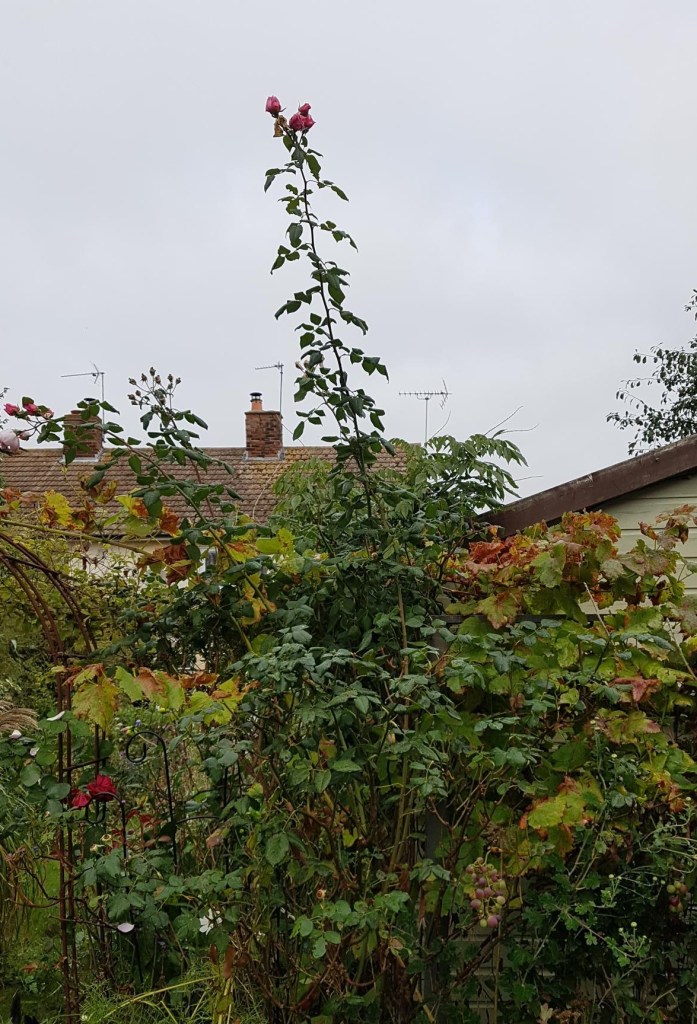
It got a bit blowy in October, so I need to prune back some of my roses, which thanks to feeding all summer have reached 8 or 9 feet in some cases. Windrock could loosen their roots or snap stems, so I’ll take the tallest ones back by about a third – I can tidy them up in early spring with their first proper prune.

If you want to help control blight, you can also gather up fallen rose leaves, but I tend to believe roses are pretty but diseased things and that’s just the way they are – it’s too much effort to keep picking, spraying and managing them in this way.

Decide whether to lift your dahlia tubers – if you’ve read a previous column you know I won’t be – though I am going to lift my canna rhizomes this year as the cold May meant they haven’t reached a good enough height to flower (I’ve heard 6 or 7 feet is necessary for the bigger ones I have like red Canna ‘Roi Humbert’ and firey ‘Lethoso Lil’).

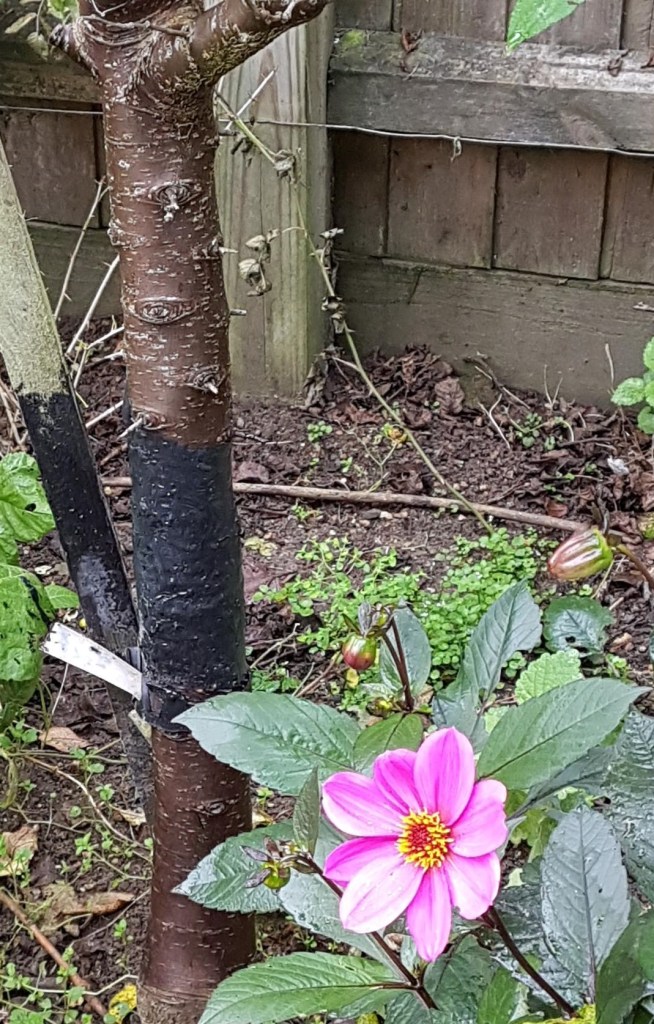
In the mini-orchard, I’ve been slapping sticky grease around the trunks of trees to try and control winter moths from laying eggs (that lead to maggots in fruit). I wear disposable gloves to wipe it on with my hand, but you can use an old paint brush (you won’t be able to paint with it after though) or tie grease bands around it (slightly more expensive and I think uglier than the grease which weathers in quickly).