We hope you’ve had a great summer everyone.
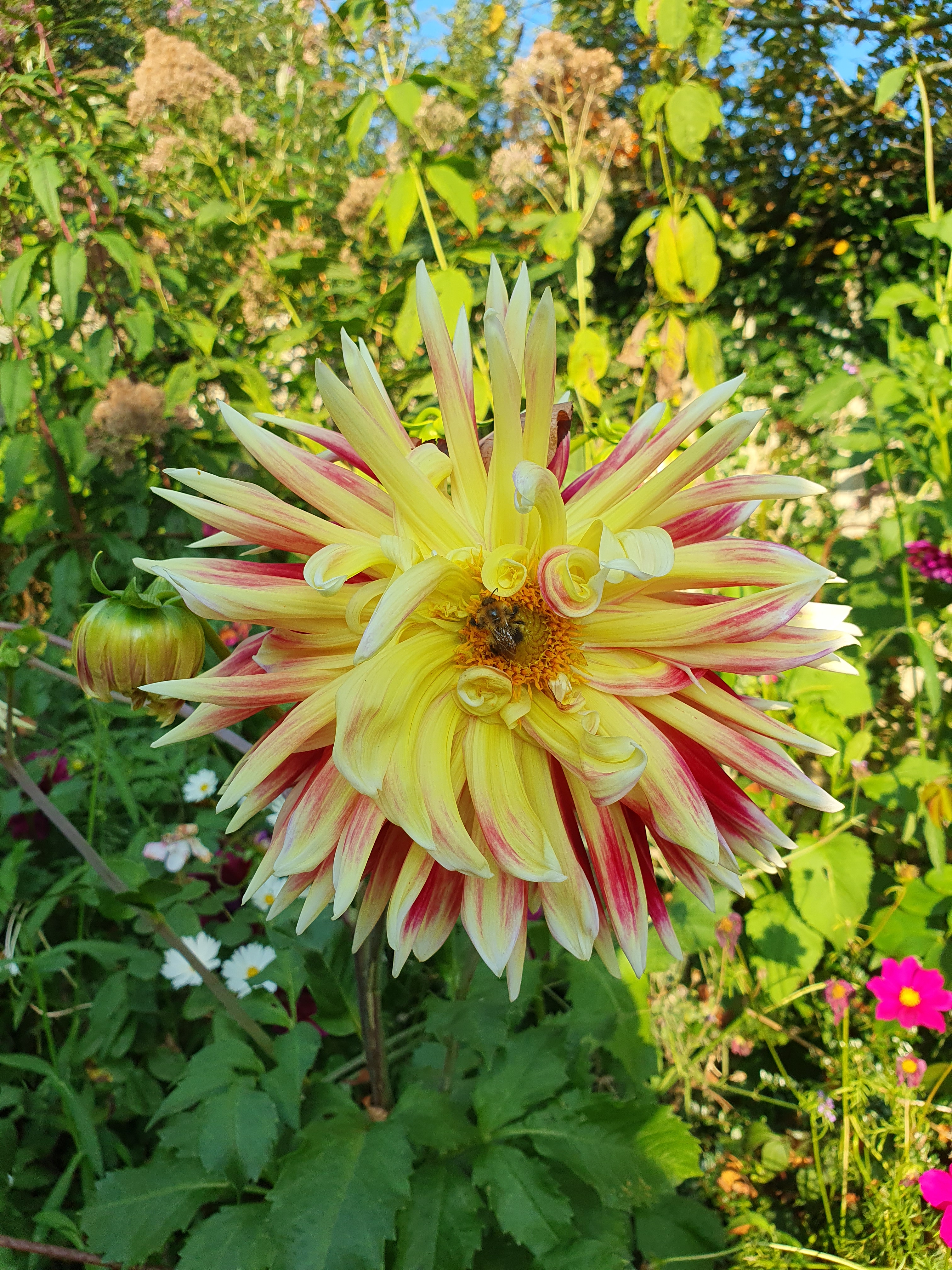
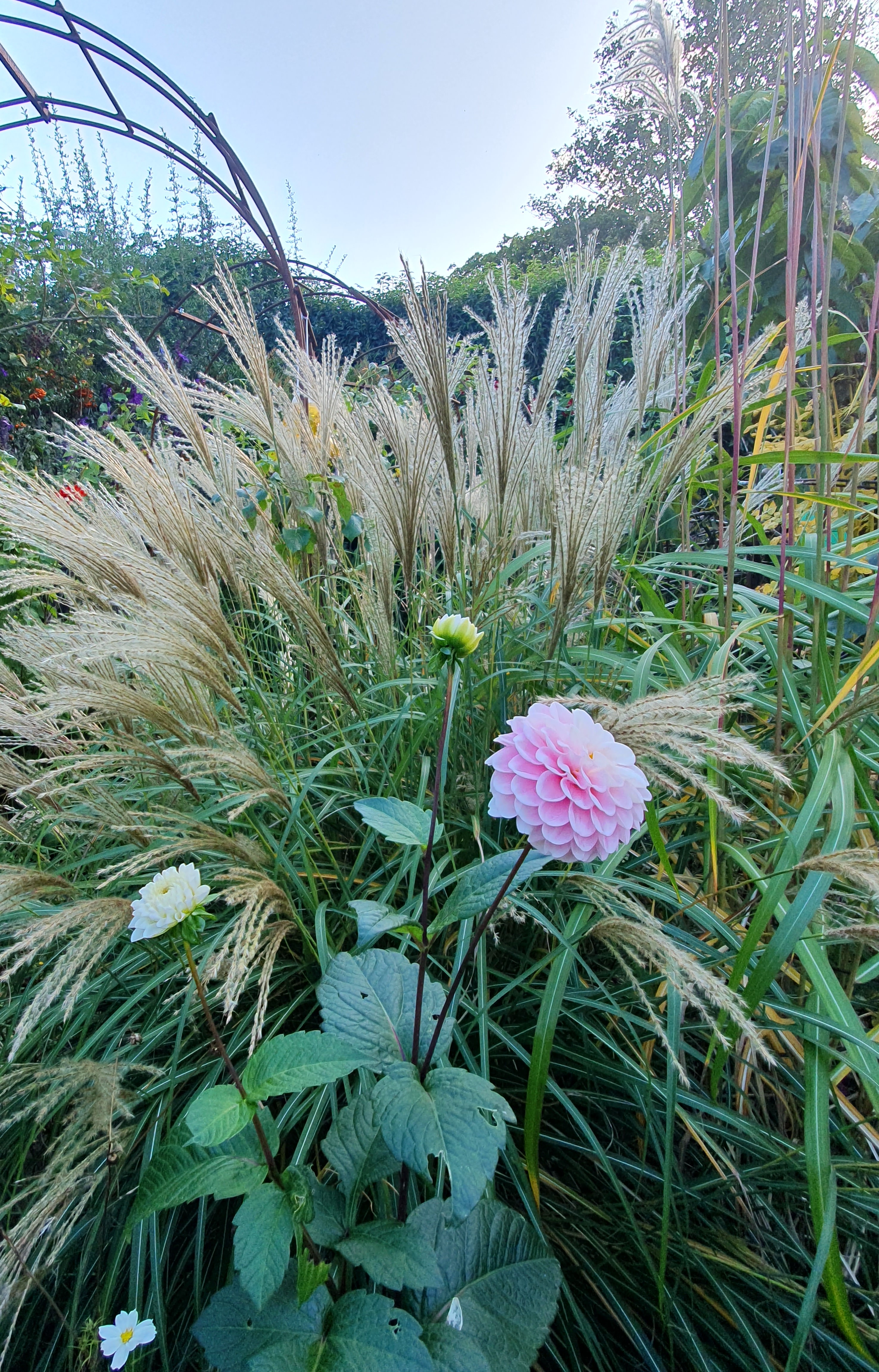
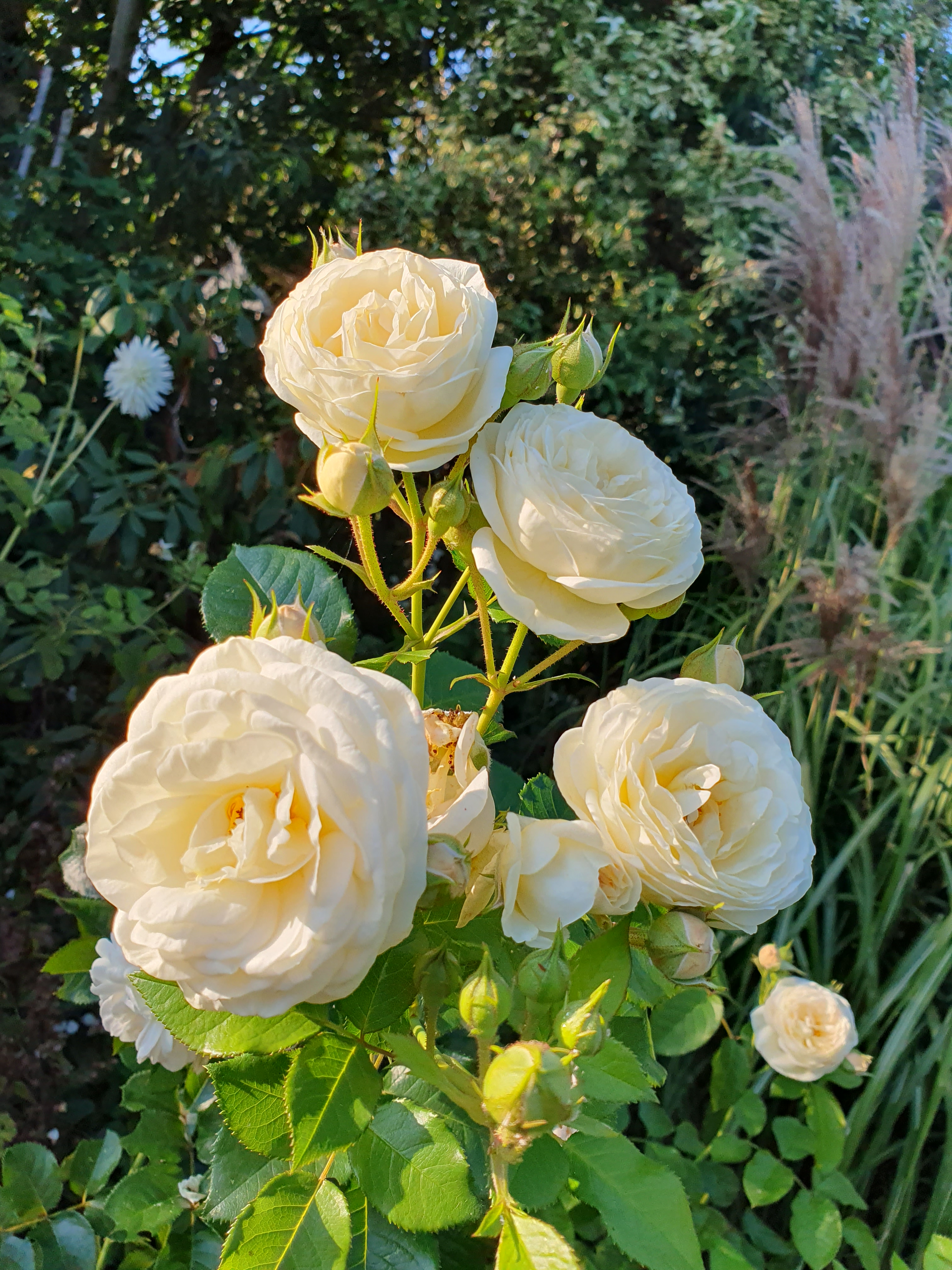
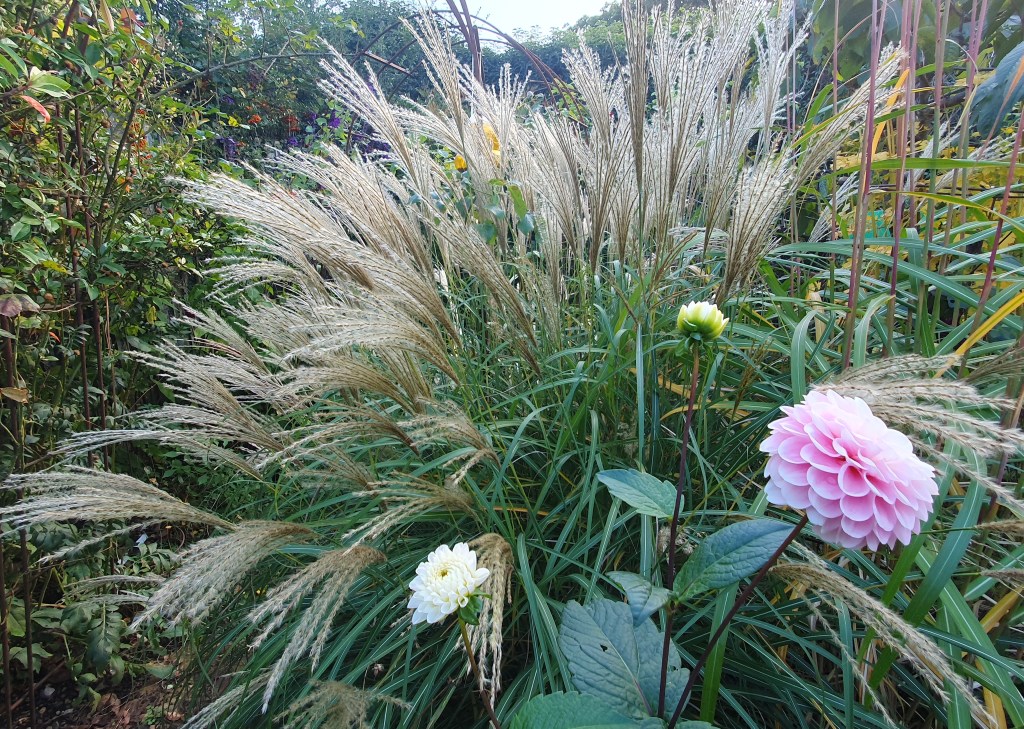
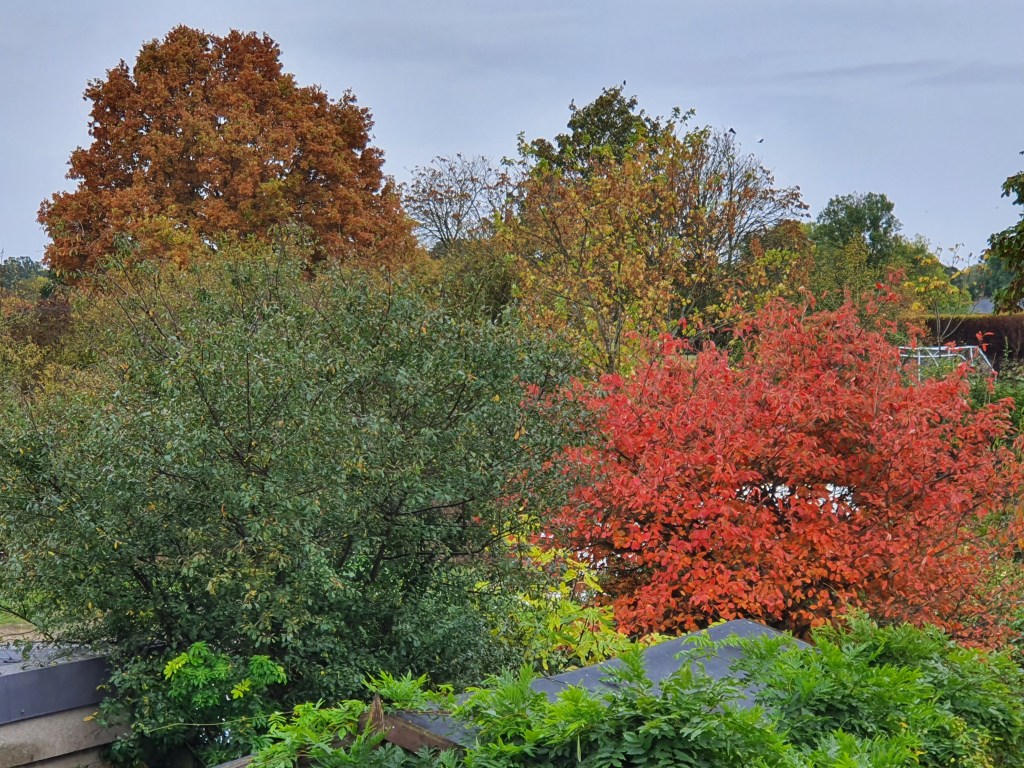
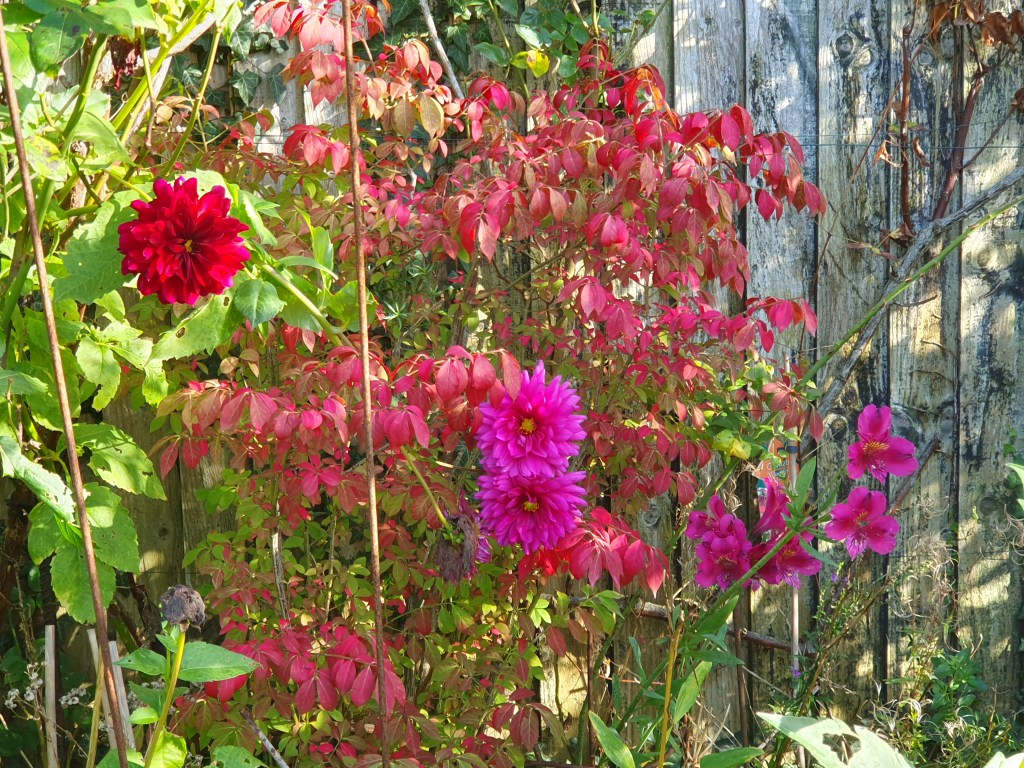
The garden right now is full of autumn colour. The dahlias have struggled a bit with the heatwaves and a lack of water but have started to catch up now. I’d say they are still a bit shorter than they have been. They are complimented by clumps of hardy pink chrysanthemums, the feathery foliage of cosmos in white, pinks and reds, while little jewel-like flowers of salvias shine around the stems of roses.
If this sounds beautiful and perfectly planned well… about 70% of it is and was, but if you make a wrong turn you’ll be smacked in the face by utterly out of control giant scabious, (not a scabious that is giant, but the buttery white Cephalaria gigantea that reaches about two metres) or clumps of Miscanthus Malepartus that really should not be quite so close to the path. The editing doesn’t just happen in this article!
If you’re not planning to move some plants around or stand about admiring your work, then what about learning something more about gardening. We’d love to welcome you to another season of events organised by the Dedham Horticultural Society.
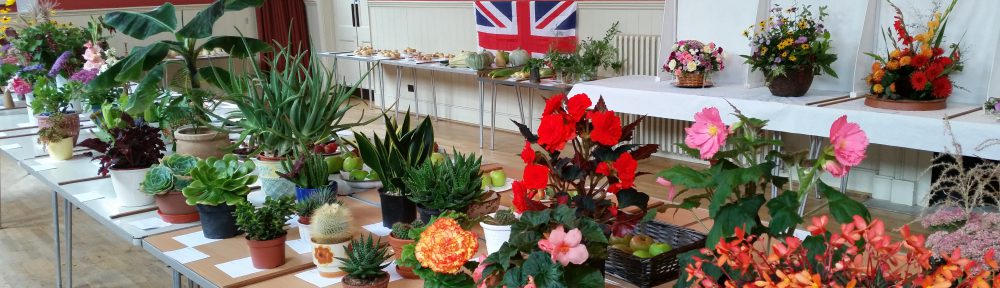
We kicked off this month with our Autumn Flower Show (also fruit and veg, cooking and photography of course), kindly sponsored by Kingsleigh Estate Agents. It’s always great to see what people exhibit and catch up with members, friends and neighbours who come along on the day.
Then we get into our annual speaker evenings which are free for Society members and just £2 for everyone else. As well as a chance to catch up with other people from Dedham and surroundings, refreshments are included, and we have a small raffle.
We’ve got a great line-up that starts with Joanne Hull of Benton End Flower Farm in Hadleigh. Alongside partner Carla, Joanne runs a chemical-free, wildlife-friendly cut-flower business just a few steps from Sir Cedric Morris’s historic Benton End House. Come along to hear how she and Carla blend that historical legacy with modern floral artistry, whether it’s creating floral installations like their 8-ft “Flower Stallion” or making plans for a lavender distillery and exclusive glamping later in 2025.
In November, Peter Miller from Kings Seeds presents a fascinating glimpse into Essex’s centuries-long foundation in seed-growing and Kings’ pivotal role since 1888. Then we take a break until our traditional virtual meeting on Zoom in February. We’ll be joined by Geoff Hodge who has been Web Editor for RHS Online and Gardening Editor of Garden Answers and Garden News magazines. We’ll be picking his brains about combatting pests and diseases.
In March, we’ll hear from a former member of Beth Chatto’s team, Marc McHearne who was responsible for raising plants on the nursery’s stock beds. He has a huge amount of knowledge and will no doubt share some great growing tips as spring starts. Andrew Babicz follows Marc and share knowledge and experience gained from over 55 years working in the horticulture, including at iconic gardens such as RHS Wisley, Kew and Hampton Court Palace.
Colchester-based photographer Roger Hance will share his techniques for photographing wildlife in the garden – so come along and take the opportunity to show off what you learn in the 2026 autumn show 😊. Using both natural and purpose-built hides, Roger will show us practical ways to attract wildlife and capture it on camera.
For our final talk, we welcome back Maggie Piper, who has researched and regularly visits several of the country’s great gardens. She’ll tell us about Bridgewater, the RHS’s first new garden in over 20 years and how it came about.
Our speaker programme is a great way to learn more about gardening, whether you have beds and border or a few pots and containers. Find out more about all our events on our website.
 Dedham Horticultural Society