“All the world sweats with the bead of summer in its bud”

April can be a busy month in the garden. We’re halfway through spring now, the garden has woken up, and everything seems to be waiting to burst into the peak of its beauty.
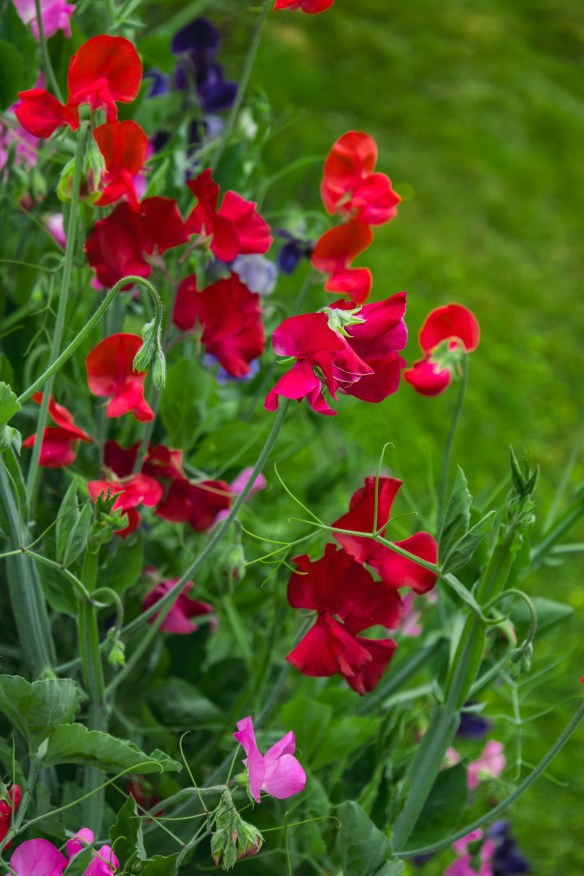
Sweetpeas – credit Sara Kozak_Unsplash

The greenhouse is getting full now and I’ll need to get small plants out of it as soon as I can to make room for the melons, cucumbers and dahlias that need a few more weeks under cover.

This means hardening off the sweet peas that are now several inches tall. I’ll gradually introduce them to outdoor conditions over a week or so by putting them outside in a sheltered spot by day but put them back under cover for the night. After a week of such treatment, I can plant them into the border, gently tying them to a tall support to scramble up.

Over the Easter weekend I’ll give the lawn a light mow (weather permitting) with the blades set high and apply a high nitrogen spring feed to promote strong growth and help the lawn recover after the winter. The warmer weather means I can also reseed any areas that need it. If it doesn’t rain within 48 hours of doing both, I’ll need to get the sprinkler out.

If you grow potatoes, Easter is also traditionally the time to plant them out as the risk of frost has lessened and the soil is warming. However, with the holiday falling so early this year, it might be best to hang on a couple of weeks.
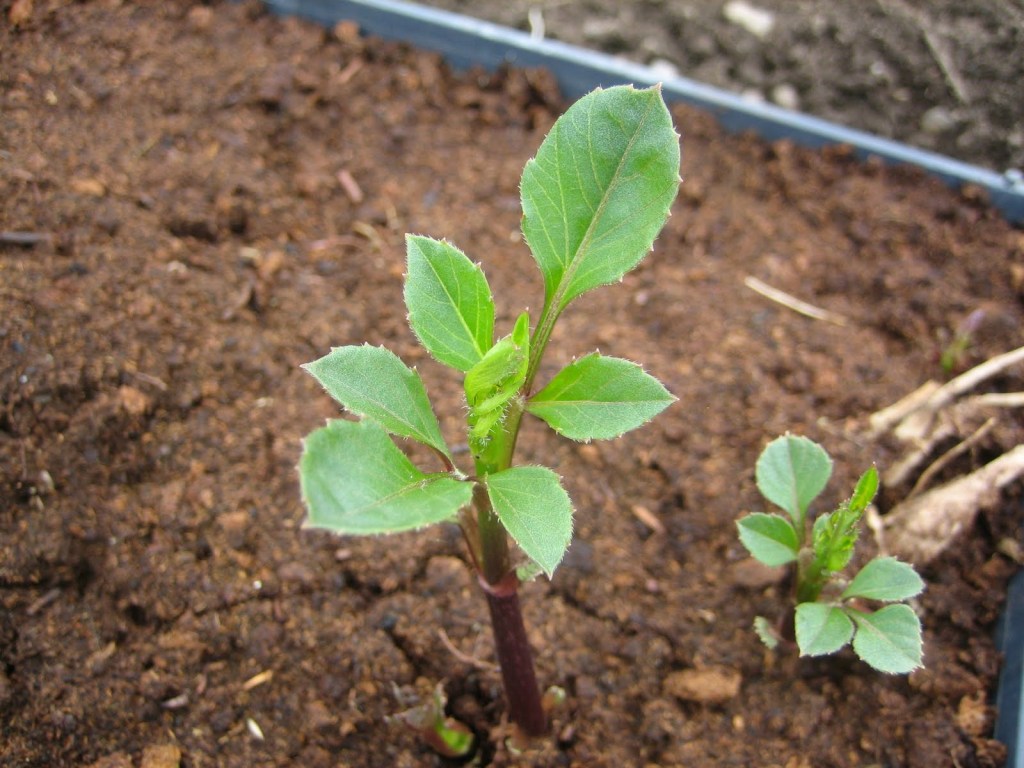
Last month, I started my dahlias into growth by potting them up, just covering the tubers with compost and giving them a quick water. Then I put them in a frost-free place with plenty of light: an unheated greenhouse or cold frame works well but have some horticultural fleece ready in case of a cold snap.

Now that it’s April, lots of my dahlias have put up shoots and you can take cuttings to bulk up your stock. Wait until the shoot is 7-8cm long and push the compost aside so you can see where the stem of the shoot meets the tuber. Then take a sharp knife and cut into the tuber – just under the stem – to separate the shoot from the mother plant. It’s important to take a bit of the tuber with the stem.

Cut away the lower leaves of the stem and if they are large, cut the top leaves in half. Pinch out the very tender tip too, all of which will help reduce moisture loss. Put the cuttings around the edge of a pot and gently firm them in. Give them some water and they should root within 2-4 weeks – a propagator or a plastic bag over the top will help stop them drying out. When you see fresh leaf growth or roots from the bottom of the pot, you know you’ve been successful.

Dahlias can go outside and into beds and borders when all possibility of frost has gone but you can also grow them in pots. If you give them a go, don’t forget to enter our Autumn Show!

Provided shrubs like forsythia, flowering quince and flowering currant have finished doing their thing, I can give these a prune to shape the plant. This will also prompt fresh growth that will carry the flowers next spring.

Finally, I’ll start putting a range of supports into beds: peonies will need their cages that prevent the weight of their big, blousy flowers from bending or snapping stems. My tomato plants should be ready to go into the growbags that will hold them all summer and, like them, tall-stemmed delphiniums and lilies will need tying to canes.
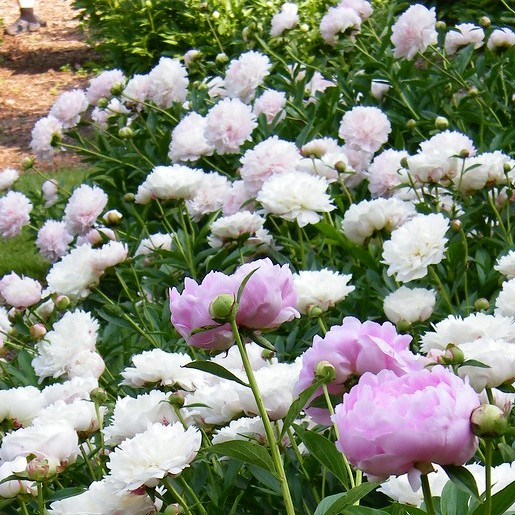
Although there’s plenty to do this month, don’t forget to take a walk around the garden to do some casual deadheading of any spring bulbs that are now going over and to admire everything else that’s happening. From budding plants to the remaining daffodils, tulips and blossom, there’s plenty to enjoy this time of year.
A crowd, a host, of golden daffodils

It’s March! Finally! And the spring equinox is just a few weeks off which means serious sowing and planting can get underway and brings our Spring Show on Saturday 21 March. We’ve brought it forward a couple of weeks to avoid the Easter holidays but also to catch increasingly early-flowering daffodils (Narcissus if you want to get Latin about it).

There’s no cost to enter the show and you don’t need to be a member of the Society, and we have a great programme with classes for everyone. Just download the Schedule and Entry Form from our website where a search for ‘daffodil’ will return a few tips and images to help you exhibit. If you have any questions, just email dedhamgardening@gmail.com and we’ll try to help.

The classification of daffodils can be confusing, so here’s a run-down of the differences to help you choose what to exhibit. Don’t worry about getting it wrong though – let us know when you bring your exhibit in and we can make sure it goes into the correct class.

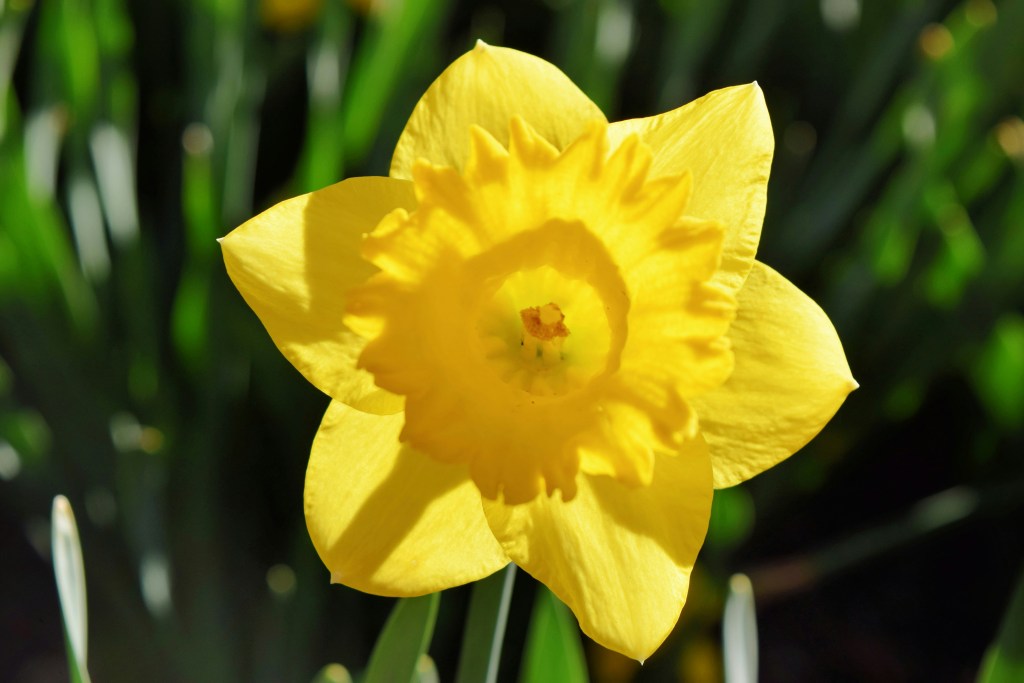
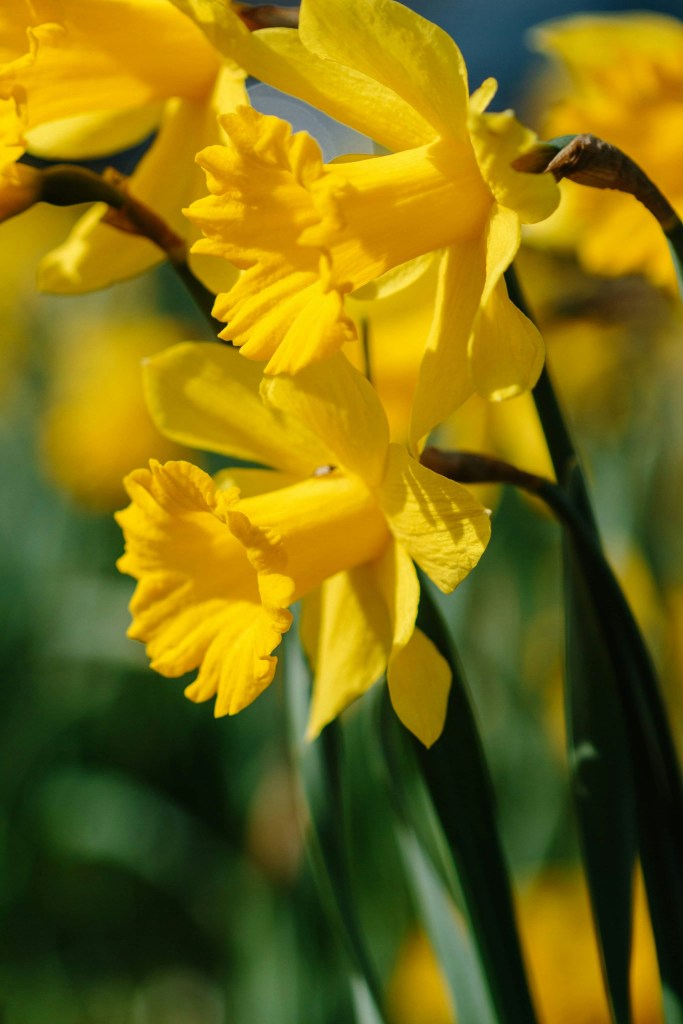
Daffodils are typically yellow but there are also varieties in shades of white or orange. The flower itself has two key parts: the corona (also called the trumpet or cup) in the centre, which is surrounded by a perianth of (usually) six segments (the petals or tepals). This is important because it helps you put your daffodil in the right class when exhibiting.

Think of the daffodil lying on the ground with the corona face up. Sometimes it suggests a teacup resting on its saucer, and this gives a clue to one of the alternate names for the corona, the cup. Sometimes the corona is longer, so it’s called a trumpet (imagine the cone-like shape of the musical instrument). Got that? Great.

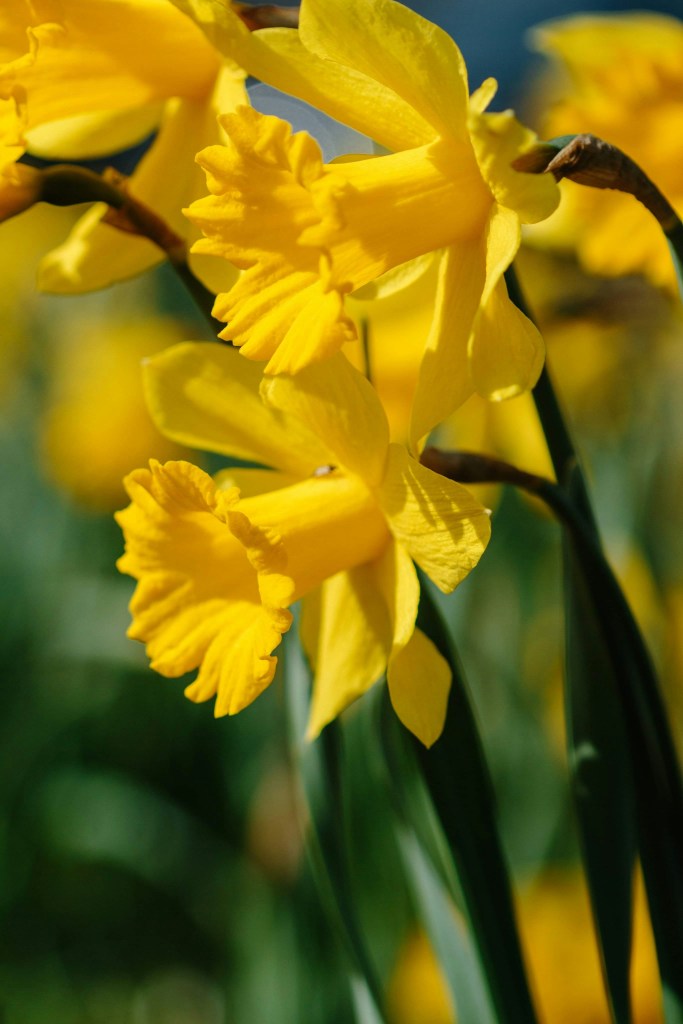
Next, daffodils are exhibited in thirteen descriptive divisions. Classes 1-6 are for trumpet daffodils, where the trumpet must be longer than the petals. To test, gently fold one of the petals forward over the corona: if it is the same length or shorter than the corona, then you have a trumpet.

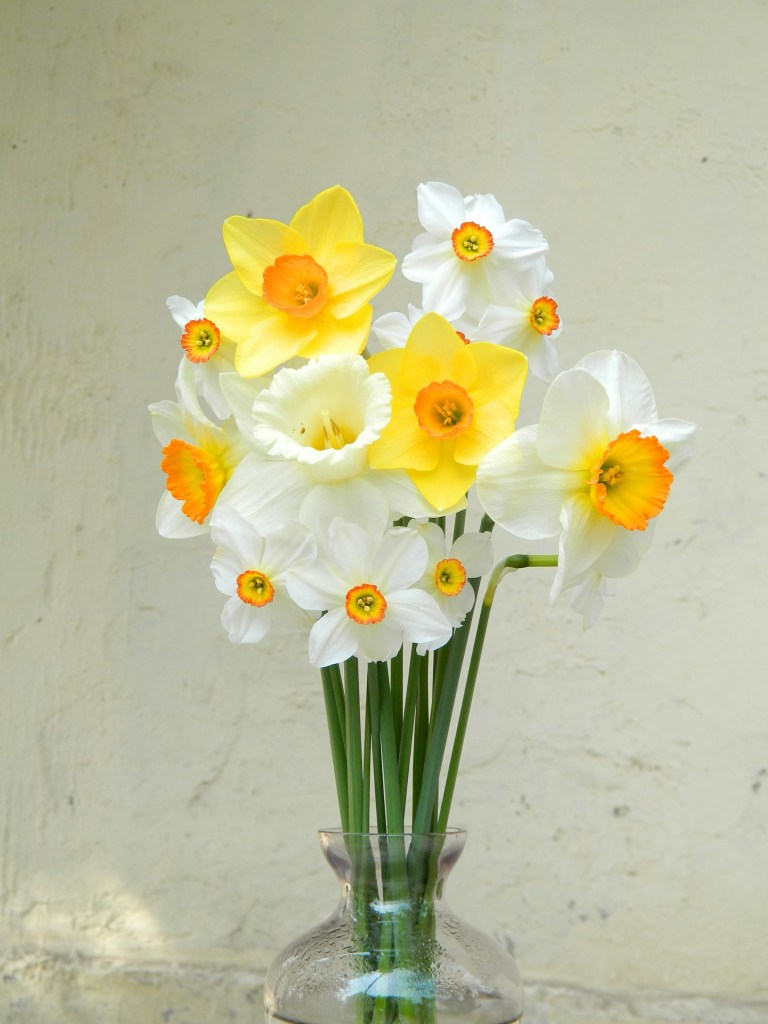
Identify cupped daffodils by folding the petals forward again. If they are longer than the corona, then you have a cupped daffodil – some of the cups are small in diameter, others are much wider. Both count as cupped daffodils, ‘small’ or ‘large’. You need large-cupped for classes 7 and 8 but can put small-cupped varieties into classes 11, 12 and 15, and – if the flower is small enough – 13 and 14 too.

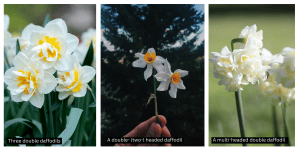
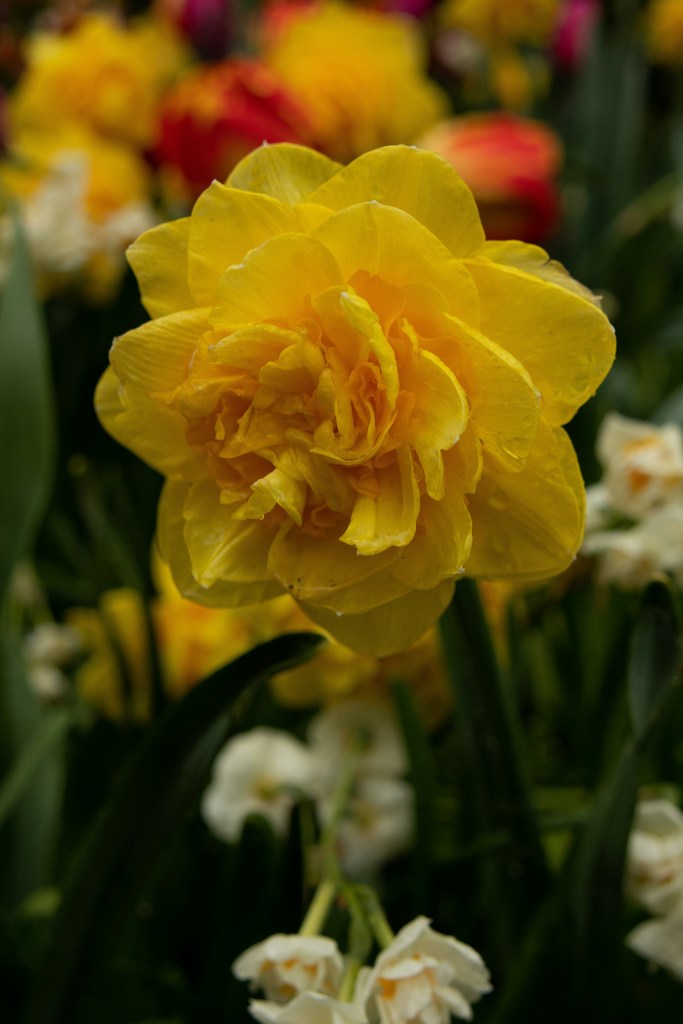
Double daffodils can be difficult to classify correctly. The flower itself must be doubled, a peony-like mass of corona and perianth. A daffodil with two or more flowers on the stem (ie multi-headed) is NOT classified as a double daffodil unless each of those flowers has that peony-like mass. Our show schedule asks you to exhibit one or three stems in classes 9 and 10, so you can exhibit multi-headed varieties here, just make sure every head is a double. Good multi-headed varieties include ‘Bridal Crown’, ‘Cheerfulness’ or ‘Erlicheer’ (‘Early Cheer’).

Credit (left to right): Yoksel Zok; Akam; Ethan Bell – all on Unsplash

Classes 13 and 14 are essentially for ‘any other’ type of daffodil. These include multi-headed varieties, as well as the weird-looking (I think) bulbocodium and the pretty split-cupped. Then there’s the pheasant’s eye, which has pure white petals and an almost flat corona with a red rim.

If you can’t be bothered remembering all that, just find 12 daffs, make them look nice in a vase and enter class 15. And if you’re not sure what you have, we don’t mind if you circle all the daffodil classes on your entry form and we will help you out on the day. The British weather being what it is, it doesn’t matter if – on the day – you don’t have everything you’d hoped to exhibit.

The Show is not just about daffodils of course. There are classes for other bulbs and, as it might prove too early for many tulips, we’ve created a dedicated class for grape hyacinths (muscari) this year.

Class 20 requires 12 stems of small or miniature bulbous plants with a minimum of three different varieties. There’s nothing stopping you from including miniature daffodils or muscari here, even if you’ve also used them in classes 13, 14 or 18, while scilla, puschkinia and ipheion all have smaller varieties.

Although not officially bulbous, we ask our judge to be kind here so anemone, cyclamen and crocus (rhizomes, tubers and corms respectively) can also be included in this class.

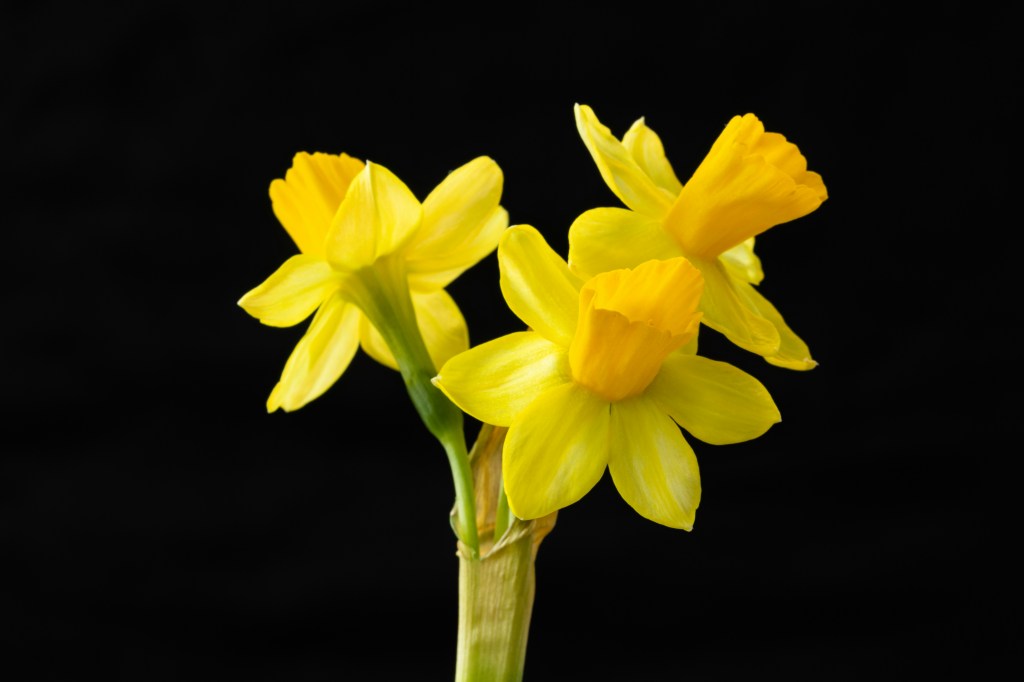
Remember that a variety can be the same kind of plant but look different. For example, ‘Dutch Master’ and ‘Mount Hood’ are both trumpet daffodil types, but the first is an all-yellow variety, the second all-white. If they were miniatures (they’re not, don’t try it) they would count towards two of the three needed in class 20. For miniature daffs, where the blooms are usually less than 2 inches (50mm) in diameter, ‘Tête-à-Tête’, ‘Rip van Winkle’, ‘Sun Disc’ and ‘Minnow’ are all very different varieties.

For class 21, 12 stems of spring flowers, you’ll probably have to draw on any hellebores, primroses, primulas, wallflowers, pansies or violas that you haven’t already used in other classes. You can’t use any bulbs or shrubs, so daffodils and spring blossom will be disqualified here.

Do have a look at the schedule on our website. It would be great to see more people taking part and supporting Dedham’s gardening group. I know the show sounds a bit intimidating but we’re a friendly bunch and are happy to help and offer advice and encouragement.  Even if you don’t exhibit, make sure to put the afternoon of 21 March in your diary and come along for a look around, a hot drink and the raffle! We’ll see you there.

Transition into spring

February is a transitional month in the garden – still very much winter, but full of signs that spring is approaching as the days get longer and the soil slowly starts to warm again.

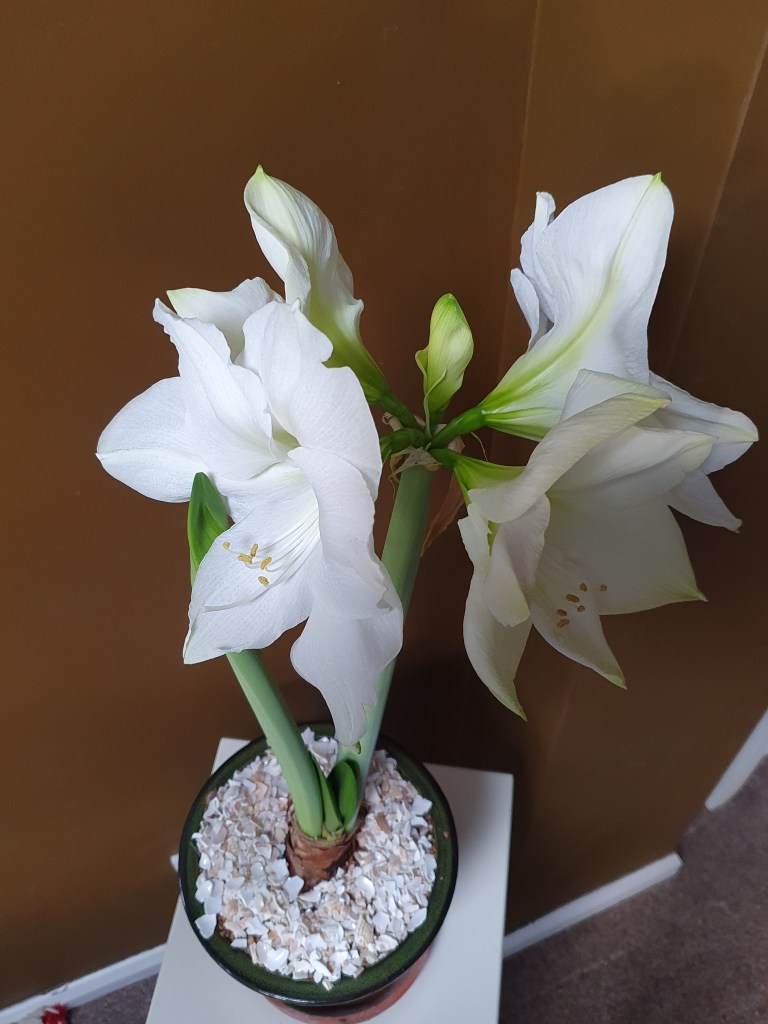
Look around the garden and you’ll find snowdrops, crocus, winter aconites and camellias bringing the first real colour of the year (green doesn’t count). I’m cutting back the leaves of my hellebores to remove signs of black spot and display the flowers to their best advantage. Elsewhere, daffodils are coming into flower, seeming to bloom earlier than ever – one of our members had a daff in full flower on Christmas Day! – while indoors, I’ve amaryllis (left) and forced hyacinths cheering the place up.

If vegetables are your thing, you might still be harvesting the winter cabbages, sprouts, leeks and parsnips that you didn’t eat over Christmas. However, generally February is a great time to shake off the last of the winter lull and begin preparing your garden for the growing year to come.

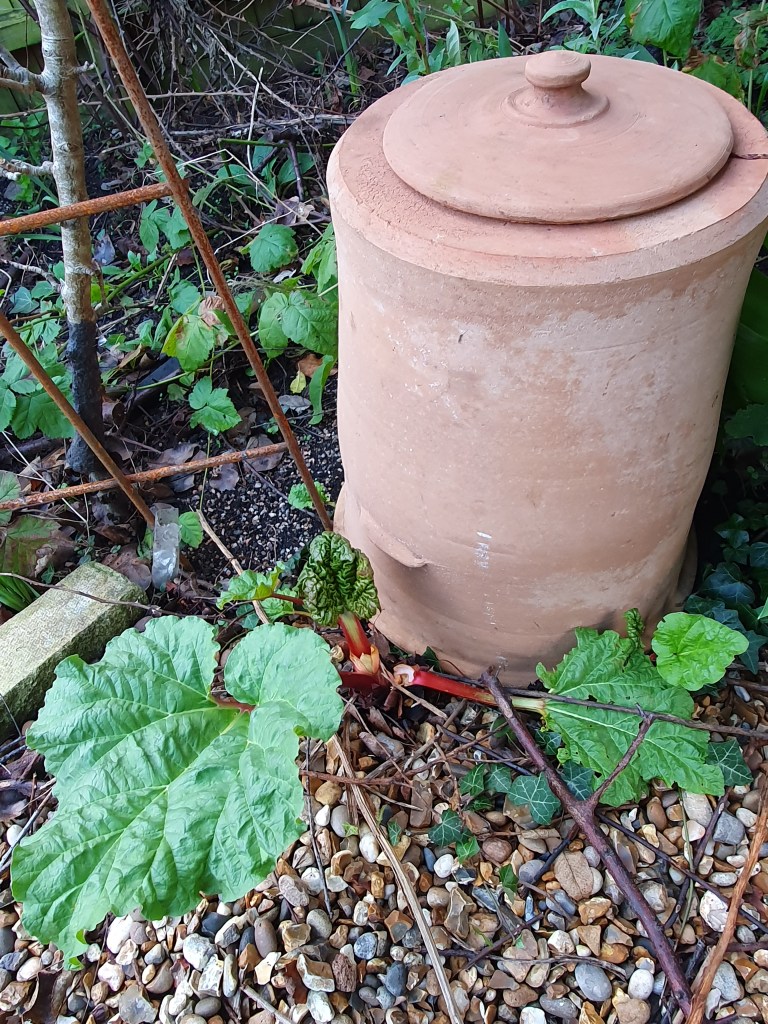
Traditional cottage gardens would mix ornamental plants (grown for flowers or foliage, rather than to eat) with edibles, and rhubarb can look wonderfully architectural among your flowers. It can also be grown in a large pot – just divide it and share it with friends when it gets too big. If you haven’t already done it, early in the month is really your last opportunity to cover the plant with a bucket or forcer (right) to exclude light and grow stems that are a lovely tender and juicy pink. Yum!

There are several seeds worth sowing under cover this month – I have some windowsill propagators that are ideal for starting off my tomatoes – as well as some that can be sown in a tray and left in a sheltered area outside. The latter will usually be hardy annuals, biennials like foxgloves, or perennial seeds which may not germinate unless they think they’ve suffered through a winter season before the rise in temperature encourages them to sprout.

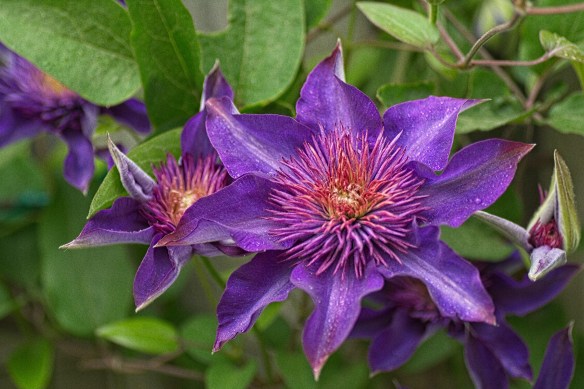
There’s quite a bit of pruning you can do towards the end of the month. I’ve talked about roses in a previous article, but you can also cut back some clematis varieties (the Group 3s) in February. I’ve several in rich jewel tones like ‘Gravetye Beauty’, ‘Rooguchi’, ‘Madame Julia Correvon’ and ‘Niobe’. All flower later in the summer and benefit from being pruned to a pair of healthy buds 20-30cm from the base of the plant.

A flower with purple petals and a mass of purple stamens in the centre with green leaves in the background.

I love them for their different shapes and wide range of colours. Well chosen, you can have a clematis of one form or another in flower throughout the year, but they can take a while to establish. If you’re fond of a rhyme (and who isn’t), there are a couple to help, with the first being especially apt right now: ‘if they flower before June, don’t prune’.

The second gives you some reassurance if you think the plant you put in last year has turned up its toes: “the first year they sleep, the second year they creep, and the third year they leap”. Just give them some feed, try to keep the roots cool in the heat of summer, and don’t accidentally dig them up, and they’ll eventually do you proud.

As part of the plan to rejuvenate one of my borders, I’ll also cut back my deciduous ornamental grasses, the two-metre tall Miscanthus sinensis ‘Malepartus’ which have grown into significant clumps over the last decade. I’m going to divide them and discard any sections that are no longer performing well before replant some of the pieces in other places around the garden. They are great for creating informal screening and creating surprise and interest.

If you have just a balcony, patio or small courtyard, plant lily bulbs now for stunning scented blooms in the summer. If you’re pots and containers have been planted for a while, remember that the soil may have run out of nutrients by now and will need more to grow will in the season to come. You don’t always have to repot them; instead, you can ‘top dress’ which just means replacing the first two inches of compost with fresh and adding a sprinkling of slow-release fertiliser.

Start warming up for spring with a bit of time among your pots and borders this month. It’ll be worth it – I promise!

Thinking of exhibiting?

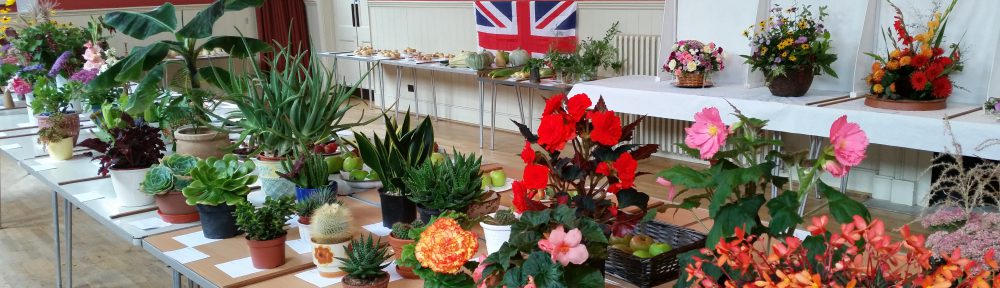
On Saturday, we once again organise Dedham’s Autumn Horticultural Show at the Assembly Rooms on the High Street and encourage everyone to have a go at exhibiting. We’re a friendly show and although it can seem quite intimidating, most people are showing things from their garden and not professional exhibitors!

If flowers aren’t your thing and you don’t have room for fruit and vegetables, why not have a go at a flower arrangement, search your snaps for something that fits our photography classes, or show off your cooking skills. If you aren’t sure what to enter in the flower sections, here are a few tips.

Every class is awarded a first, second and third prize and these are all added up to award trophies for the different sections on the day. This year we have a new trophy just for new exhibitors or people who haven’t entered any of our shows since April 2023. It’s always a thrill to get placed in a particular class and who knows, you might also go home with a trophy to keep until the following year.

You can find the schedule and entry form (get it in or just email us the class numbers you want to enter by 5pm Tuesday 2 September) here on our website. And of course, we hope to see many of you at the Assembly Rooms on the day.

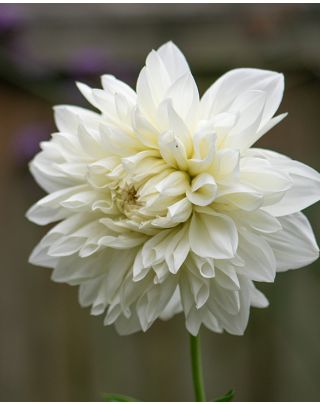
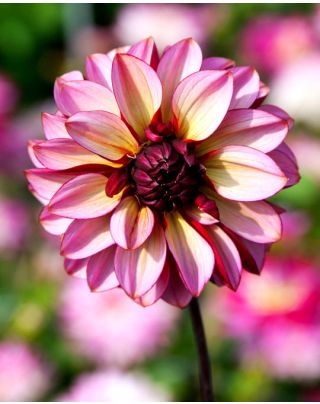
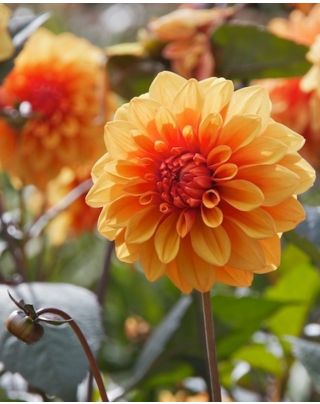
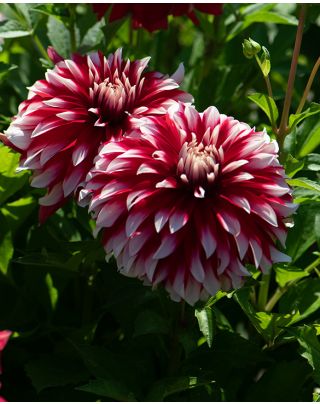
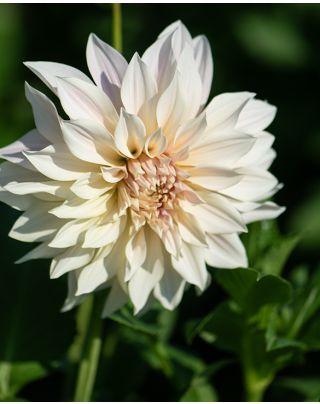
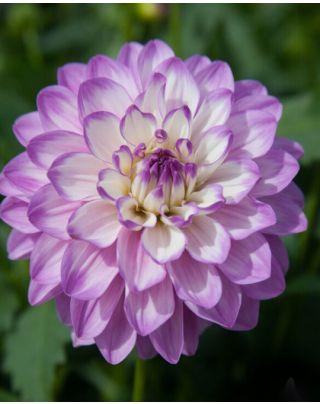
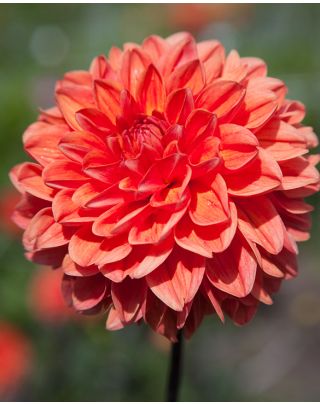
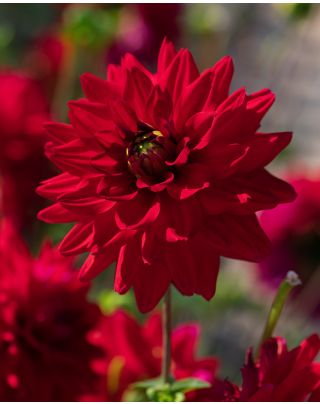
Let’s start with the five dahlia classes. The easiest classes here are Class 1 ‘one decorative-type bloom’ and Class 4 ‘two vases, 3 blooms in each, one or more varieties’. The hardest part of Class 1 is working out whether you have a decorative dahlia – especially if you’ve lost the label and can’t remember the name.

Generally, ‘decoratives’ have large, showy, fully double blooms with wide, flat petals which hide the yellow disc of stamens (where the pollen is) – search online and look at any of the garden suppliers for examples of what they look like. They’re rubbish for pollinators but look amazing in the border. It’s an easier class because you don’t have to make it identical to the others you exhibit.

For Class 4, you just need six dahlias – they can be the same or entirely different – divided among two vases with three in each. Most exhibitors make the two vases identical, but you don’t have to in order to win.

Classes 10, 11 and 12 are also good ones to enter, if you have enough annuals (that die in winter), perennials (that lose their foliage in winter but will come back in spring) and shrubs. I find the perennials easiest as you only need one kind that is big enough to cut five stems – they don’t have to be identical, just make sure they look good – flowers should still be fresh (carefully snip off any that aren’t) and stems as straight as possible.

I sometimes find it hard to find three different kinds of annuals that are still in flower in September but some good examples at this time of the year include cosmos, sunflowers, zinnia, snapdragons, marigolds, bedding plants like petunias, and wildflowers of course.

If you’re better with houseplants, try classes 14 to 18 and bring your cacti or succulents, flowering pot plant (orchids anyone?) or foliage plants (indoor ferns and classics like a philodendron). If you’re not sure what it is, bring it along – we’ll help.

Many of us love a rose and you may have at least one in a container or the garden. A hybrid tea is the classic rosebud shape, usually with a single flower at the top of the stem. A floribunda is also called a cluster rose due to the several blooms clustered together – we typically think of them as having small flowers, but they can be larger. They tend to have little or no fragrance, so no good for Class 21.

It can be hard to decide whether you have a shrub rose, but essentially if it looks like a shrub and doesn’t look like a hybrid tea or a floribunda – and it’s neither a climber or a rambler which shoot up metres-long stems – then it’s most likely a shrub, so chuck it into Class 23. Class 24 is also good if you have enough roses – your vase of five can be any type – hybrid tea, bush, shrub or floribunda. They don’t have to match, just create a display that will impress!

The rose section is hotly contested, but the display always looks (and smells) amazing.

If you’re nervous about exhibiting or aren’t sure which class, do get in touch by emailing us (dedhamgardening@gmail.com) and perhaps we can help. If you need some help on the day, please ask – we may look like we’re rushing around without a minute to spare but we’re always happy to pause and offer some advice.

Midsummer’s here

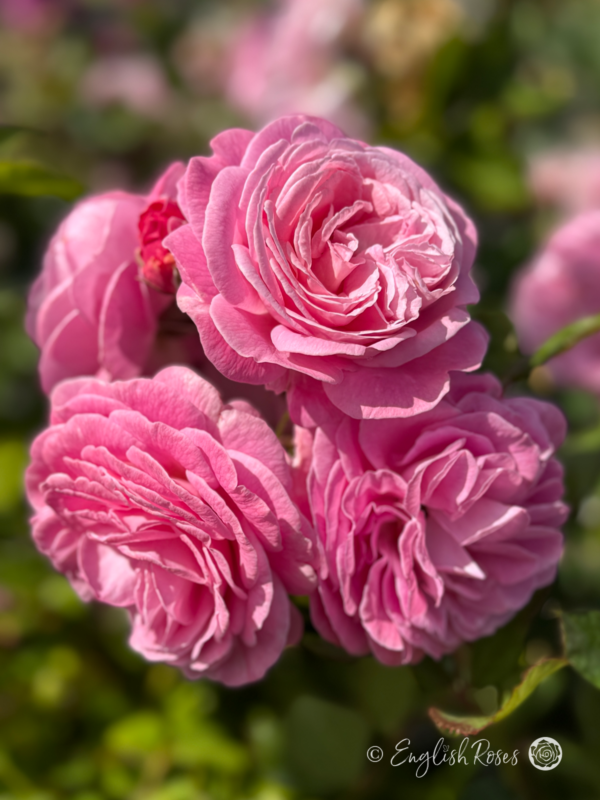
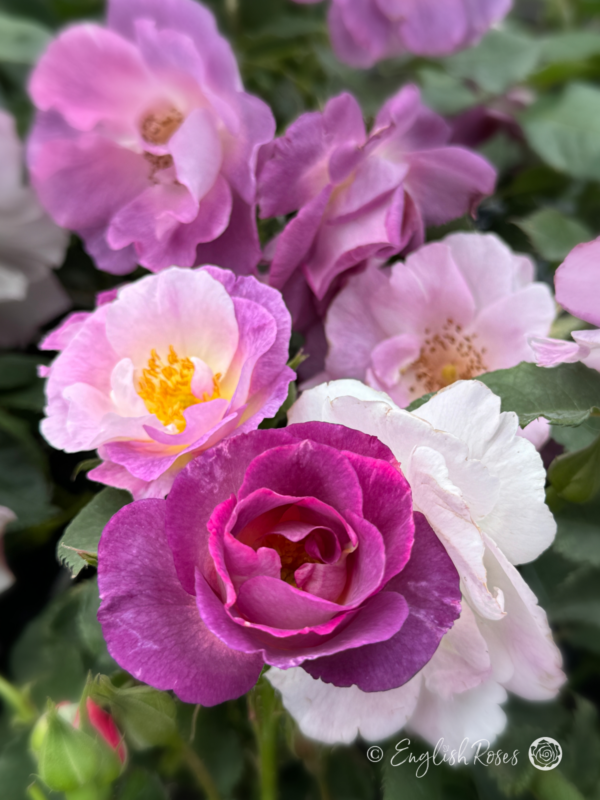
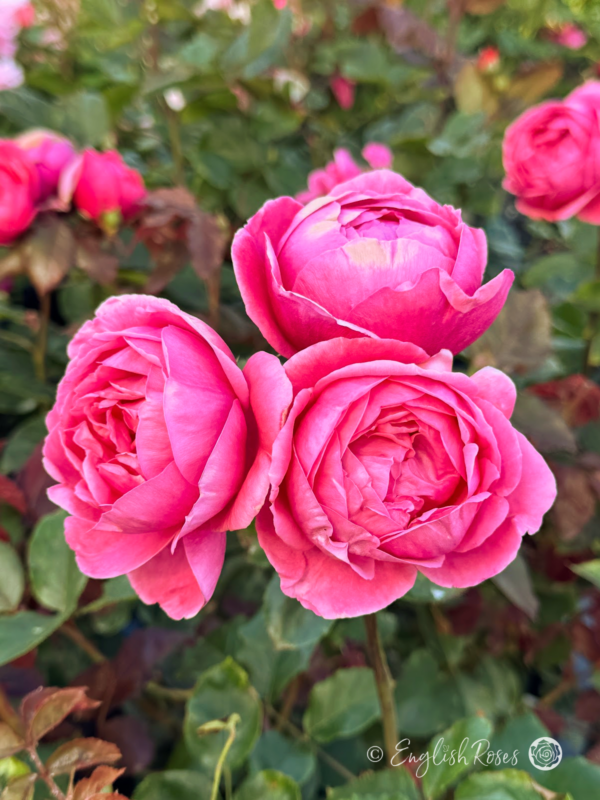
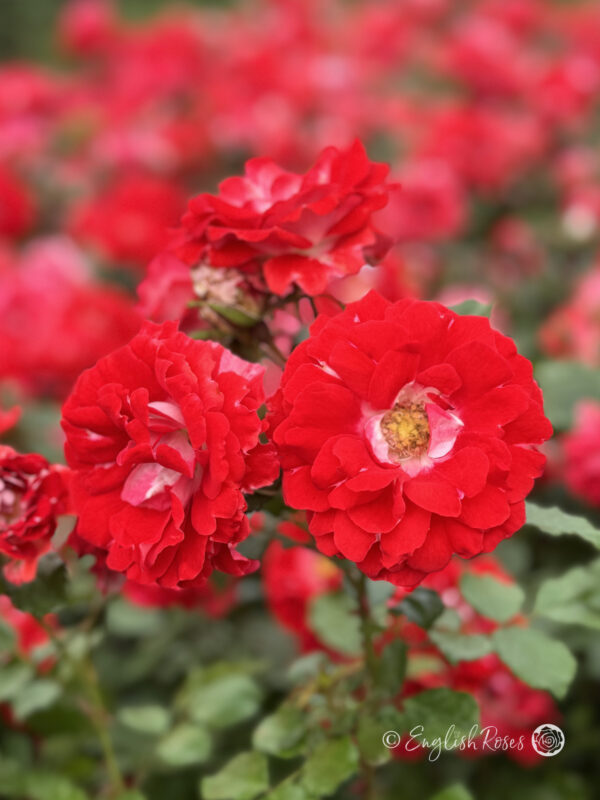
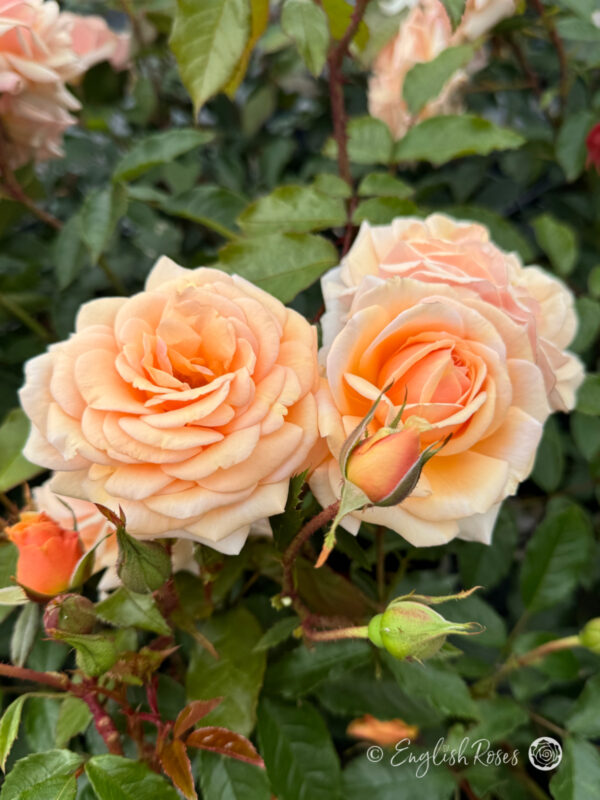
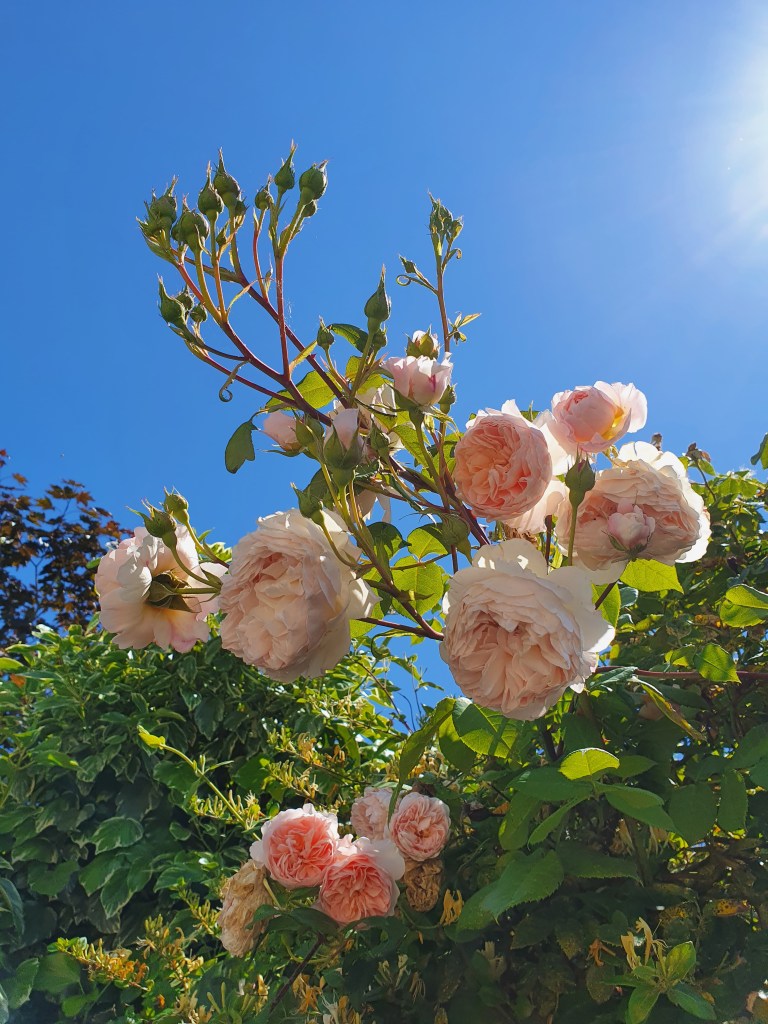
June is the month of roses, and my garden is filled with a huge range from clusters of small white double flowers to obelisks clothed in single pink climbers.

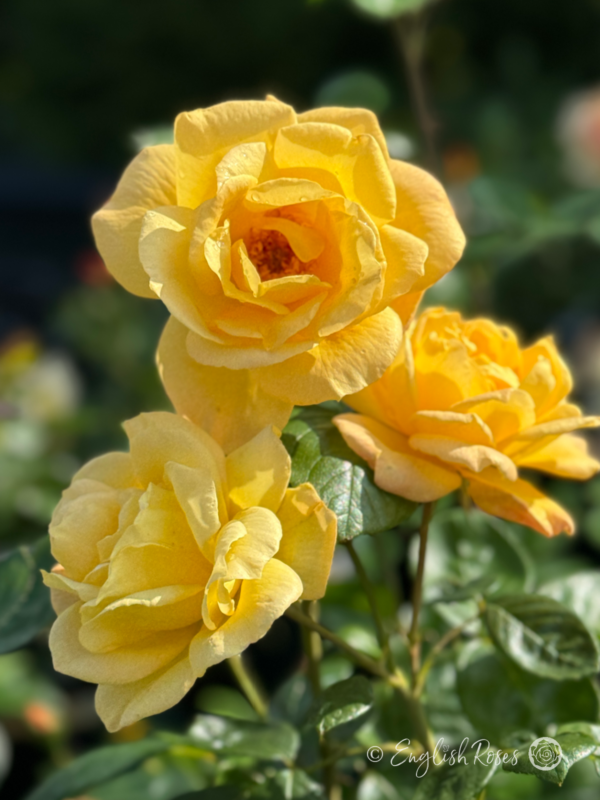
There are roses on the front of the house and over an arch as you walk to the front door. Every border and bed has at least one rose, ranging from white to pink to red, from cream to yellow. With so many, I will be busy deadheading them throughout the summer to keep them blooming.

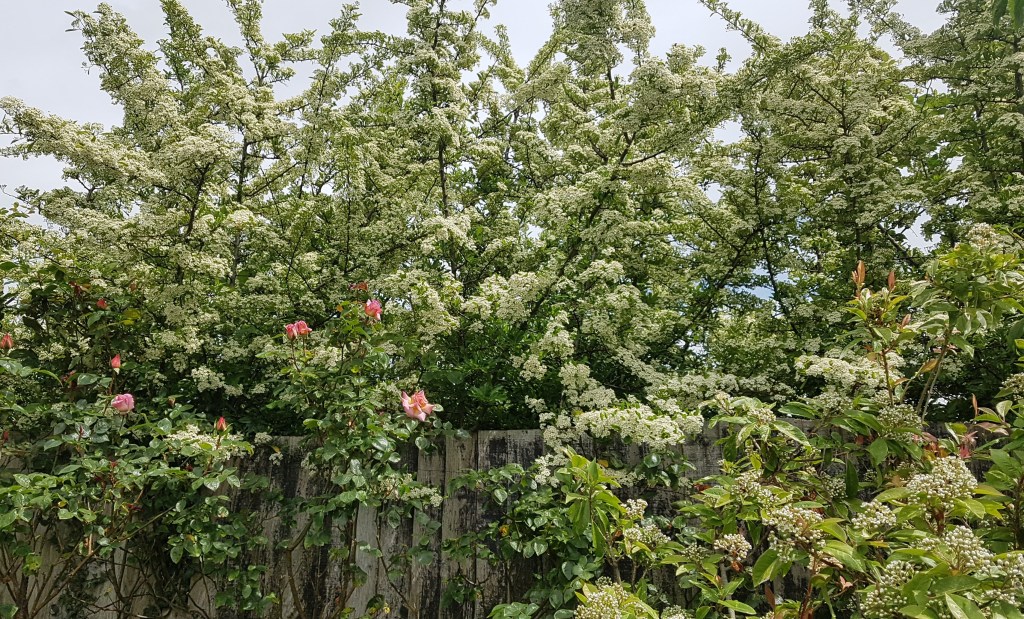
The roses are complemented by early large-flowered clematis in pink and deep purple, as well as alliums, foxgloves, delphiniums and the white forms of valerian and rosebay willowherb. My bees are going mad on the pyracantha hedge that floats above one of my fences.

As we approach the longest day of the year, there’s plenty to do and even time to relax and enjoy the fruits of our labours.

The best way to deadhead your roses is to use your secateurs and cut right back down the stem to the next leaf or bud. This will prompt a side shoot to grow and eventually another flower.

You can deadhead other plants of course, both annuals and perennials. The production of flowers is part of how flowers reproduce. When the flowers die, they leave behind seeds (essentially the plant’s eggs) from which more flowers are born. Once seeds are produced, the plant thinks its job is done and has no further need to produce flowers. Deadheading therefore keeps the plant in a state of perpetually giving birth (flowering). I think I might be a bit mad about that if I were a plant and is probably why I come in from the garden covered in thorn scratches.

Although some plants will only ever flower once, deadheading will also work on asters, campanulas, delphiniums, daylilies and scabious. It is especially important for sweet peas, which is why you should pick as many as you can whenever you can so that seed pods aren’t produced.

I love aubrieta for its vibrant purple flowers, which look great against late flowering daffodils. It offers early nectar and pollen for my bees, but by now it can be looking a bit tatty so needs cutting back. Lightly trim your aubrieta if it still forms a quite neat mound, but if it’s straggly with an almost bald centre then it needs to be cut back harder to within a couple of inches of the base of the plant. Make sure to keep it well watered after cutting back and it will put on fresh foliage within a few weeks.

Cut back perennial Oriental poppies too after flowering, taking them back to ground level. Water – you can feed them with poultry pellets or tomato food if you like – and you’ll get new foliage and perhaps even some new blooms. Hardy geraniums (not the tender pelargoniums) can also be chopped back now too.

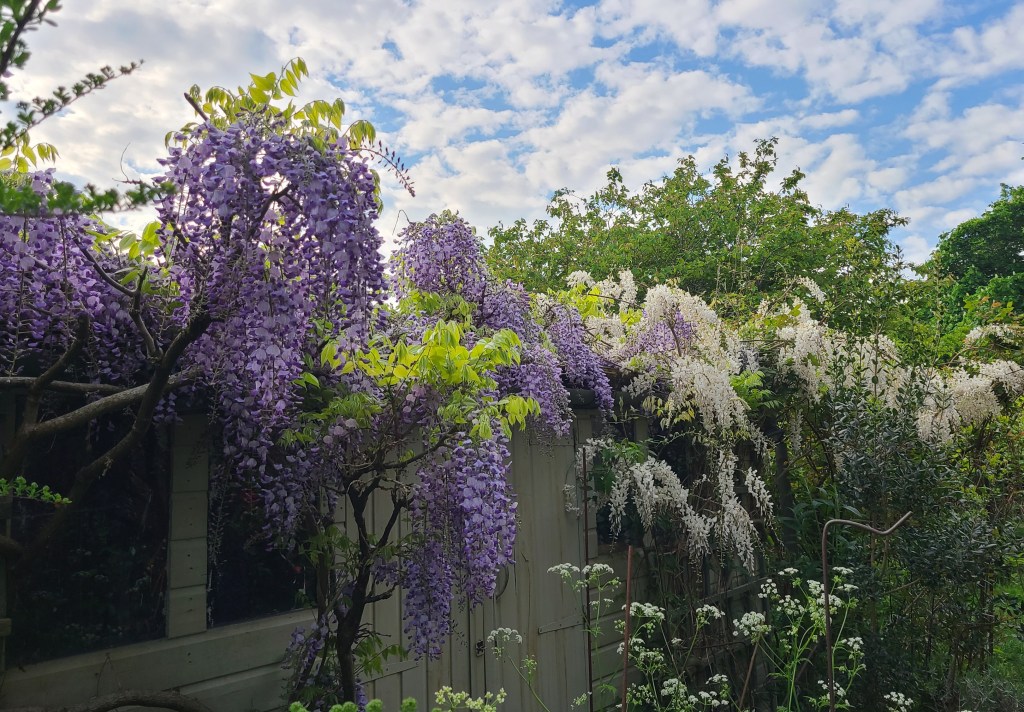
My wisteria plants have been magnificent this year, and their powerful scent seems to reach all round the garden. Once they’ve finished showing off though, it’s time for their first prune of the year this month.

Wisteria produces its beautiful racemes of purple, white or pink flowers on new growth, so to encourage lots of flowers next year, I’ll need to cut back the whippy new shoots that have grown this season. Prune back to the sixth bud from the base of the shoot. If you’re not sure, cut lightly as you’ll do a second prune in winter when it’s easier to see what you’re doing.

I put some garden pinks (Dianthus) around the beds last year and they are beginning to bulk up so I can take some softwood cuttings. Just pull a non-flowering shoot with four pairs of leaves off the plant using your thumb and forefinger. Use a sharp knife to cut below the lowest pair of leaves to make a cutting 5-10cm long. Remove the lower leaves and dip the base of the cutting in hormone rooting powder or gel. Make a hole in a pot of compost, insert the cutting so the lowest pair of leaves is just above the top of the soil, then water. Pop it in a propagator or under a plastic bag and place somewhere warm, and it should root within 2-4 weeks. Although it can be a busy time in the garden right now, don’t forget to take time to soak up the summer sun this month.

We put on a show!

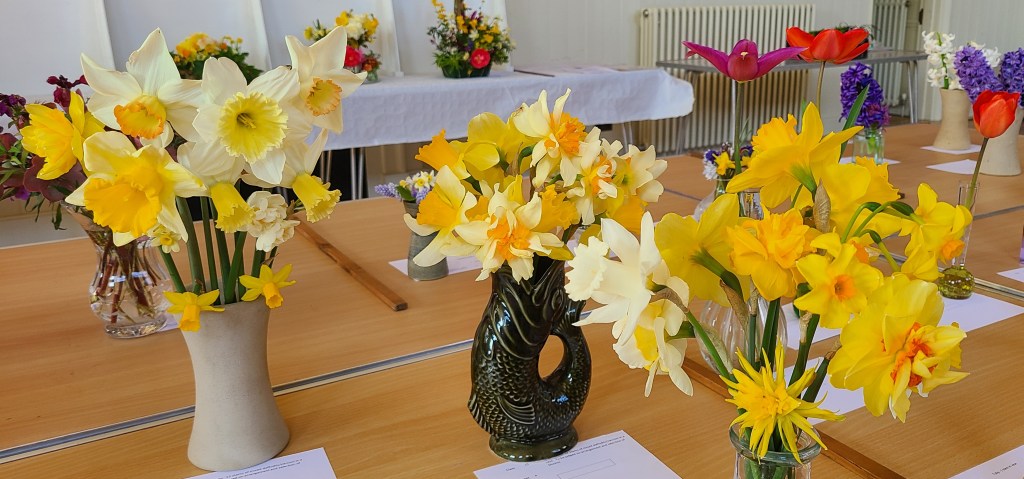
Thank you to everyone who exhibited at or came along to our annual Spring Show. More than two dozen people entered classes for plants and flower arranging, cookery and photography this year. Walking into the Assembly Rooms, visitors were hit with a riot of colour and the scent of spring.

Spring is our daffodil show with 15 separate classes to exhibit the best of your blooms. It’s a great section to enter as nearly everyone has a daffodil or two in the garden or a planter. However, the classification of daffodils can be confusing, so – if you are thinking about planting a few bulbs this autumn – here’s more of an explanation.

Daffodil is the common name for the botanical classification of Narcissus (plural Narcissi). This bulbous perennial (it comes back and will slowly spread over the years) is typically shades of yellow but also white/cream and orange/peach. But what are we talking about when we say trumpet, corona and perianth?

The stem and leaves sprout from the bulb planted in autumn and flower from February to May depending on variety and climate. The flower itself has two key parts: the corona in the centre, which is surrounded by the perianth.

If you think of the daffodil lying on the ground, sometimes it suggests a teacup resting on its saucer, and this gives a clue to one of the alternate names for the corona, the cup. Sometimes the corona is longer, so it’s called a trumpet (imagine the cone-like shape of the musical instrument). Still thinking of the flower lying on the ground, the perianth is the ‘saucer’ of six petals (they’re actually tepals, but you don’t need to care about that!).

Now that you know all that (you’ll thank me later), it will help you work out what to exhibit in which class.

Our classes are guided by the Royal Horticultural Society’s classification of daffodils into thirteen descriptive divisions. Classes 1-6 are for trumpet daffodils, identified by gently folding one of the petals forward. If they are the same length or shorter than the corona, then you have a trumpet.

Identify your large-cupped daffodils by folding the petals forward again. If they are longer than the corona (cup), then you have a cupped daffodil – some of the cups are small and will reach less than a third of the length of the petal, others are much wider/longer and dominate the flower. The latter are the ones to exhibit here.

Double daffodils can be confusing. The flower itself should be doubled with a mass of petals. A daffodil with two or more flowers on the stem is NOT classified as a double daffodil unless each of those flowers has that mass of petals.

Two or more flowers on a stem is classified as triandrus and you can enter these in classes 13 and 14). These two classes are essentially for ‘any other’ type of daffodil. These include miniatures (flowers usually less than 50mm in diameter), weird-looking (I think) bulbocodium, and the pretty split-cupped. Then there’s the pheasant’s eye (classes 11 and 12) – also called poeticus – which has pure white petals and an almost flat corona with a red rim.

If you can’t be bothered remembering all that (though if you’re not sure, just enter everything on your entry form and we can help you out on the day), just find 12 daffs, make them look nice in a vase and enter class 15!

So now you know a bit more about how to exhibit daffodils in our next spring show and have a year to prepare! We hope you’ll also have a go in our Autumn Show, when it’s all about the dahlia. There’s no fee to enter as many classes as you like in either show.