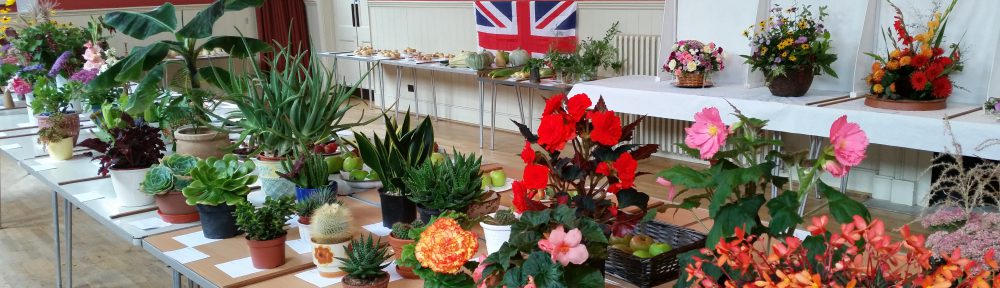
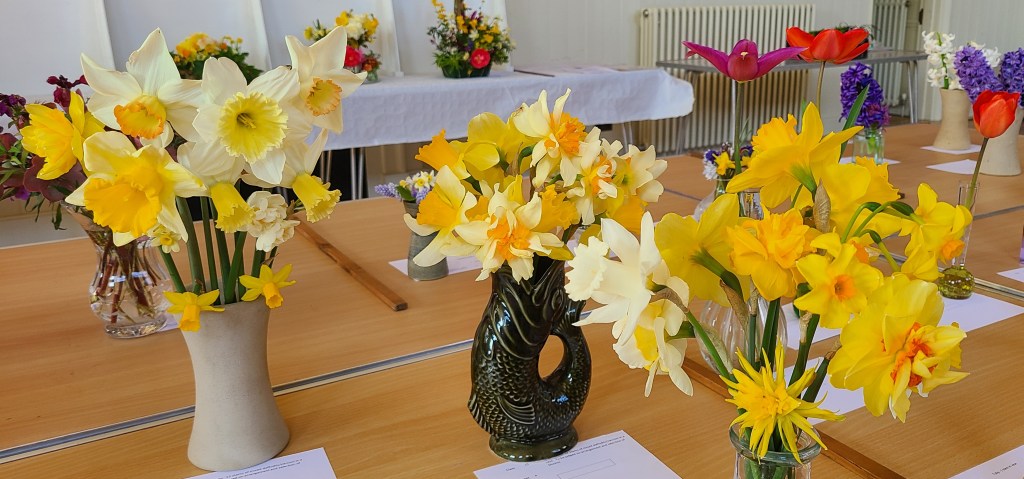
It’s March! Finally! And the spring equinox is just a few weeks off which means serious sowing and planting can get underway and brings our Spring Show on Saturday 21 March. We’ve brought it forward a couple of weeks to avoid the Easter holidays but also to catch increasingly early-flowering daffodils (Narcissus if you want to get Latin about it).
There’s no cost to enter the show and you don’t need to be a member of the Society, and we have a great programme with classes for everyone. Just download the Schedule and Entry Form from our website where a search for ‘daffodil’ will return a few tips and images to help you exhibit. If you have any questions, just email dedhamgardening@gmail.com and we’ll try to help.
The classification of daffodils can be confusing, so here’s a run-down of the differences to help you choose what to exhibit. Don’t worry about getting it wrong though – let us know when you bring your exhibit in and we can make sure it goes into the correct class.
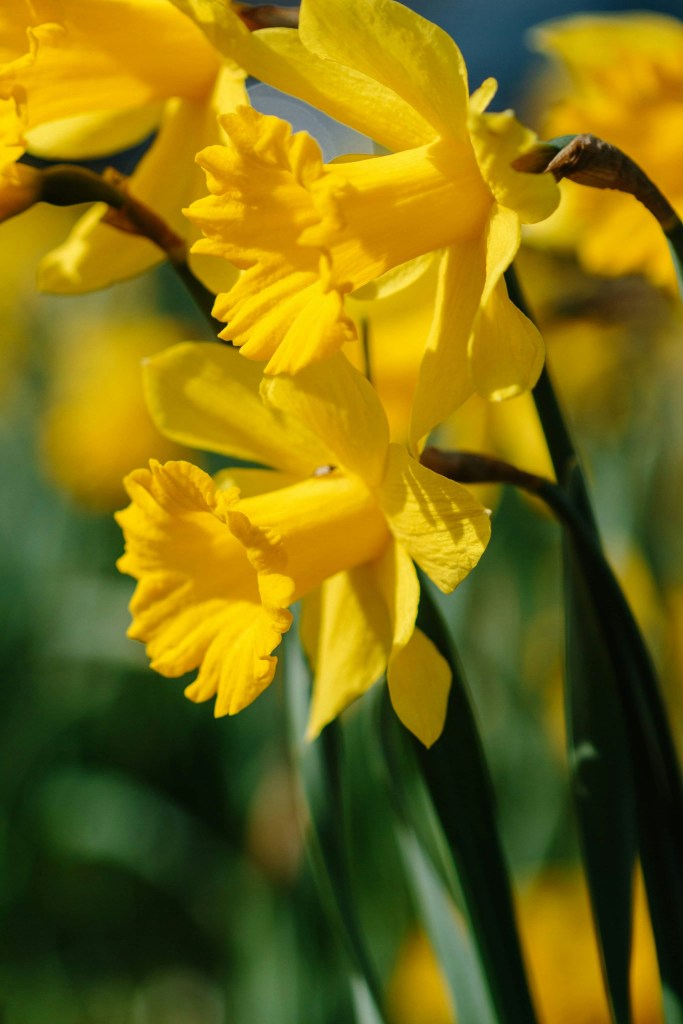
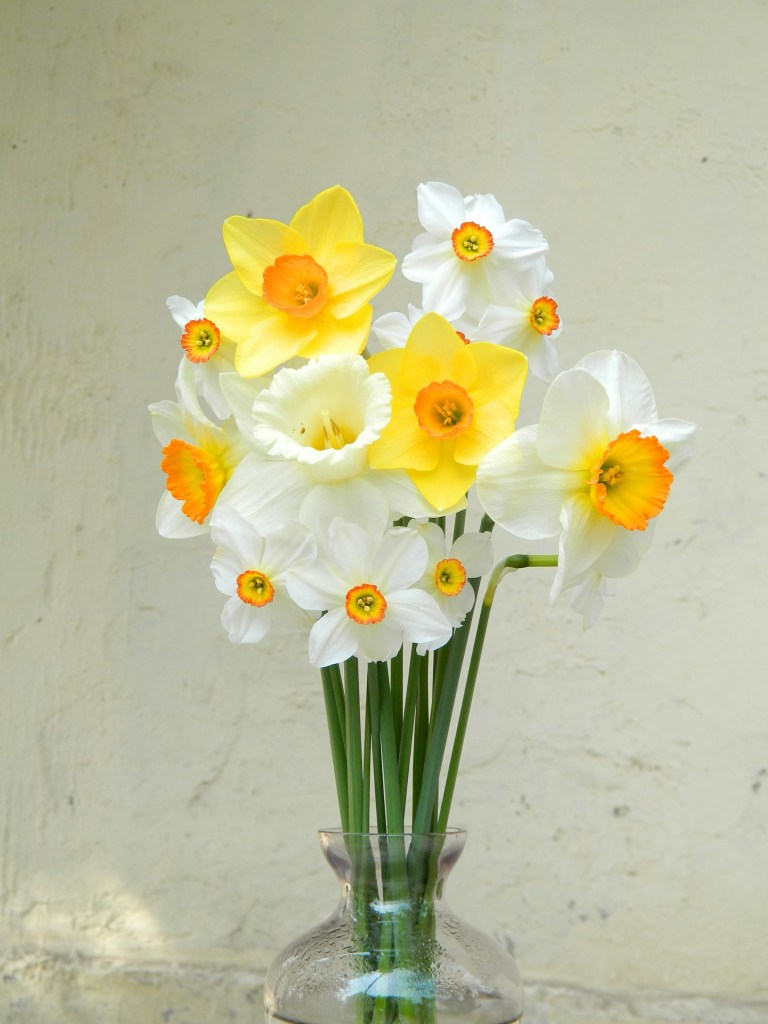
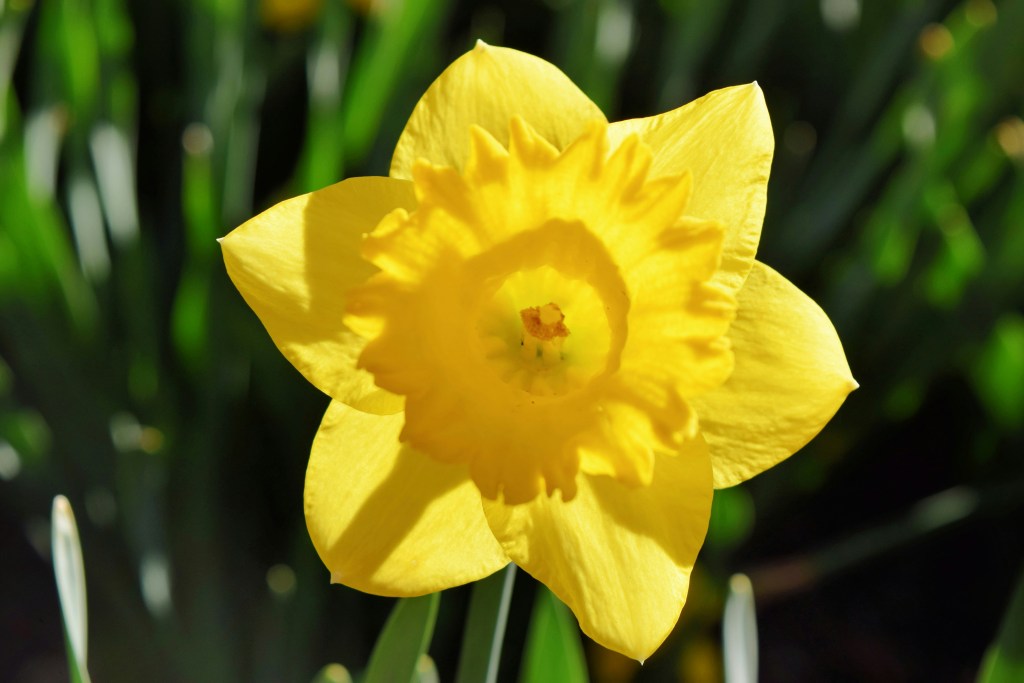
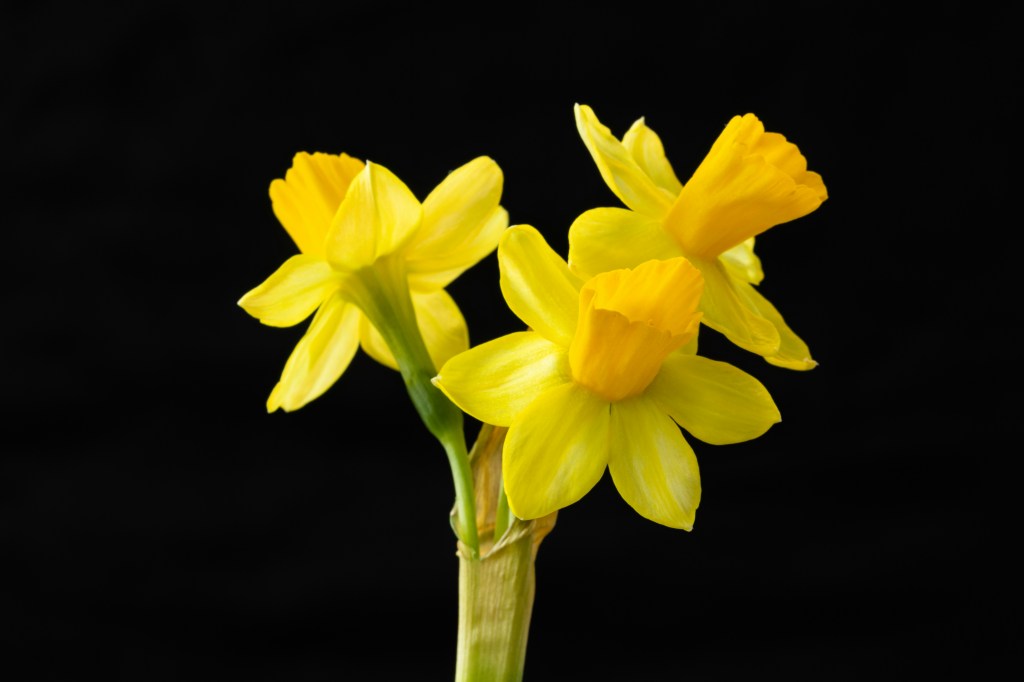
Daffodils are typically yellow but there are also varieties in shades of white or orange. The flower itself has two key parts: the corona (also called the trumpet or cup) in the centre, which is surrounded by a perianth of (usually) six segments (the petals or tepals). This is important because it helps you put your daffodil in the right class when exhibiting.
Think of the daffodil lying on the ground with the corona face up. Sometimes it suggests a teacup resting on its saucer, and this gives a clue to one of the alternate names for the corona, the cup. Sometimes the corona is longer, so it’s called a trumpet (imagine the cone-like shape of the musical instrument). Got that? Great.
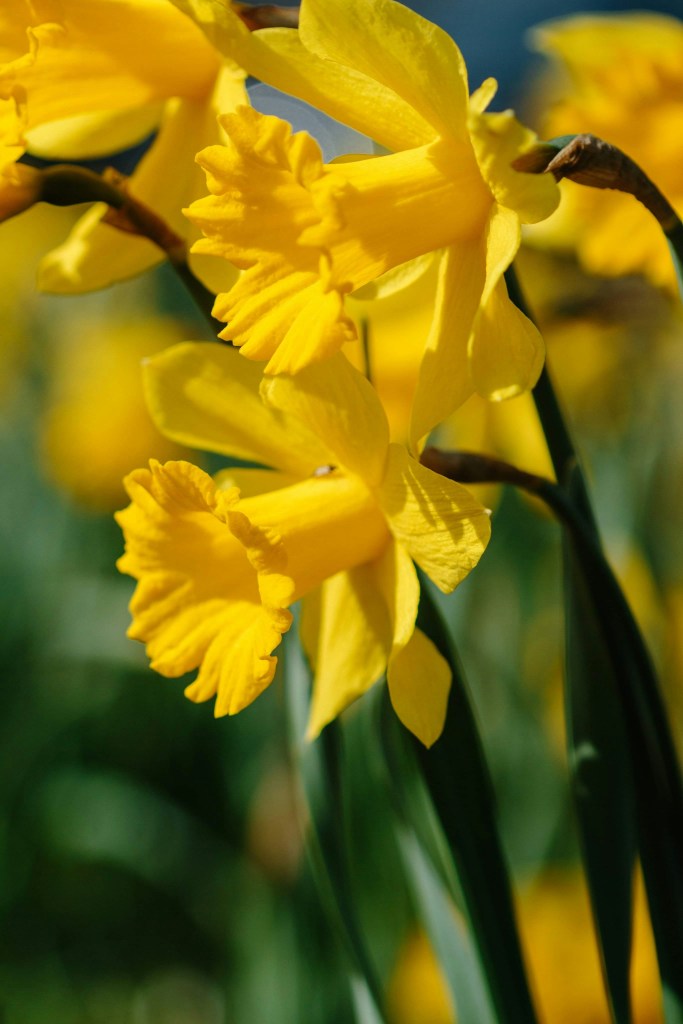
Next, daffodils are exhibited in thirteen descriptive divisions. Classes 1-6 are for trumpet daffodils, where the trumpet must be longer than the petals. To test, gently fold one of the petals forward over the corona: if it is the same length or shorter than the corona, then you have a trumpet.
Identify cupped daffodils by folding the petals forward again. If they are longer than the corona, then you have a cupped daffodil – some of the cups are small in diameter, others are much wider. Both count as cupped daffodils, ‘small’ or ‘large’. You need large-cupped for classes 7 and 8 but can put small-cupped varieties into classes 11, 12 and 15, and – if the flower is small enough – 13 and 14 too.
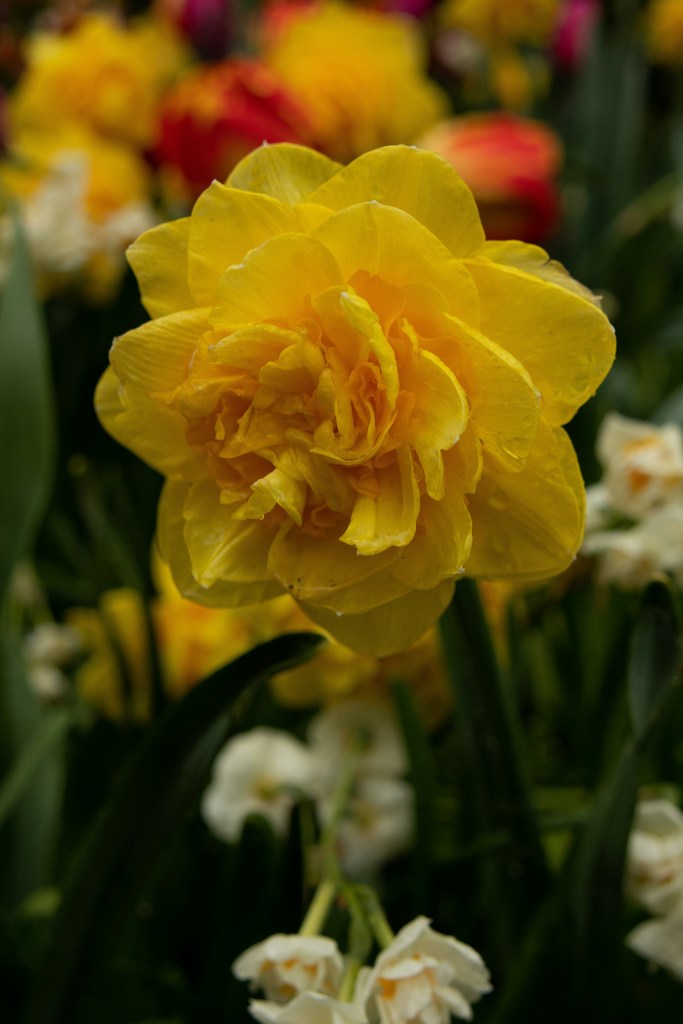
Double daffodils can be difficult to classify correctly. The flower itself must be doubled, a peony-like mass of corona and perianth. A daffodil with two or more flowers on the stem (ie multi-headed) is NOT classified as a double daffodil unless each of those flowers has that peony-like mass. Our show schedule asks you to exhibit one or three stems in classes 9 and 10, so you can exhibit multi-headed varieties here, just make sure every head is a double. Good multi-headed varieties include ‘Bridal Crown’, ‘Cheerfulness’ or ‘Erlicheer’ (‘Early Cheer’).
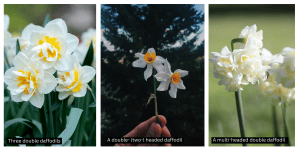
Classes 13 and 14 are essentially for ‘any other’ type of daffodil. These include multi-headed varieties, as well as the weird-looking (I think) bulbocodium and the pretty split-cupped. Then there’s the pheasant’s eye, which has pure white petals and an almost flat corona with a red rim.
If you can’t be bothered remembering all that, just find 12 daffs, make them look nice in a vase and enter class 15. And if you’re not sure what you have, we don’t mind if you circle all the daffodil classes on your entry form and we will help you out on the day. The British weather being what it is, it doesn’t matter if – on the day – you don’t have everything you’d hoped to exhibit.
The Show is not just about daffodils of course. There are classes for other bulbs and, as it might prove too early for many tulips, we’ve created a dedicated class for grape hyacinths (muscari) this year.
Class 20 requires 12 stems of small or miniature bulbous plants with a minimum of three different varieties. There’s nothing stopping you from including miniature daffodils or muscari here, even if you’ve also used them in classes 13, 14 or 18, while scilla, puschkinia and ipheion all have smaller varieties.
Although not officially bulbous, we ask our judge to be kind here so anemone, cyclamen and crocus (rhizomes, tubers and corms respectively) can also be included in this class.
Remember that a variety can be the same kind of plant but look different. For example, ‘Dutch Master’ and ‘Mount Hood’ are both trumpet daffodil types, but the first is an all-yellow variety, the second all-white. If they were miniatures (they’re not, don’t try it) they would count towards two of the three needed in class 20. For miniature daffs, where the blooms are usually less than 2 inches (50mm) in diameter, ‘Tête-à-Tête’, ‘Rip van Winkle’, ‘Sun Disc’ and ‘Minnow’ are all very different varieties.
For class 21, 12 stems of spring flowers, you’ll probably have to draw on any hellebores, primroses, primulas, wallflowers, pansies or violas that you haven’t already used in other classes. You can’t use any bulbs or shrubs, so daffodils and spring blossom will be disqualified here.
Do have a look at the schedule on our website. It would be great to see more people taking part and supporting Dedham’s gardening group. I know the show sounds a bit intimidating but we’re a friendly bunch and are happy to help and offer advice and encouragement. Even if you don’t exhibit, make sure to put the afternoon of 21 March in your diary and come along for a look around, a hot drink and the raffle! We’ll see you there.
 Dedham Horticultural Society