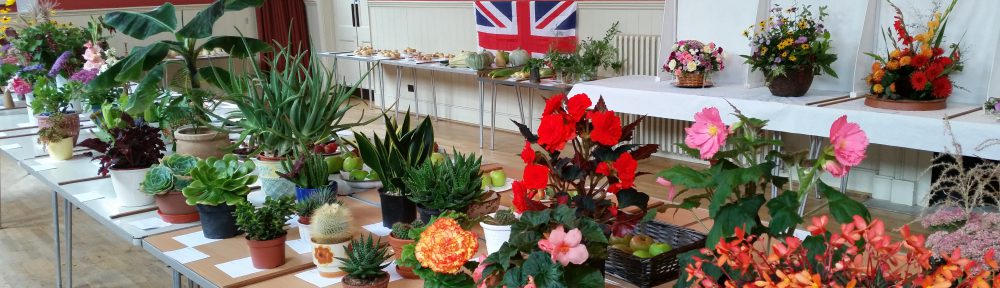
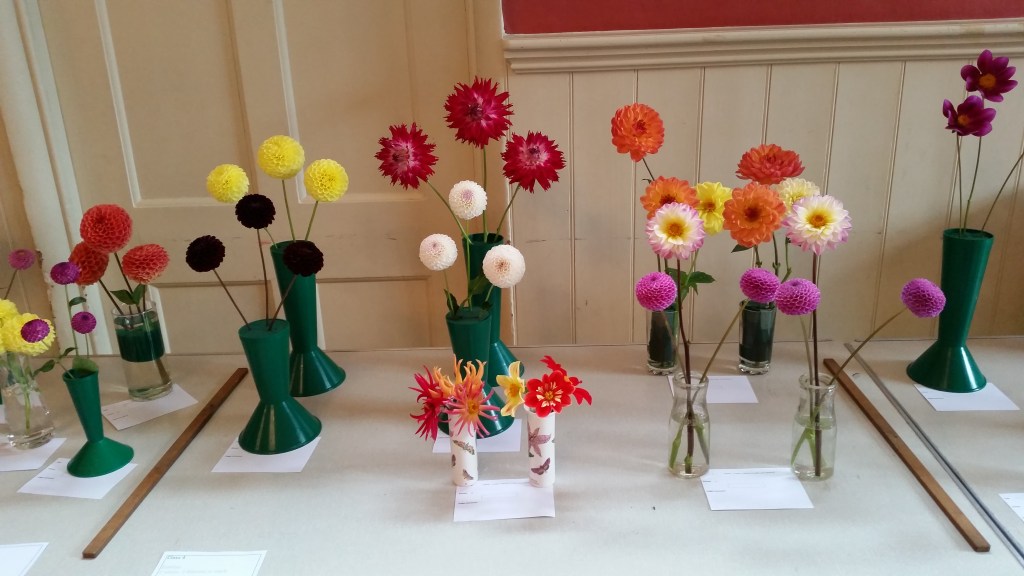
Every year in our Autumn Show, there are five classes where you can exhibit different types of dahlia. If you are new to exhibiting dahlias, the types can be a little confusing, so this page aims to help. You can find plenty of photographs of examples and further descriptions by searching the internet.
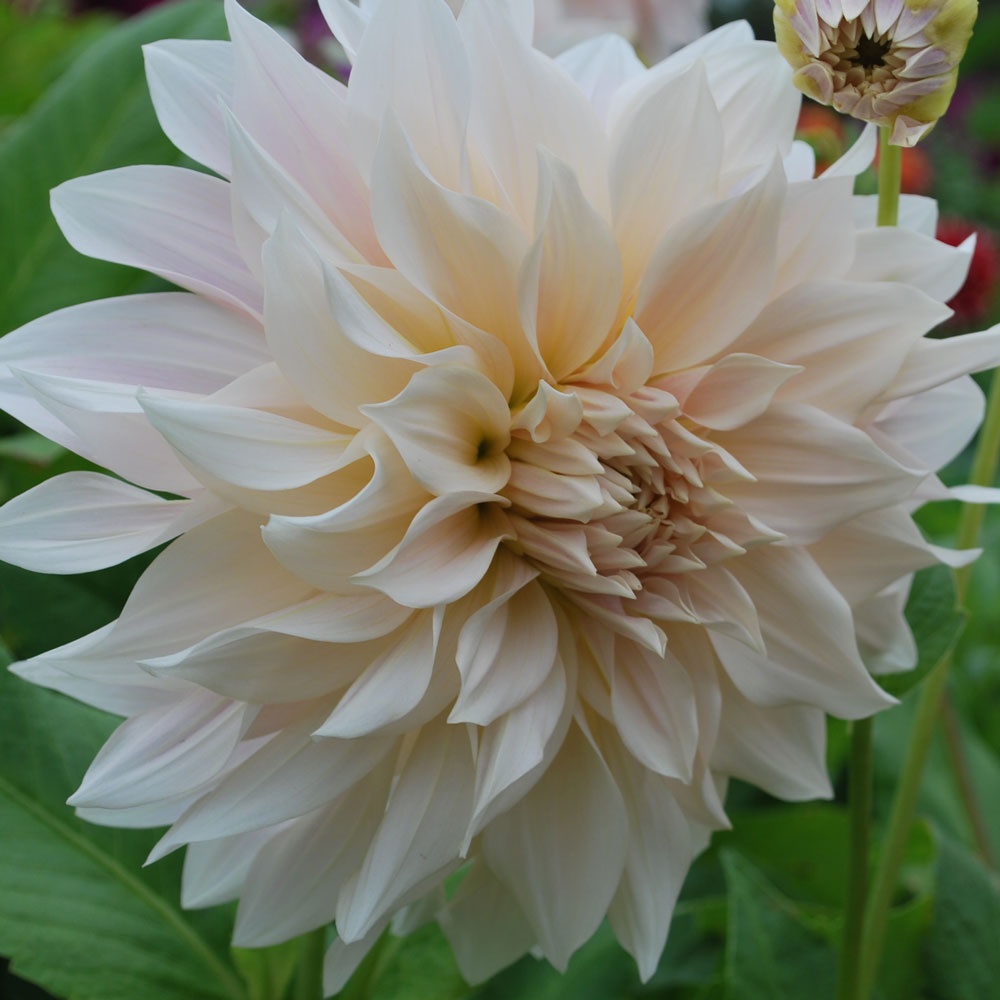
Class 1: 1 decorative-type bloom
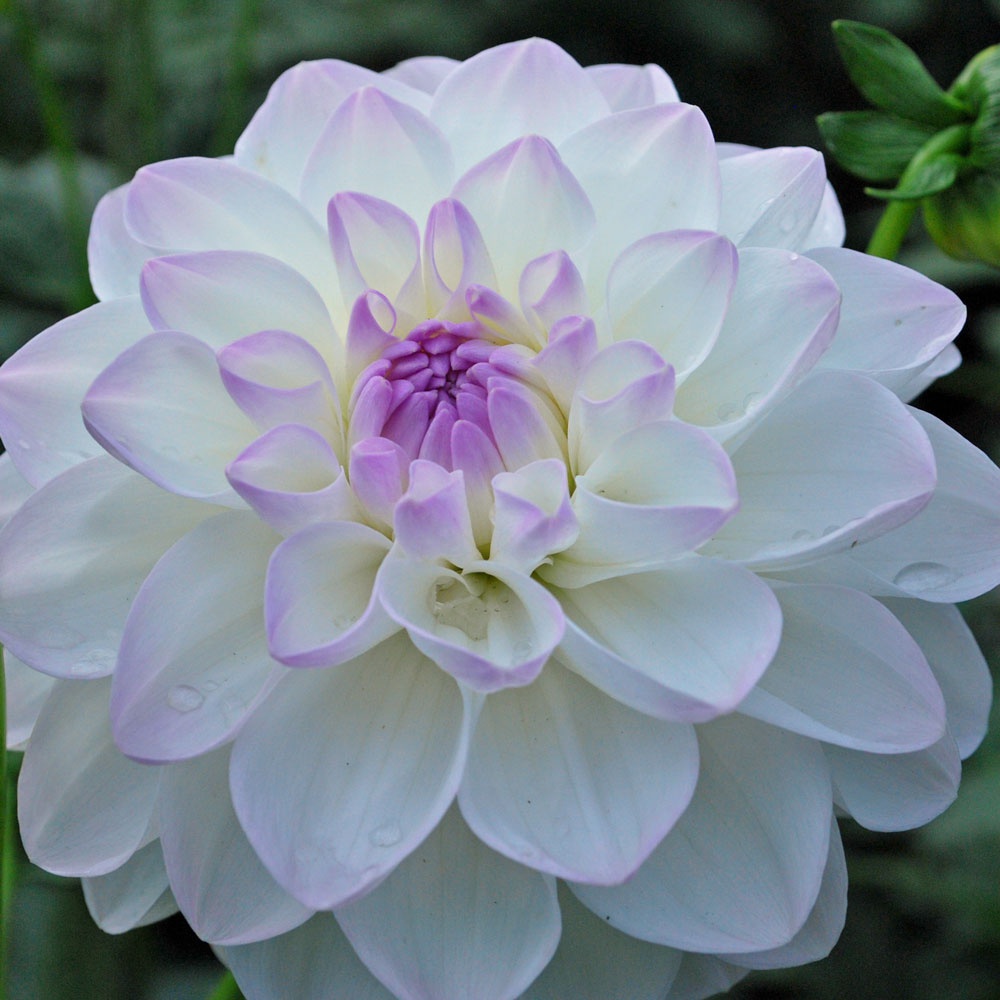
Decorative dahlias have fully double, slightly flat and broad petals, often with a blunt end, and no central disc. They’re the largest of all the dahlias – flowers can be up to 25cm in diameter.
On the left: decorative dahlia, Cafe Au Lait
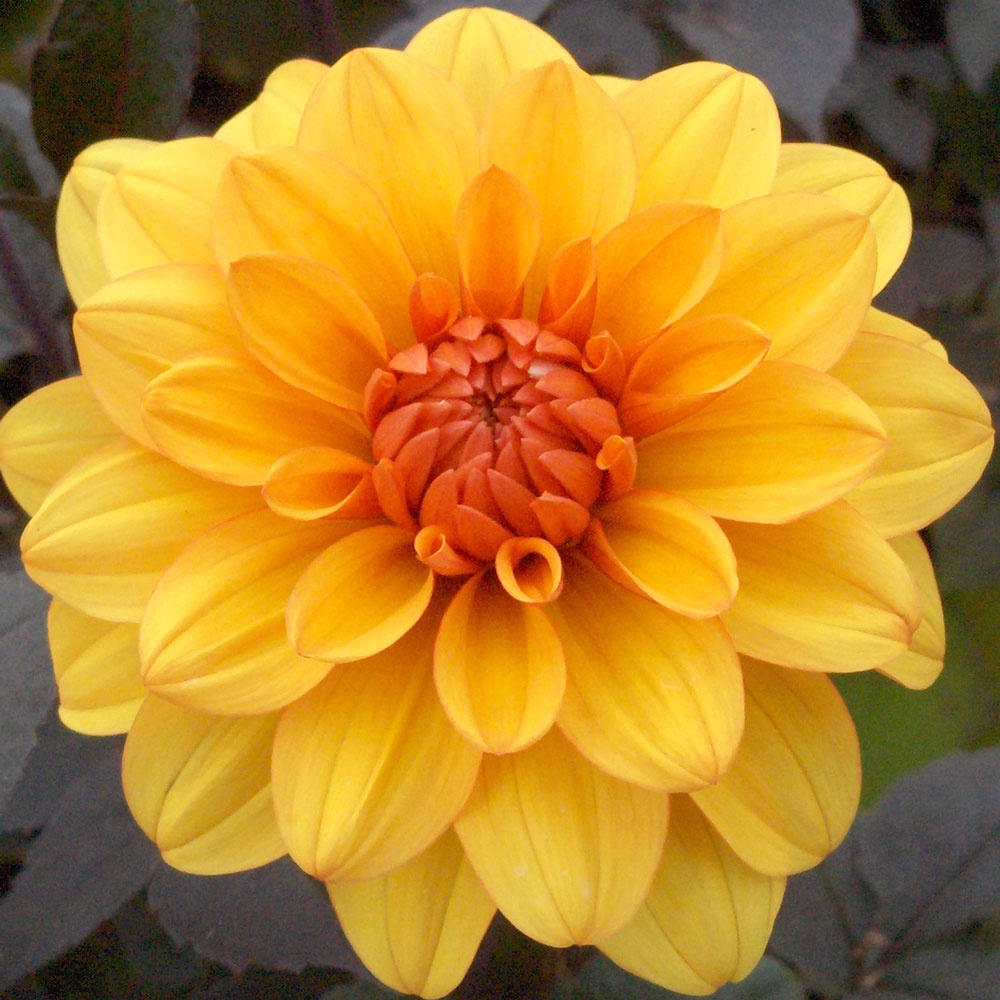
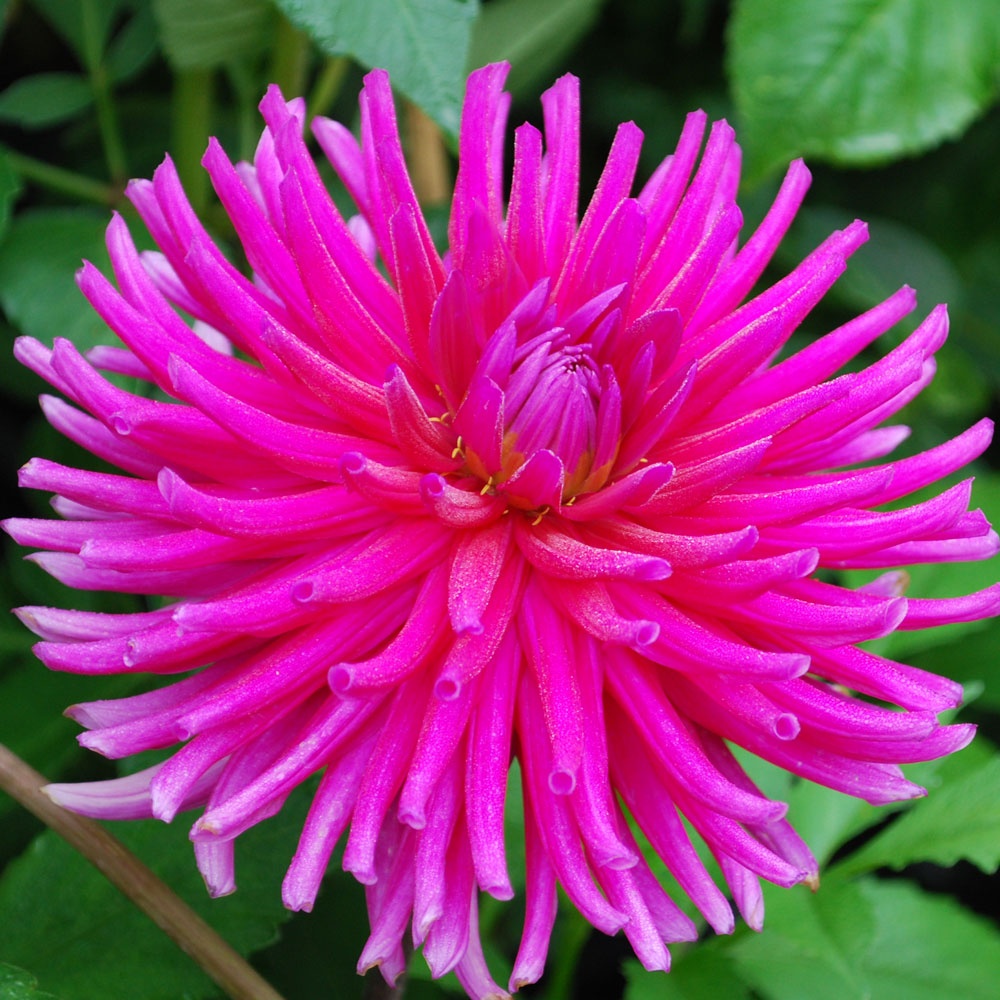
Class 2: 3 cactus-type blooms, same size, one variety.
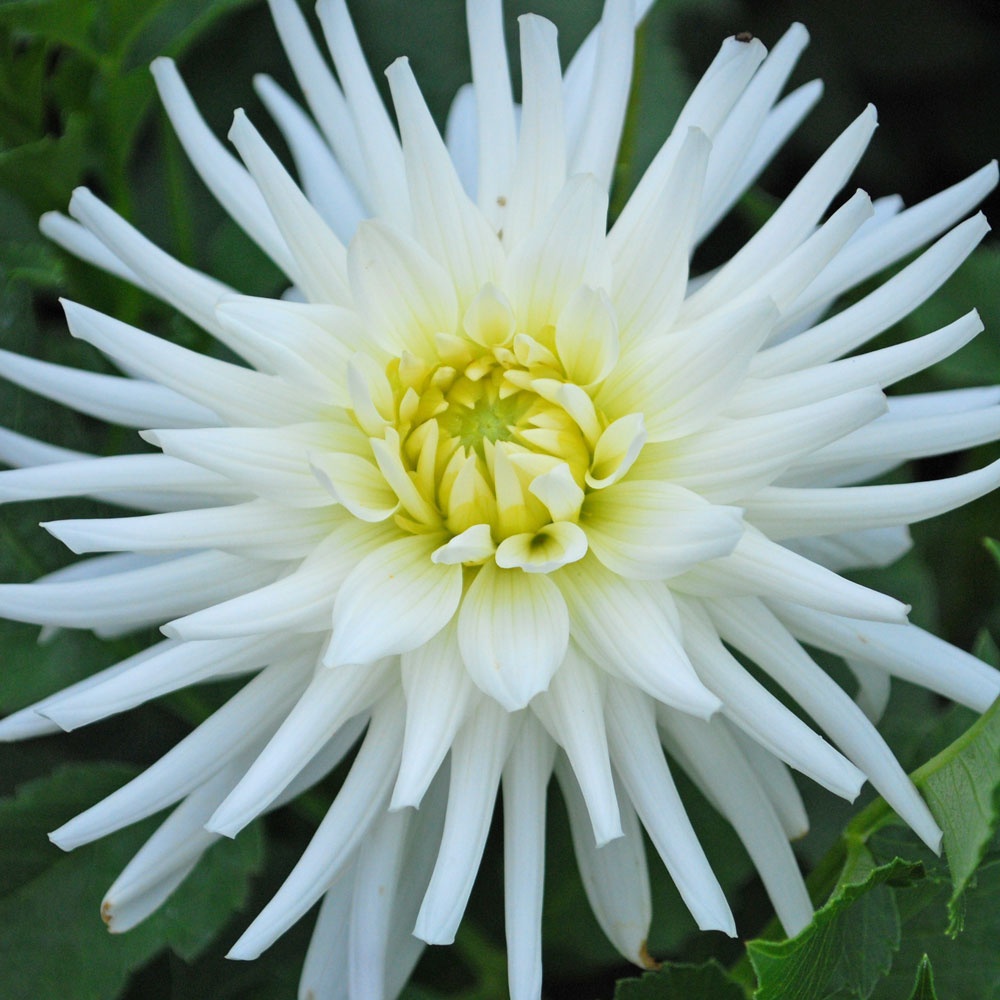
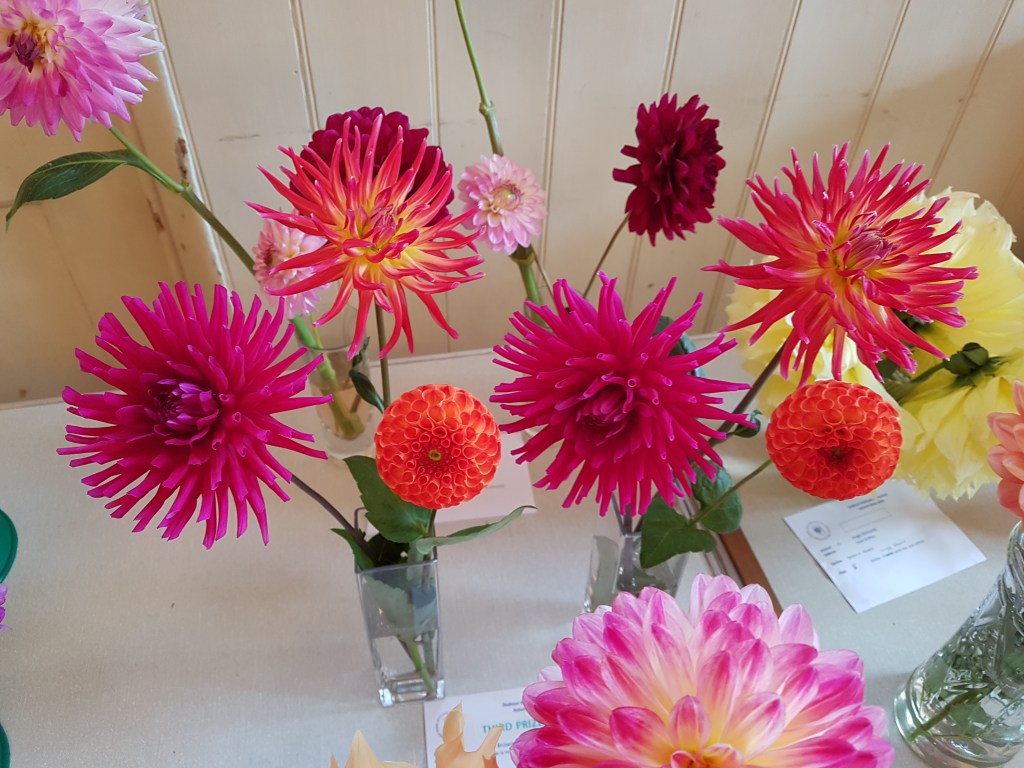
Cactus dahlias have fully double blooms, with very narrow petals from the tip to the base, that curve outwards. They range in size from miniature to giant.
Semi-cactus dahlias can also be entered in this category. The petals have a broader base at the bottom than cactus dahlias and are rolled for about half of their length.
On the right: cactus dahlia, My Love
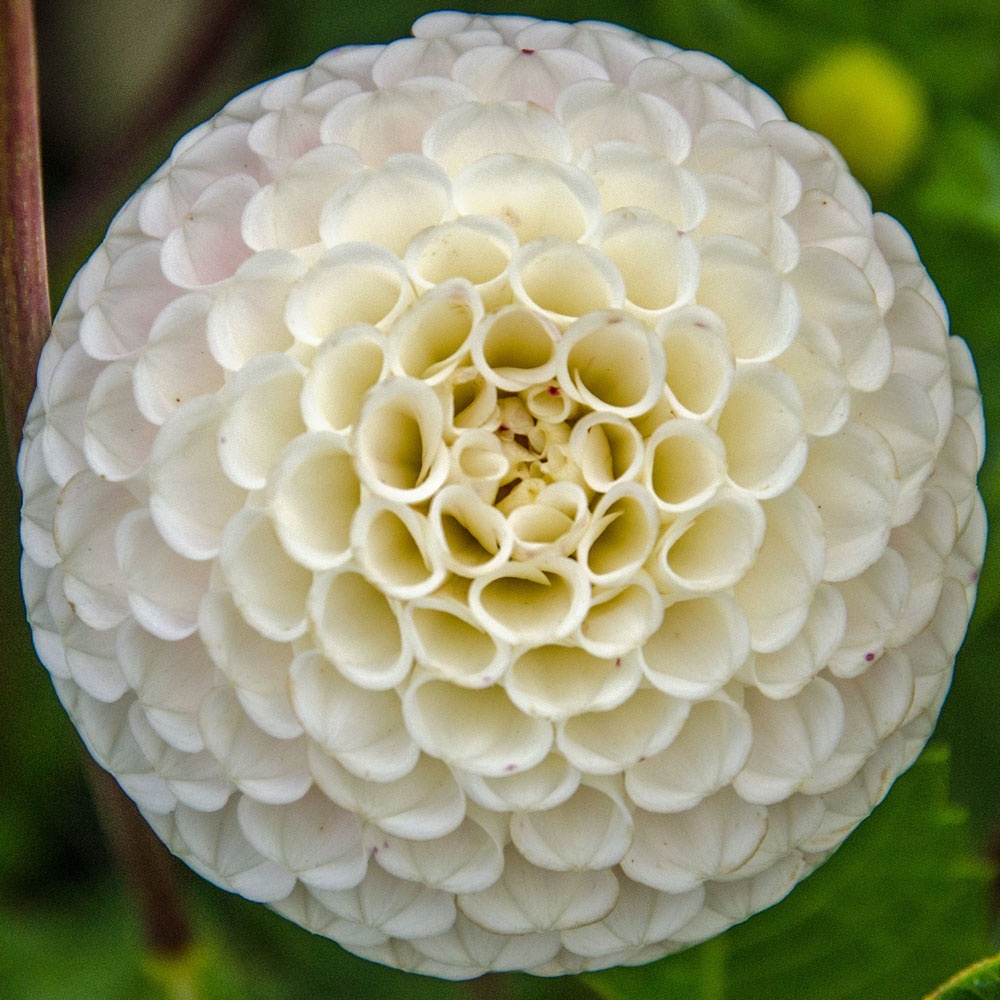
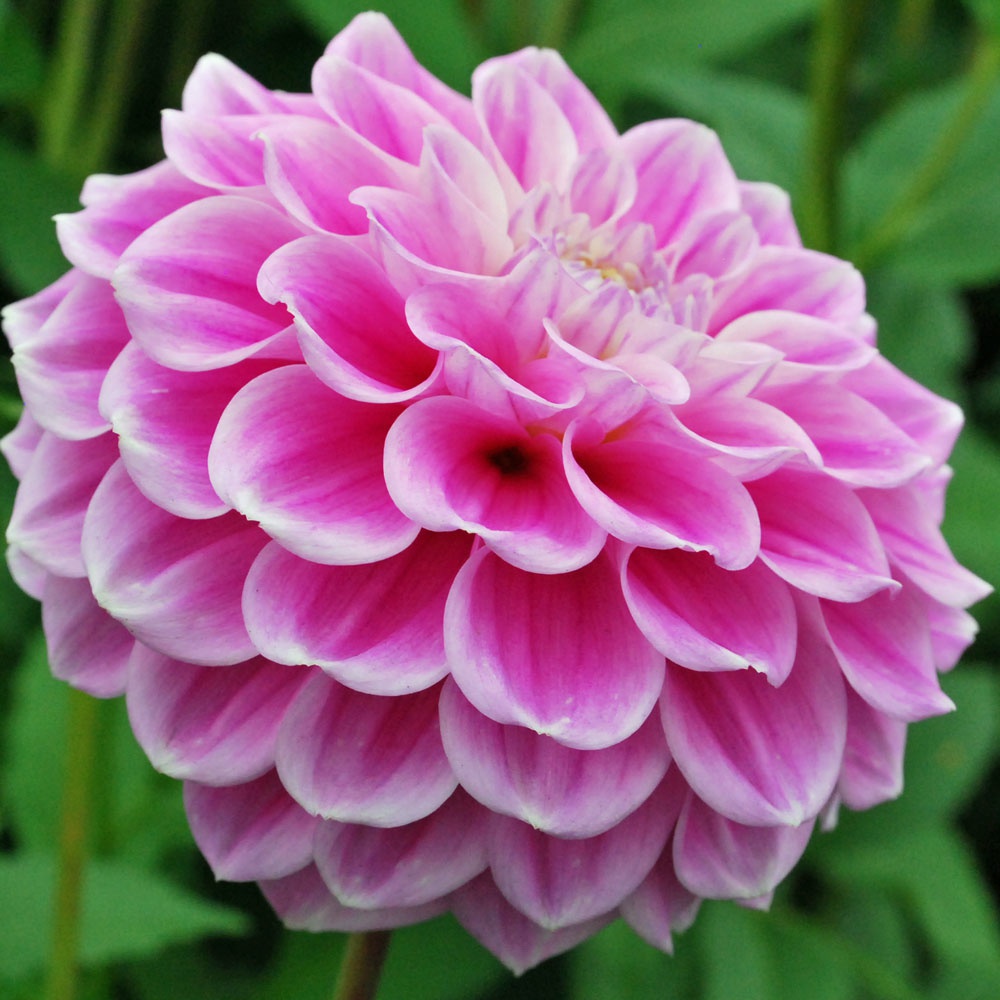
Class 3: 3 pompon-type blooms, same size, one variety, max size 50mm diameter
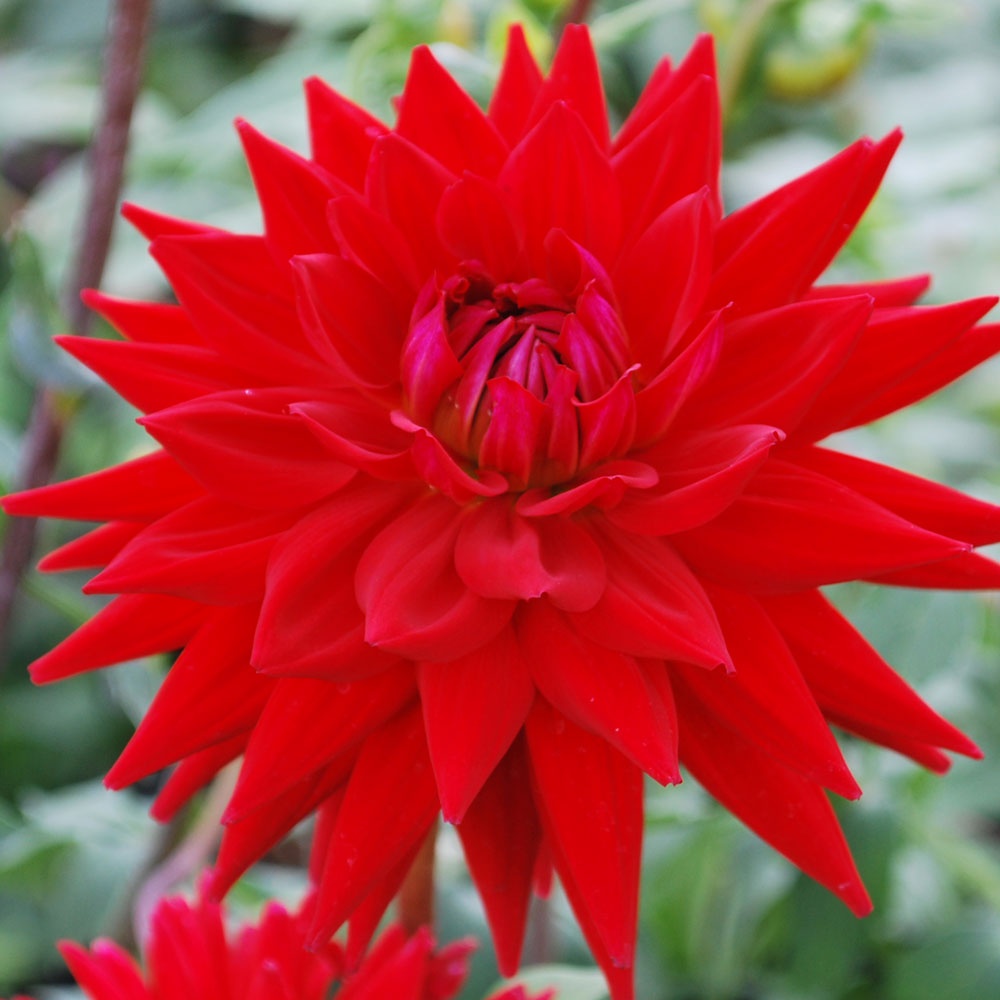
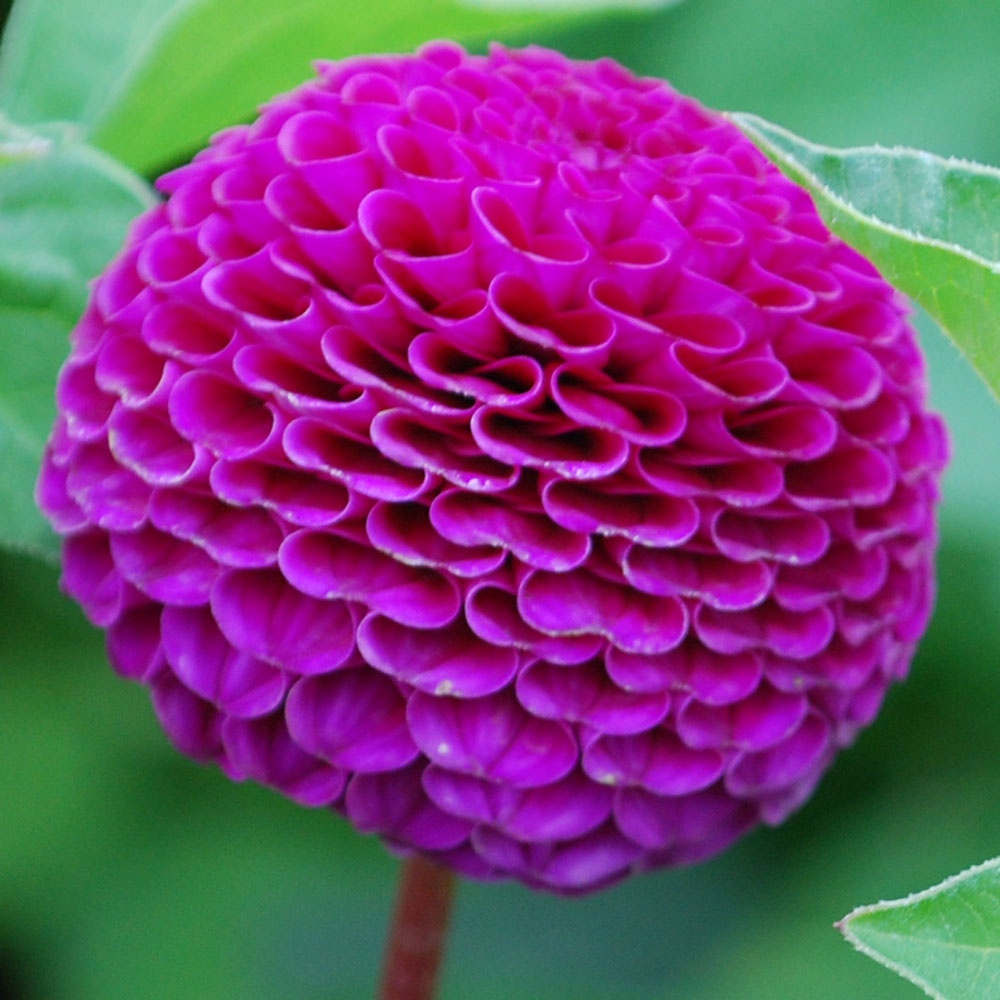
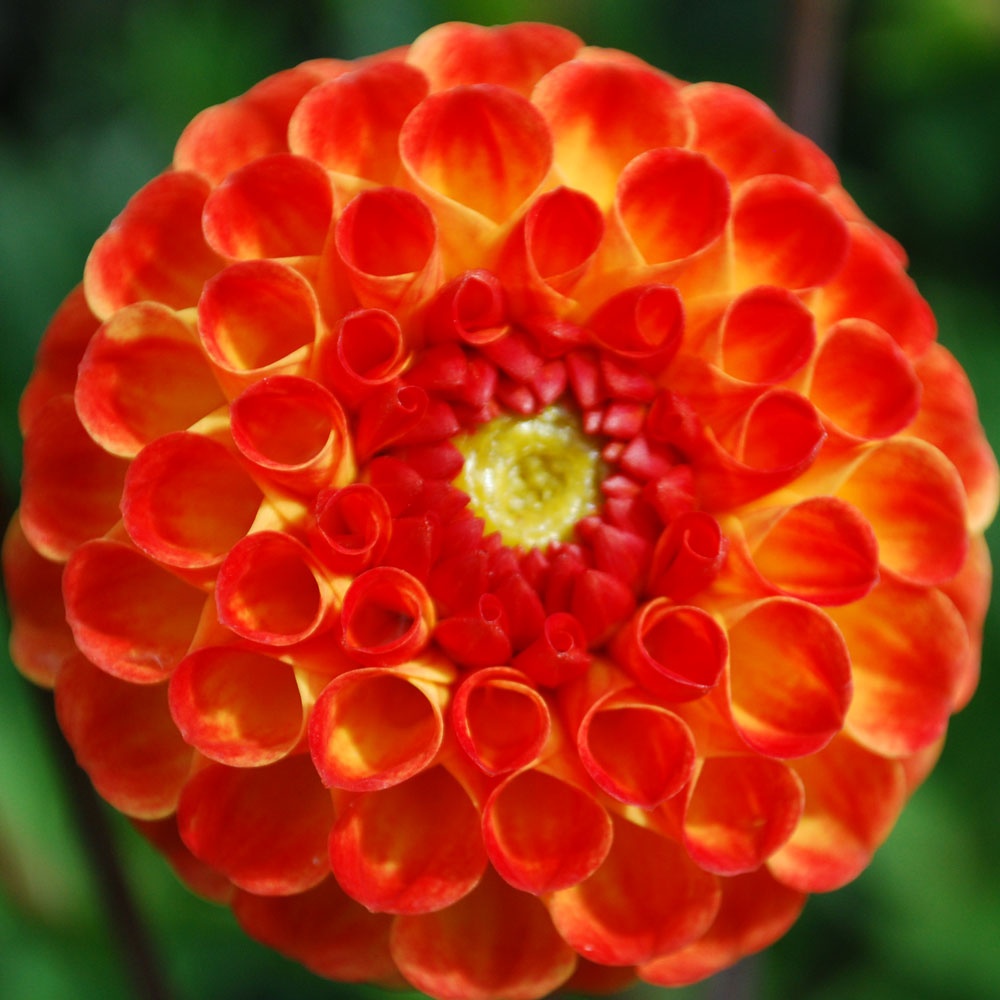
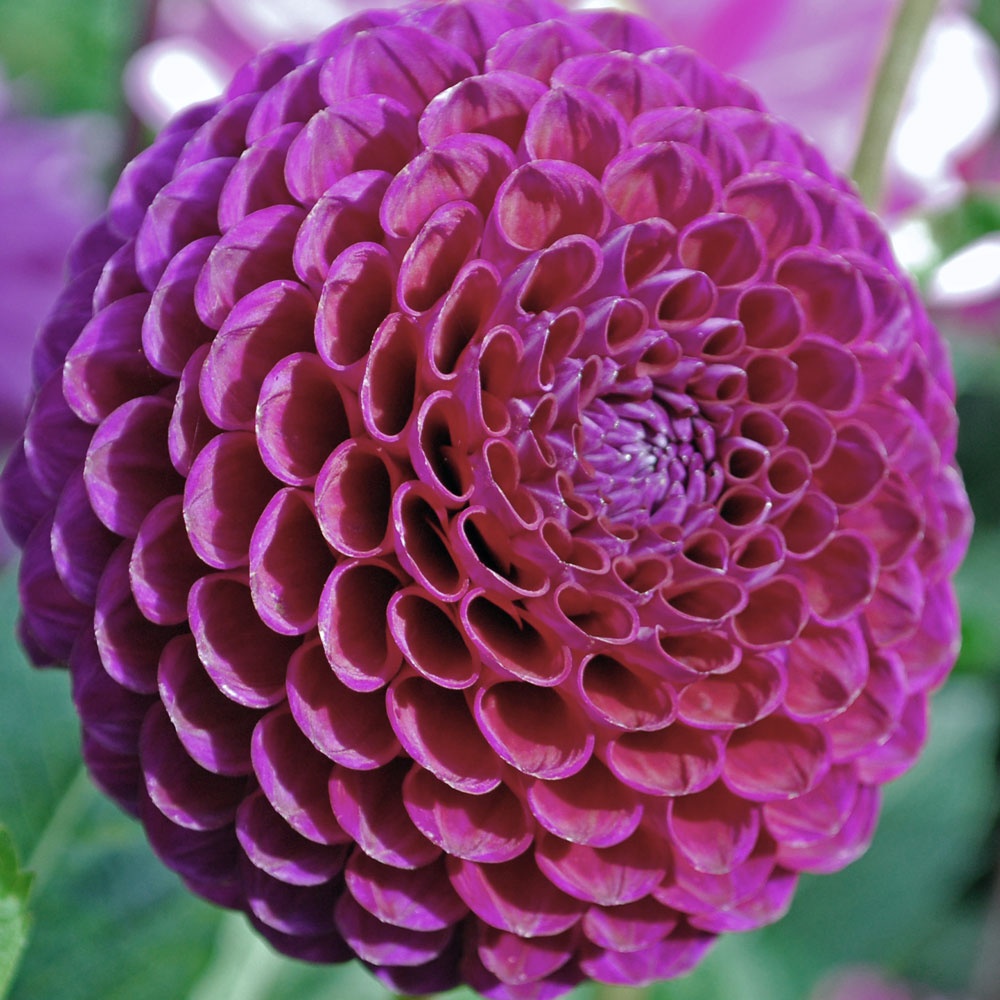
The flowers of pompon dahlias (like ‘Small World’ on the left) are perfect spheres, formed of petals that are curved inwards. Their flowers are smaller than those of ball dahlias (see ‘other types’ below).
Ball dahlias have a slightly flattened top, with blunt or rounded petals arranged in a spiral pattern.
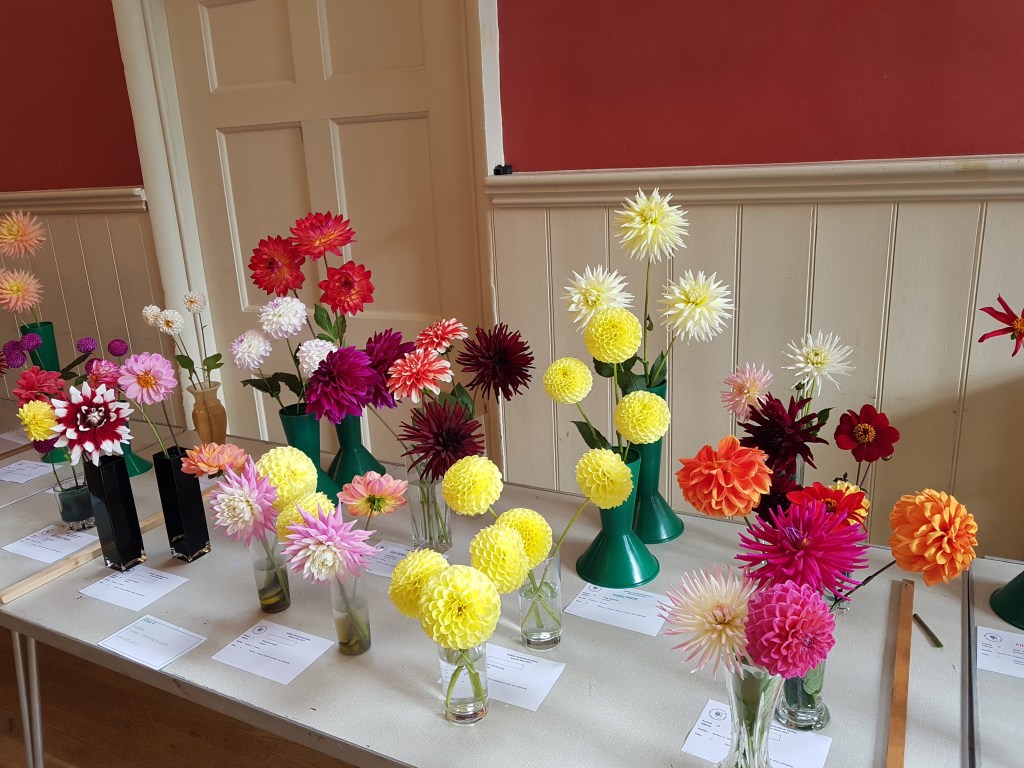
Class 4: two vases, 3 blooms in each, any variety
To enter this class you just need six dahlias. They can be any type you like, just put three in each vase. Most exhibitors make the blooms in one vase the same as the blooms in the second, but you don’t have to.
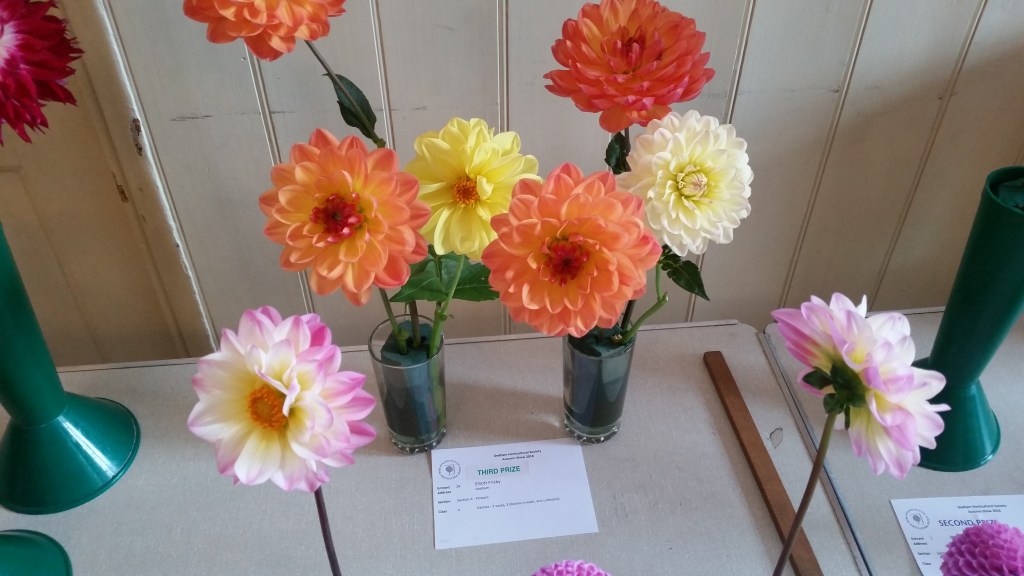
Class 5: 3 single-type blooms, same size, one variety.
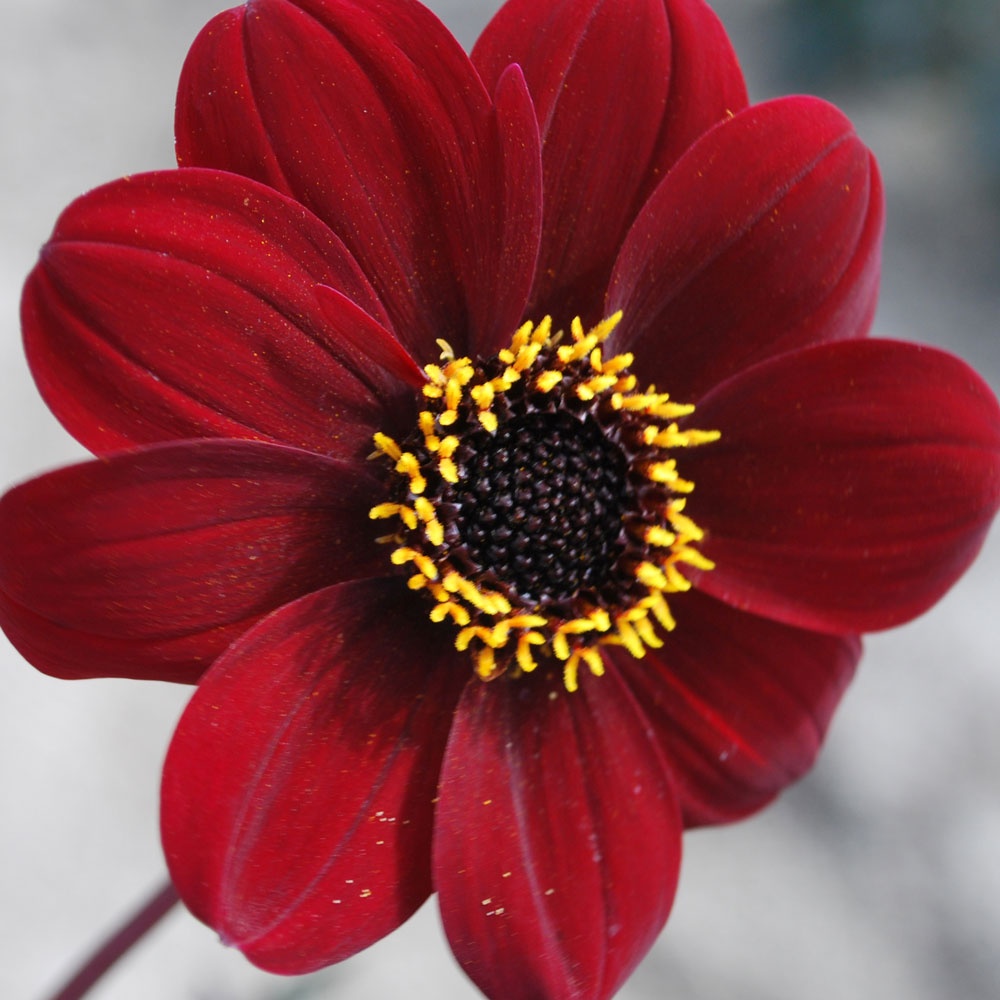
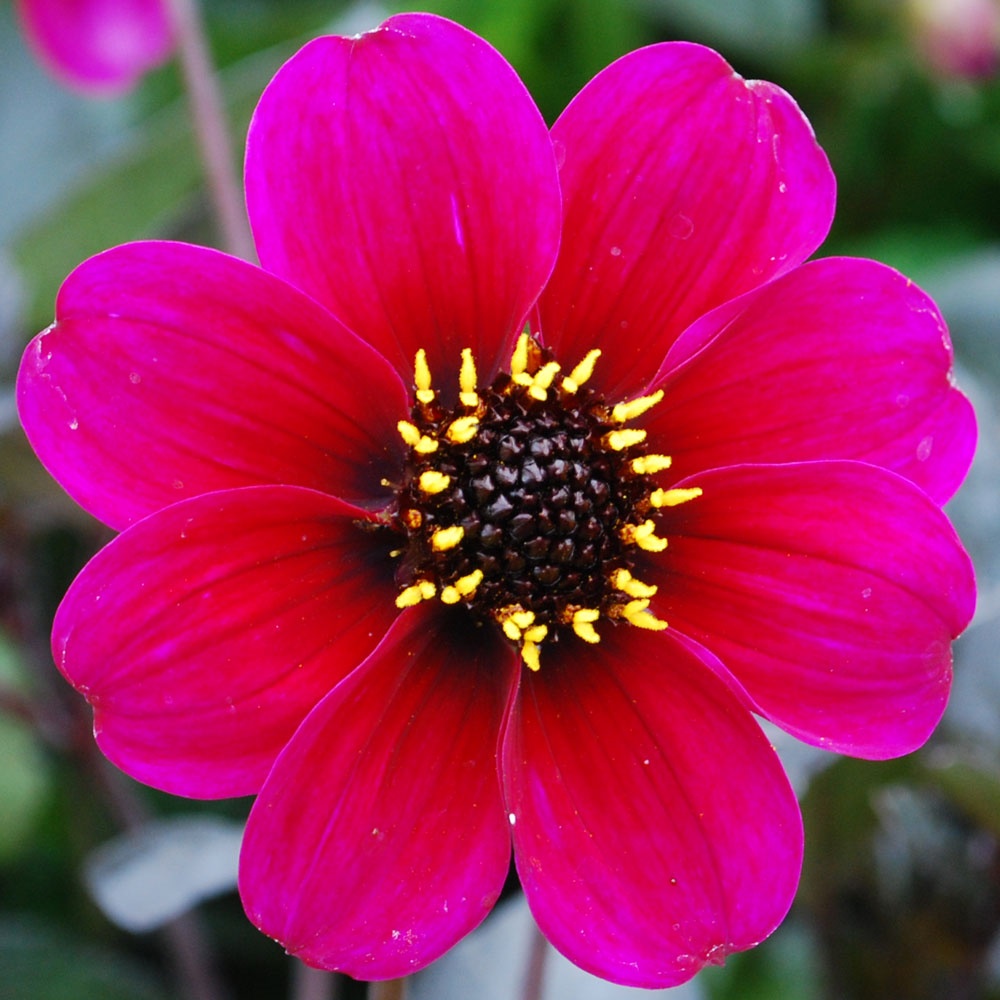
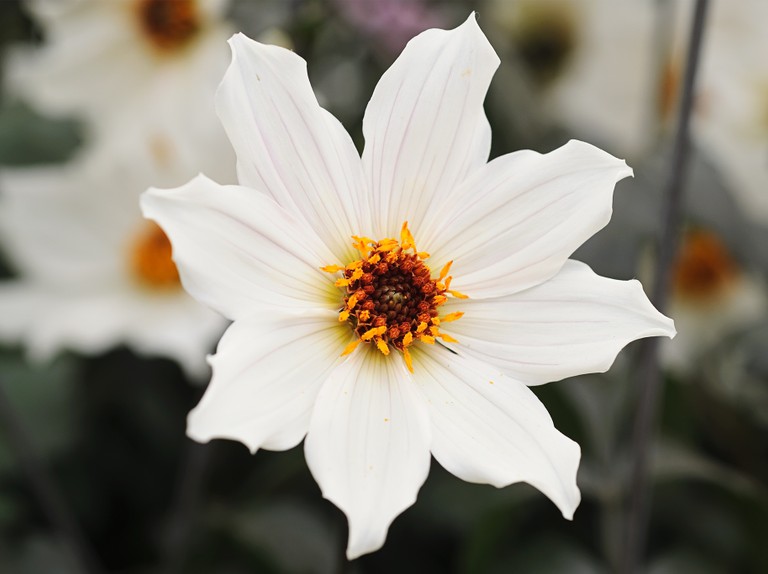
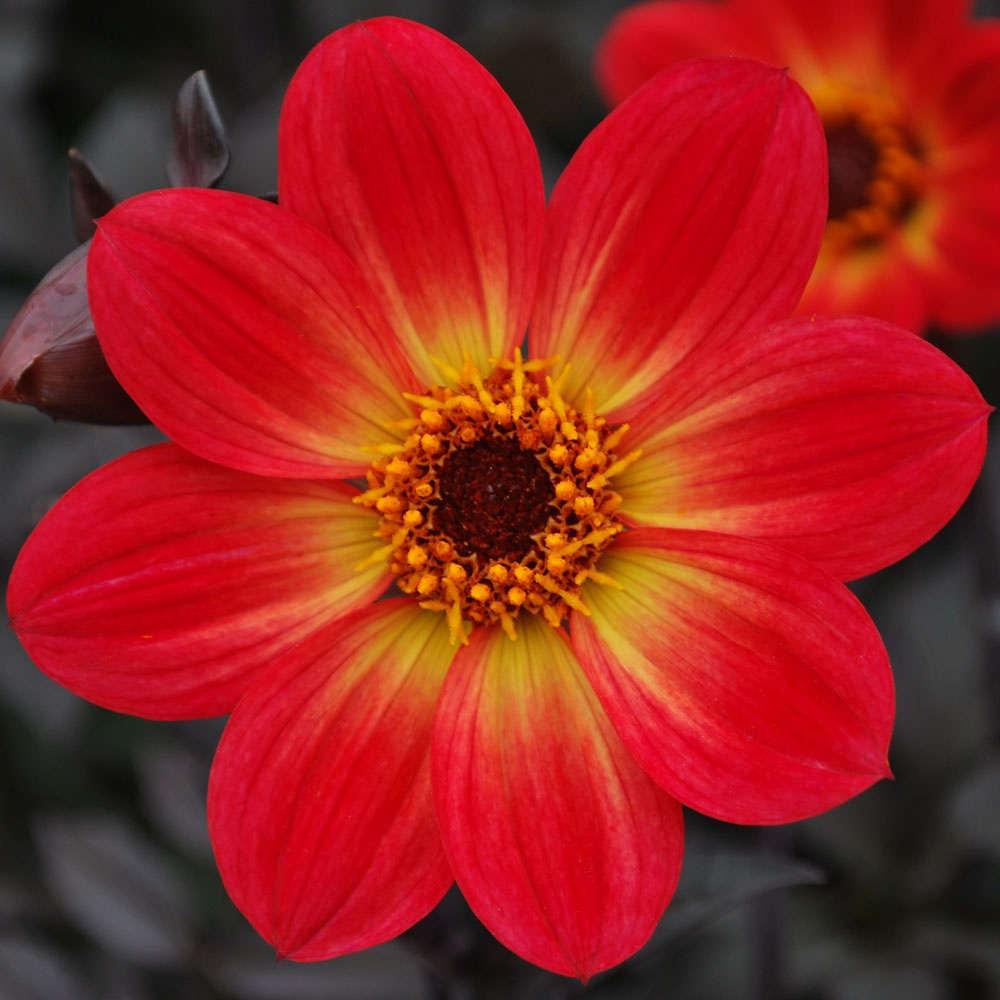
Single dahlias have a single ring of petals that circle around a central disc. The petals may be rounded or pointed and may overlap. This type of dahlia is attractive to pollinators.
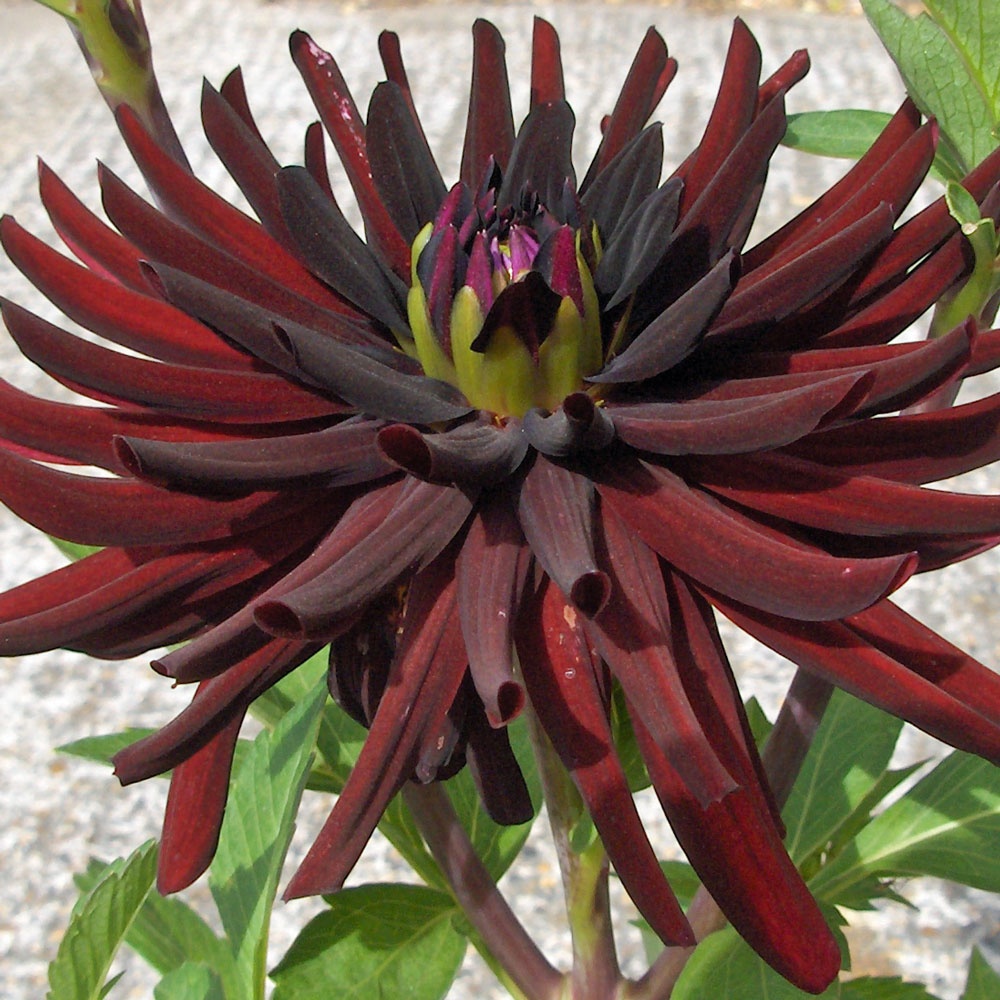
Most of the ‘Bishop’ dahlias – like ‘Bishop of Auckland’ on the left – are single dahlias. Note that ‘Bishop of Llandaff’ is a paeony type (see below).
Other types of dahlia
You can enter any of the above types of dahlias in Class 4 (two vases, 3 blooms in each, any variety) but you could also include any of these other types if you have them.
Anemone-flowered Dahlias
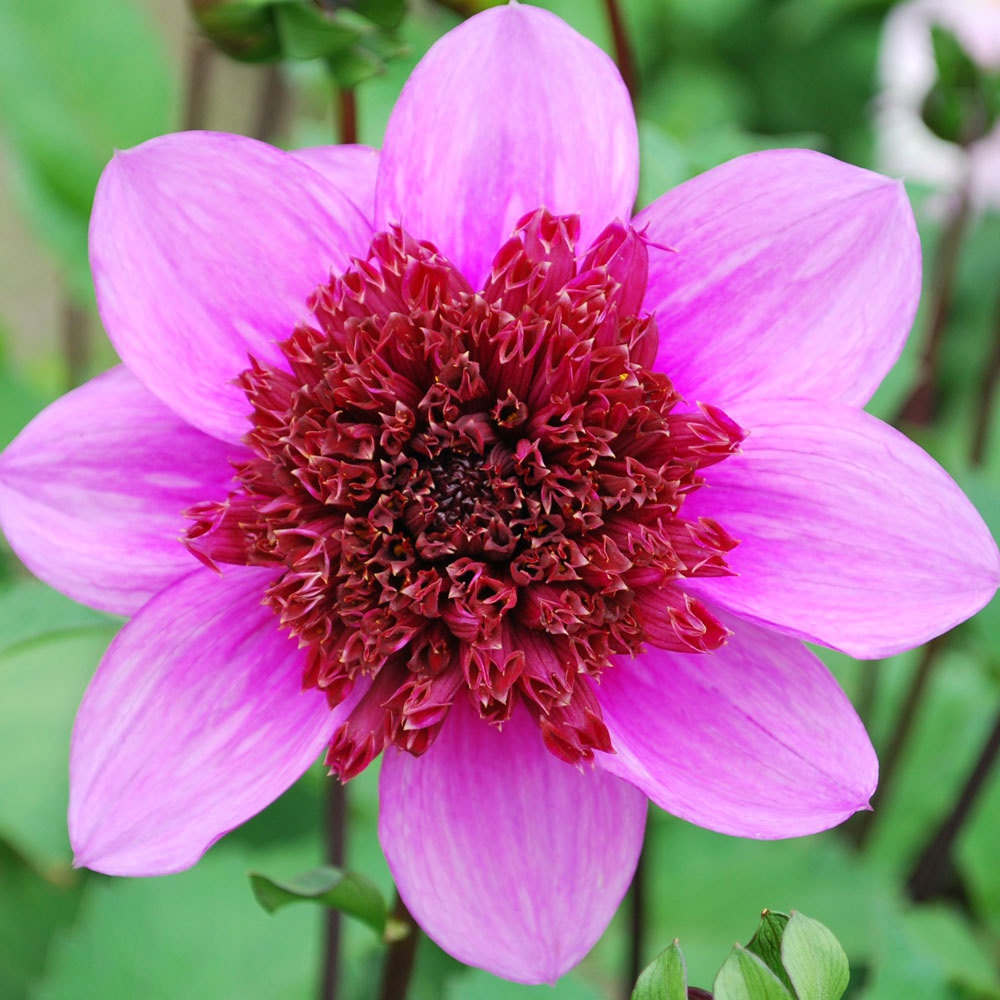
Anemone-flowered dahlias have blooms with one or more outer rings of generally flattened ray florets surrounding a dense group of tubular florets, and showing no disc.
On the right: Blue Bayou
Collerette Dahlias
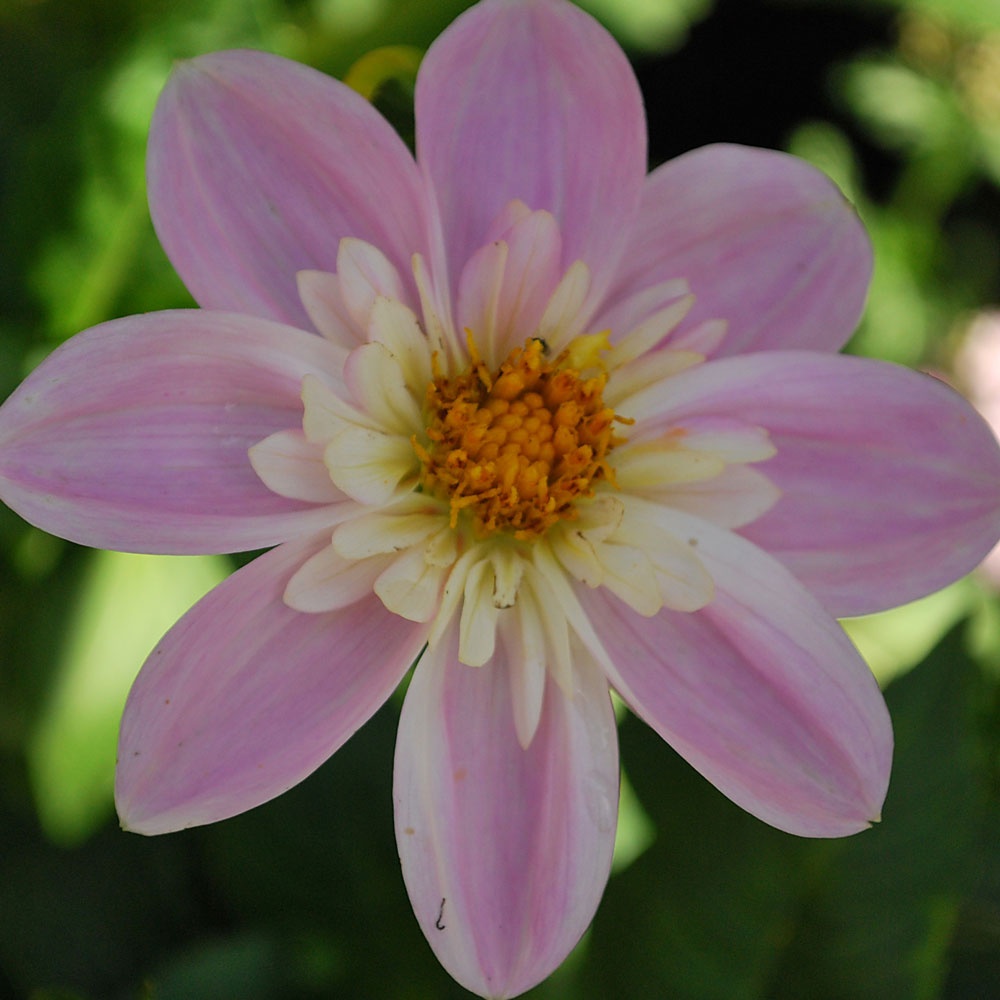
Collerette dahlias have blooms with a single outer ring of generally flat ray florets, which must overlap, with a ring of small florets (the ‘collar’) the centre forming a disc.
On the left: Famoso
Waterlily Dahlias
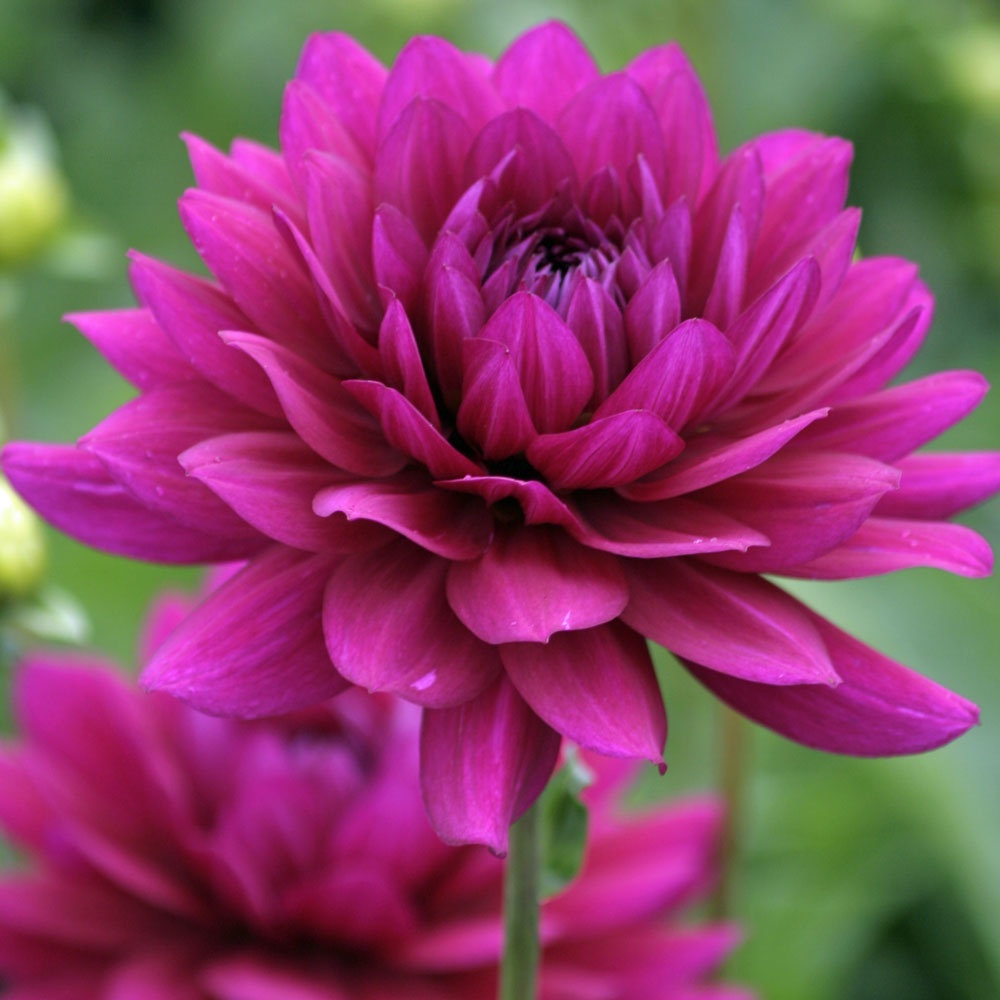
Waterlily dahlias have fully double blooms characterised by broad ray florets that are slightly involute along their length (longitudinal axis) giving a saucer shaped appearance to the bloom. The depth should be not more than one third of the diameter of the bloom.
On the right: Berner Oberlander
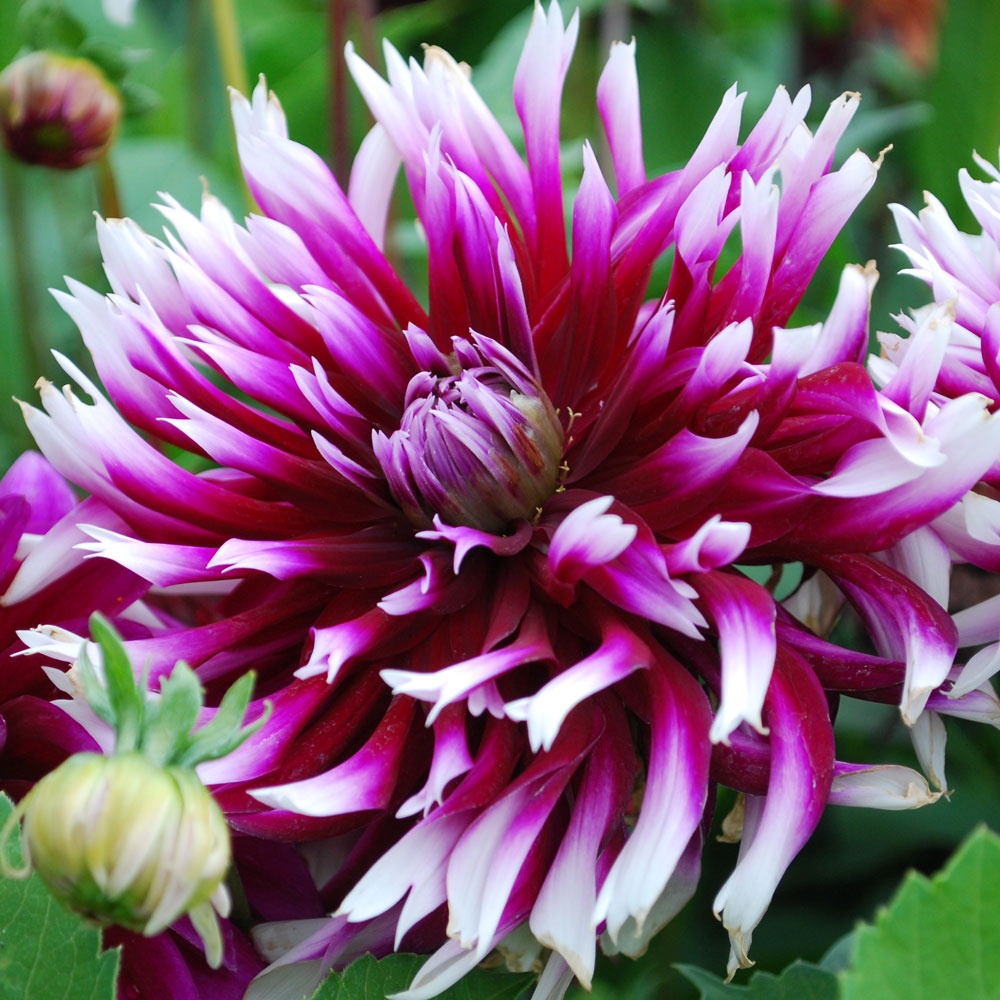
Fimbriated Dahlias
Fimbriated dahlias have blooms where the tips of the ray florets should be evenly split or notched into two or more divisions, uniformly throughout the bloom to create a fringed overall effect. The petals may be flat, involute, revolute, straight, incurving or twisted.
On the left: Alauna Clair-Obscur
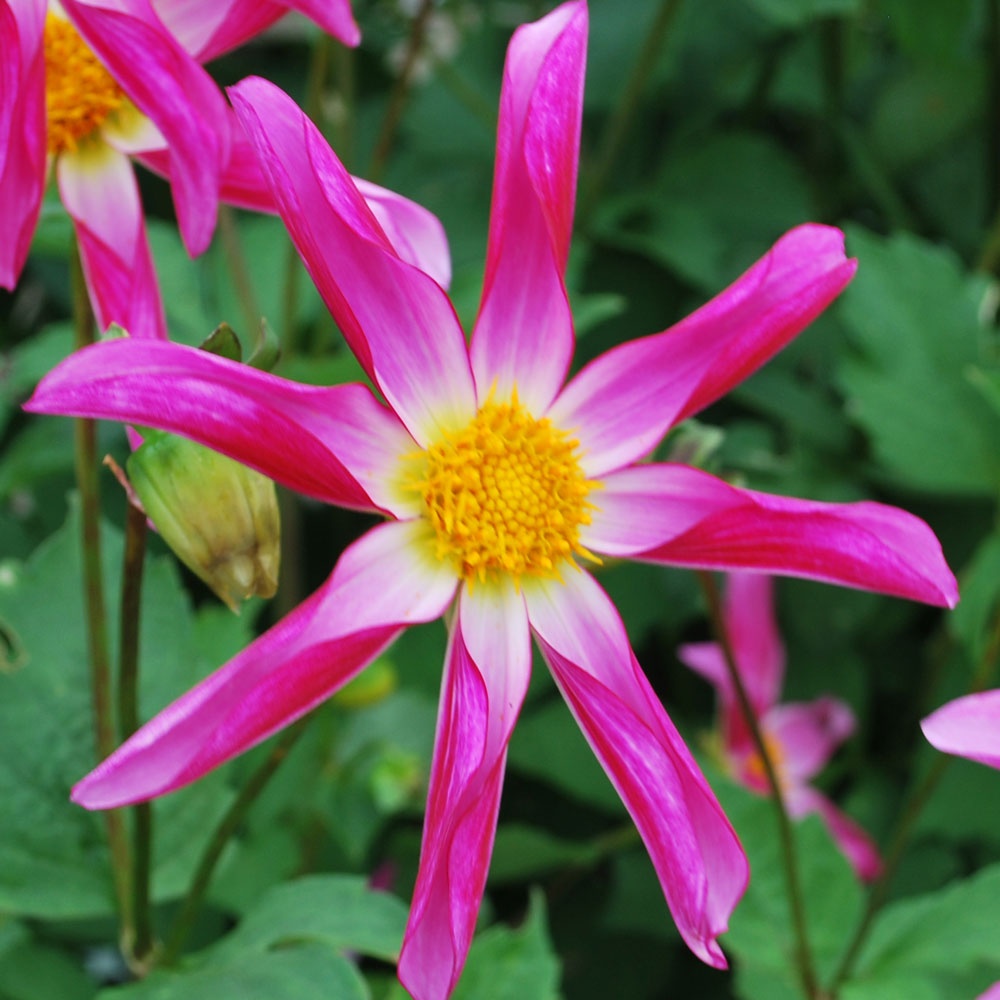
Star Dahlias
Star (or Orchid) dahlias have blooms with a single outer ring of florets surrounding the disc. Ray florets are uniformly either involute or revolute.
On the right: Honka Roze
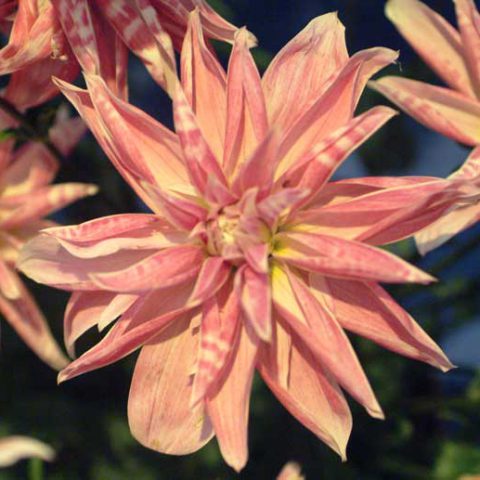
Double Orchid Dahlias
Double Orchid dahlias have fully double blooms showing no disc and have triangular centres. Ray florets are narrowly lance shaped and either involute or revolute.
On the left: Pink Giraffe
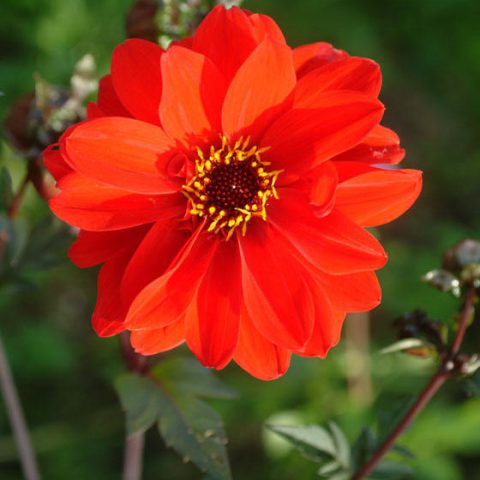
Paeony Dahlias
Paeony dahlias have multiple outer rings of ray florets surrounding a disc, ray florets are flat or slightly involute at base and are flat or are to some extent revolute.
On the right: Bishop of Llandaff
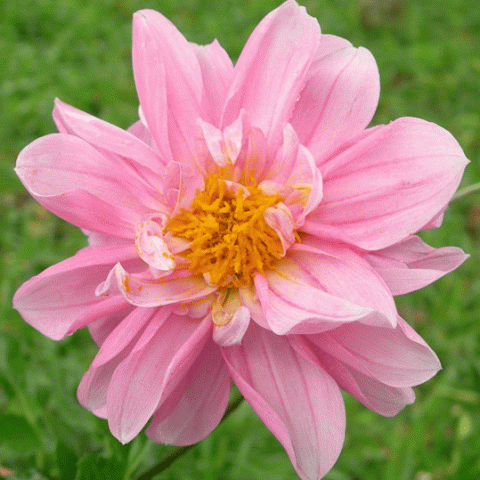
Miscellaneous Dahlias
Any dahlias which do not fall into the other types e.g. Thistle Dahlias, etc. This group includes species dahlias.
On the left: Gambung
 Dedham Horticultural Society